The Kartalkaya Tragedy and the Ministry’s Oversight Responsibility
On the night of 21 January 2025, a fire at the Grand Kartal Hotel in Bolu–Kartalkaya claimed the lives of 78 people, including 36 children, marking one of the deadliest hotel fires in the history of the Republic. The 12-story, 161-room hotel was at peak occupancy during the semester break. The fire began in the fourth-floor kitchen/restaurant area and spread rapidly due to highly flammable façade and insulation materials. Smoke was reportedly detected long before the alarms activated, turning evacuation into chaos. Testimonies and expert findings revealed severe regulatory violations in escape routes, fire doors, smoke control, elevator integration, and alarm systems.
Reports by the Parliamentary Inquiry Commission and professional chambers confirmed that inadequate escape arrangements, non-standard doors, combustible XPS façade cladding, and inoperative detection systems enabled the fire to move quickly between floors. Guests were left without guidance in darkness and dense smoke; some attempted to descend using bedsheets or jumped from windows.
This disaster falls squarely within the mandate of the Ministry of Culture and Tourism, responsible for the licensing and inspection of tourism facilities under Law No. 2634 and the relevant regulations. However, presentations to the Commission showed that inspections often focused on classification criteria rather than fire safety, evacuation, insulation, or alarm systems, and were carried out through visual checks rather than technical measurement or expert review.
At the 26 February 2025 Commission meeting, ministry officials stated that the hotel was last inspected in 2021; inspection teams lacked civil engineers, electrical experts, or fire-safety specialists; and fire-safety checks relied solely on observation. The nationwide shortage of inspection staff, the absence of risk-based oversight, and the predominance of routine, formalistic inspections allowed a facility with severe technical deficiencies to operate under the guise of being “certified.”
The hotel’s “Sustainable Tourism Program” certification also raised questions. The detention of an executive from an accredited auditing firm exposed the risks of delegating critical certification and inspection processes to the private sector without robust public oversight. The unclear division of authority and responsibility between the Ministry and the Tourism Promotion and Development Agency (TGA) further widened the gap between sustainability rhetoric and actual life-safety standards.
Despite clear institutional responsibility, no meaningful political or administrative accountability process followed. Senior officials did not assume responsibility, and adequate judicial or administrative investigations were not conducted. This failure has deeply shaken families’ quest for justice and public trust in the rule of law.
Although the Parliamentary Commission heard many institutions, professional bodies, experts, and family representatives, it failed to finalize its report on time due to procedural issues—revealing structural weaknesses in parliamentary oversight. The Kartalkaya tragedy thus exposed not only executive oversight failures but also systemic flaws in the legislature’s inquiry mechanisms.
All findings demonstrate that the Ministry’s budget cannot be evaluated solely through investment, promotion, and incentive programs. Certification–inspection capacity, the number and expertise of inspectors, in-service training, inspection frequency, and fire-safety guidance activities must be tied to budget allocations and measurable performance targets. Without this, a deep gap emerges between the “certified facility” label and actual public safety—paid for, as in Kartalkaya, with irreplaceable human lives.
For the 2026 budget, expanding the scope of technical inspections—covering fire safety, emergency management, construction materials, and escape systems—and conducting them with independent engineering expertise is essential. Results must be made public regularly. Sustainable tourism certification must include binding technical life-safety criteria, and TGA as well as accredited auditing companies must be subject to effective state oversight.
The Kartalkaya tragedy has shown that inspection and oversight lines in the Ministry’s budget are directly linked to the lives of 78 people, the grief of hundreds of families, and the public’s trust in the state. Therefore, the 2026 budget must serve as a turning-point budget—not only for new facilities or promotion projects but to rebuild the certification–inspection system, clarify the chain of responsibility, and ensure public accountability. Otherwise, what burned in Kartalkaya was not just a hotel building, but the state’s fundamental commitment to protecting its citizens.
The Problem of Turkish Citizens’ Inability to Take Vacations
The inability of Turkish citizens to take vacations is not merely a failure to meet the basic need for rest but a stark indicator of deepening economic crisis and growing income inequality. Millions of low-income and minimum-wage earners struggle to afford rent, bills, and food; even a short vacation has become an unattainable luxury. As inflation rises, living costs soar, and real wages erode, the constitutional right to rest remains only on paper, leaving citizens deprived of a fundamental component of dignified living.
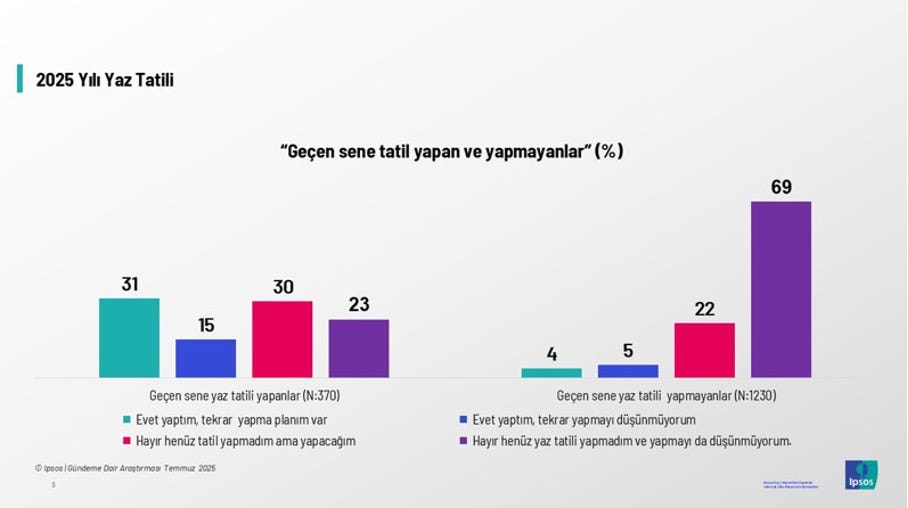
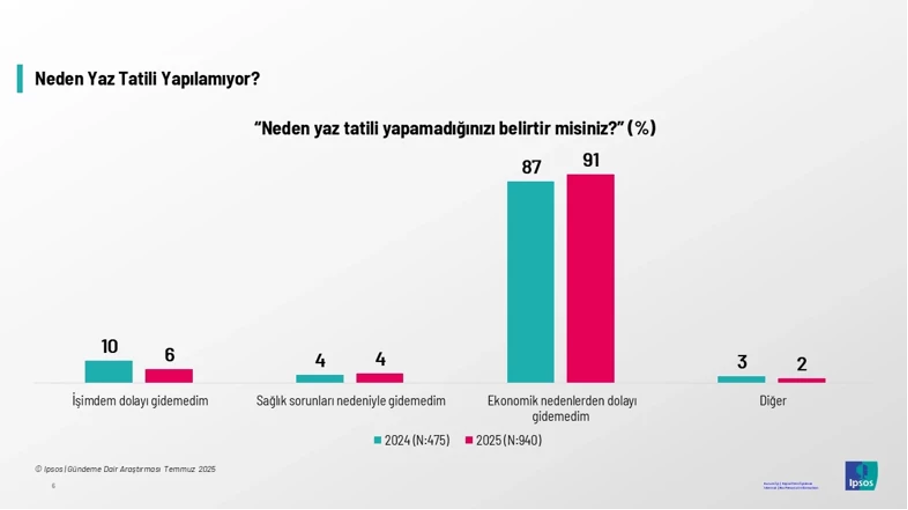
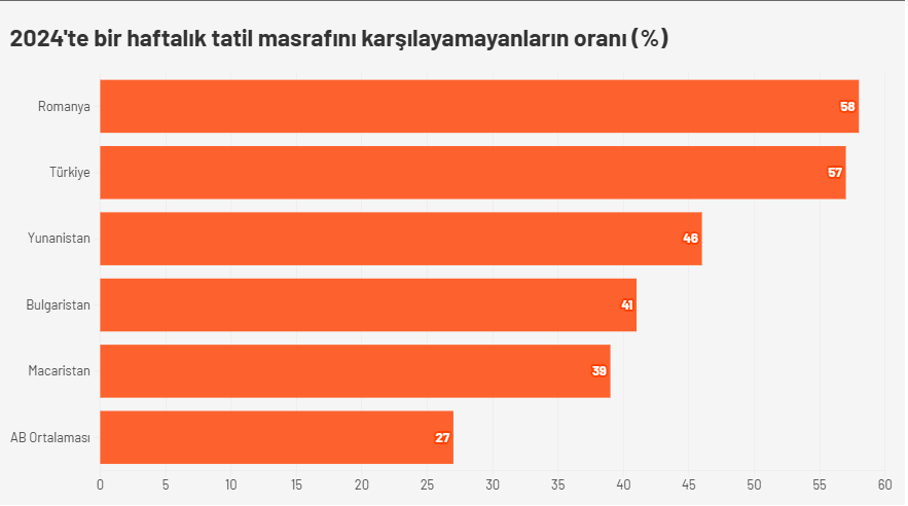
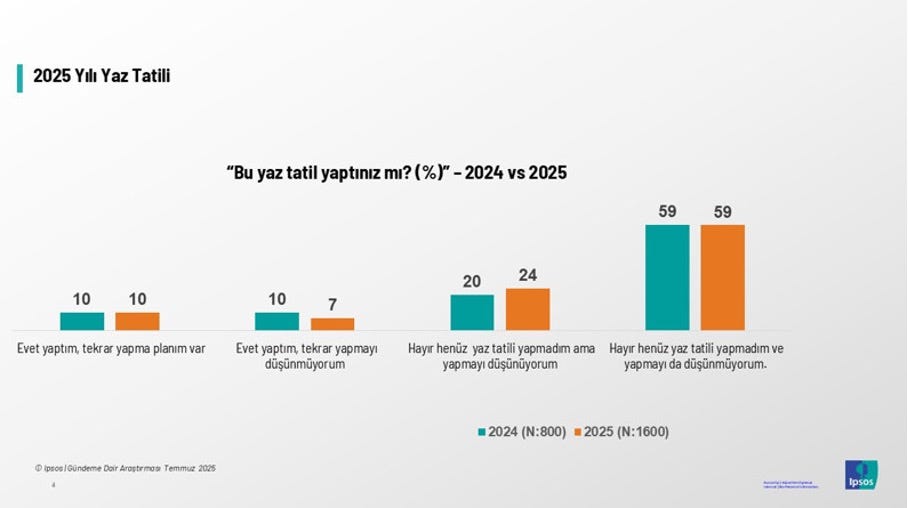
According to IPSOS’s “2025 Summer Vacation File,” 6 out of 10 citizens did not take a summer vacation and do not plan to do so. Among those who could not take a vacation last year, 69% say they will not be able to this year either. Nine out of ten people cite economic reasons; the share of those who cannot afford a vacation due to financial constraints rose from 87% to 91% in one year, showing a deepening accessibility crisis. Eurostat’s 2024 data on “difficulty affording a one-week holiday” ranks Türkiye second in Europe, confirming the magnitude of the financial barrier.
The inability of citizens to vacation even within Türkiye reflects insufficient household income, rising costs, and the lack of inclusivity in domestic tourism. For retirees, the problem is even more acute: while foreign retirees can vacation comfortably in Türkiye on their pensions, Turkish retirees often work low-wage seasonal jobs in the same hotels or cannot afford a vacation at all. In contrast, countries like Spain operate subsidized social-tourism programs that guarantee access for older adults, reduce tourism seasonality, and support local economies.