

Justice System and Everyday Life in Türkiye
🚔 11 detained in Istanbul ISIS operation
Eleven suspects have been detained in Istanbul as part of an operation targeting individuals alleged to be linked to the terrorist group ISIS and accused of conducting propaganda via social media. According to the report, teams from the Istanbul Provincial Security Directorate’s Counter-Terrorism and Intelligence branches identified the identities and addresses of suspects allegedly engaged in activities tied to the group. Simultaneous operations were carried out at the locations identified, leading to the detention of 11 suspects, who were taken to a police facility for processing.
🐒 Rhesus on the run: monkey found wandering Yozgat country lane
Locals in the Sarıkaya district of Yozgat were treated to a rather unexpected sight on the road to Karayakup village — a monkey, doing its best impression of a confused commuter. The villagers, sensibly concluding that this was not, in fact, native fauna, alerted the authorities, and the Provincial Gendarmerie’s Environment, Nature and Animal Protection Team duly arrived to collect the wayward primate. Believed to be a Rhesus macaque (or “Indian macaque”) — a species which one is not, it turns out, allowed to keep as a pet in Türkiye — the monkey was handed over to the Nature Conservation and National Parks Branch Directorate, where it underwent a health check and was placed under protection. Quite how it ended up taking the country air on a Yozgat back road remains, for now, a mystery.
Politics
💰 Türkiye’s parliamentary committee approves sweeping tax overhaul, with up to 72-month instalments for tax debts
The Turkish Grand National Assembly’s Plan and Budget Committee has approved a Bill on Amendments to Certain Laws bringing in extensive changes to the country’s tax system. Under the bill, the Law on the Procedure for the Collection of Public Receivables is amended so that public debts may be deferred — with interest — for up to 72 months where timely payment, the imposition of liens or the realisation of seized assets would put the debtor in serious difficulty, provided the debtor has applied in writing and offered security; no security will be required where the total deferred debts owed to a single collection office do not exceed 1 million lira, and for amounts above that threshold the required security will be half of the portion exceeding 1 million lira, with the President empowered to vary the threshold by up to a factor of ten upwards or by half downwards. Inheritance and gift tax on inheritance transfers from those benefiting from the income tax exemption on overseas-sourced earnings is set at 1 per cent. Income tax exemptions on free or discounted share grants given to staff at qualifying technology start-ups are recalibrated, with the upper limit redefined at twice the relevant year’s gross salary; the holding period is shortened, but if such shares are sold within two years the entire exempted tax becomes payable, with 75 per cent recoverable for sales between three and four years, and 25 per cent for sales between five and six years, all collected from the employer with default interest.
A new Article in the Income Tax Law introduces a 20-year income tax exemption on overseas earnings of individuals deemed resident in Türkiye, provided they had no Turkish residence or tax liability in the three calendar years preceding their classification as resident; the existence of prior real estate, securities or capital gains tax liabilities will not preclude eligibility, but no annual return need be filed for such income, no deductions may be claimed against domestic earnings, and foreign taxes paid cannot be offset against Turkish income tax. The Direct Foreign Investments Law is also amended to introduce the concept of a “Qualified Service Centre”, defined as a capital company set up to serve related companies or groups operating in at least three different countries and earning at least 80 per cent of its annual revenue from such overseas affiliates, providing a wide range of services from financial advisory and risk management to legal advice, branding, R&D coordination and post-sales support; a 95 per cent corporate tax exemption (rising to 100 per cent for participants in the Istanbul Finance Centre) will apply to qualifying overseas earnings of such centres for 20 accounting periods, alongside an income tax exemption on the portion of qualified service personnel’s gross salaries up to three times the gross minimum wage (five times for IFC participants).
The amendments to the Corporate Tax Law also raise the deduction rate for income from the resale of goods bought abroad without entering Türkiye, and from intermediation in cross-border trade, to 95 per cent (100 per cent for IFC participants), with the President empowered to vary the rates between zero and 100 per cent. The corporate tax rate is set at 12.5 per cent on income derived solely from the production activities of companies holding an industrial registry certificate and actively engaged in production, and from the agricultural production of companies engaged in such activity, although the existing five-point export earnings reduction will not apply on top, with the rate taking effect for income earned in 2027 and subsequent periods. To boost voluntary tax compliance, the bill introduces a new asset declaration scheme: real and legal persons with foreign-held cash, gold, foreign exchange, securities and other capital market instruments may declare these to banks or brokerages by 31 July 2027, transferring them within two months to accounts opened in their names in Türkiye or, for physically imported assets, depositing them via Customs declaration. Domestically held but unrecorded assets may also be declared and entered into legal books; balance sheet taxpayers will create a special fund account, withdrawable from the business only after two years and only into capital, with no taxation on liquidation.
Banks and brokerages will withhold 5 per cent on the declared value as advance tax, but the rate falls to zero per cent for assets pledged to remain in time deposits, government domestic borrowing securities or lease certificates for at least five years, with intermediate rates of 1, 2, 3 and 4 per cent for four-, three-, two- and one-year commitments respectively; rates rise by half a point for declarations made between 1 January 2027 and 31 July 2027, with a further half-point rise after that date. Declared assets are immune from tax inspection or assessment, with carefully calibrated rules on offsetting against any tax base differences uncovered through other inspections, and on consequences for failure to repatriate or honour commitments. The Research, Development and Design Activities Law is amended so that conditional capital increases by non-listed companies holding the Ministry of Industry and Technology’s “Technogirişim” badge will not be subject to the Turkish Commercial Code’s conditional capital provisions, while qualifying digital companies founded by entrepreneurs eligible for “incubation” status under the Technology Development Zones Law will be exempt from chamber dues for up to three years from incorporation. Finally, the Istanbul Finance Centre Law is amended to extend the income tax reduction for staff with overseas experience to all participants, to extend the 100 per cent corporate tax reduction for IFC participants engaged in financial activity until 2047, and to extend the financial activity fee exemption for the licensing and authorisation of such institutions from five to 20 years.
🛂 Türkiye and Saudi Arabia abolish visas for diplomatic and special passport holders
Foreign Minister Hakan Fidan has announced that Türkiye and Saudi Arabia have signed an Agreement on the Mutual Exemption from Visa Requirements for Holders of Diplomatic and Special Passports, on the sidelines of the Third Meeting of the Turkish–Saudi Coordination Council. Writing on social media, Fidan said he had co-chaired the meeting in Ankara with his Saudi counterpart Prince Faisal bin Farhan Al Saud, with the relevant ministries and agencies of both countries attending to review the work of joint committees in strategic areas including trade, energy, defence, education, culture, tourism and transport, and to address bilateral relations within an institutional framework. The two sides also discussed regional matters, with Gaza featuring prominently. Fidan said he hoped the agreement would prove auspicious for both countries, and thanked his counterpart and the accompanying delegation for their visit.
⚖️ Serdar Mutta elected as new chair of Türkiye’s Supreme Election Council
Serdar Mutta, 52, has been elected as the new chair of Türkiye’s Supreme Election Council (YSK). The six new members chosen for the council by the General Assemblies of the Court of Cassation and the Council of State were sworn in earlier the same day, after which an internal vote was held to choose a new chair and deputy chair, with İsmail Kalender named as deputy. Mutta, a former Court of Cassation member, had been elected to the YSK in January 2023. Born in Hatay, he graduated from Kırıkhan High School and from Istanbul University’s Faculty of Law in 1995, completing his military service as a military judge in Konak, İzmir. He began his judicial career as a candidate judge in Beyoğlu, Istanbul, and went on to serve as a judge in Hüyük, Uzundere and Türkoğlu, before holding senior posts including Justice Inspector, head of the Personnel Department of the Ministry of Justice, head of the Department for Enforcement and Bankruptcy Services, deputy secretary general of the High Council of Judges and Prosecutors (HSYK) and senior adviser at the Ministry of Justice.
🇪🇺 EU envoy hails Türkiye as ‘island of stability’ on Europe Day
The EU Delegation to Türkiye marked Europe Day in Ankara with digital art exhibitions and a reception, foregrounding climate change, cultural heritage and shared values. Held at CerModern, the event was attended by Deputy Foreign Minister and Director for EU Affairs Ambassador Mehmet Kemal Bozay, Deputy Trade Minister Mustafa Tuzcu, Head of the EU Delegation to Türkiye Ambassador Aivo Orav, Ankara Metropolitan Mayor Mansur Yavaş, foreign mission representatives and a wide range of guests. Two digital photography exhibitions, “Transforming Matter” and “Trace”, were unveiled, exploring the effects of climate change, human reshaping of the planet, and the preservation of cultural heritage; Orav said the works brought art and science onto common ground, with “Trace” examining the imprint left by climate change through image, sound and visuals, and “Transforming Matter” raising questions about humanity’s reshaping of the earth. Bozay said Europe was at its strongest when it embraced diversity and built bridges between cultures, describing Türkiye, with its rich history and dynamic society, as “an indispensable part of the genuine European identity”, and arguing that in a world marked by uncertainty and division, Europe Day should serve as a compass reminding people what Europe truly is and aspires to be. Orav described the EU as a peace project transforming a conflict-ridden past into a future based on cooperation, and said it was an honour to mark Europe Day alongside Türkiye as a key NATO ally and a significant candidate for EU membership, calling the country a vital partner for Europe at a time of global uncertainty. Pointing to the war in Ukraine — which he described as “merciless and unlawful”, with civilians suffering daily and aggression there posing a threat to all — and to a Middle East in flames from conflict and economic crises, Orav said Türkiye continued to be “an island of stability and a bridge for diplomacy”, noting its mediation efforts and observing that hosting NATO allies in Ankara this year and the world at the Climate Summit in Antalya had made its role more vital than ever. Describing EU enlargement as an “investment in peace”, he placed Türkiye at the heart of that vision as a candidate country and NATO ally, and closed his remarks with the words of Mustafa Kemal Atatürk: “Humanity is a single body, and every nation is a part of it.”
📵 Diyanet tells staff: stop using ‘Diyanet’ on social media
Türkiye’s Directorate of Religious Affairs (Diyanet) has issued a social media instruction to its staff telling them not to use the names “Diyanet”, “DİB” or “Diyanet İşleri Başkanlığı” in their online posts, in a move that has reignited debate about competence and consistency at the institution. According to a report in BirGün, an official communication issued in March in the name of Diyanet head Safi Arpaguş, addressed to all directorate personnel, set out a “name and abbreviation warning” instructing staff that such terms — including the institution’s name and shortened forms — were not to be used. Personnel pointed out, however, that both Arpaguş himself and former Diyanet head Ali Erbaş were ignoring the rule, with the abbreviation “DİB” appearing on both men’s social media accounts. Staff suggested that those signing the directive on the chair’s behalf seemed unaware that he was doing the very thing the document told everyone else not to do, observing pointedly that “the rule and the instruction should first be applied by the institution’s most senior official, who should set an example for the personnel.”
👨👩👧 Caring duties weigh on Türkiye’s labour market, official data show
Türkiye’s Statistical Institute (TÜİK) has published its 2025 “Reconciliation of Work and Family Life” bulletin, drawing a striking picture of how care responsibilities shape the country’s labour market. The survey, conducted alongside the Household Labour Force Survey on the 18–74 age group at the same time as in EU countries, defines care responsibility as regular care for children under 15, grandchildren, sick or disabled children aged 15 and over, spouses or other relatives in need of care. Among the 59,127,000 people in the 18–74 age group last year, 43.1 per cent had care responsibilities — 40.6 per cent of men and 45.6 per cent of women. The labour force participation rate was 58.2 per cent overall, rising to 60.5 per cent for those with care responsibilities and falling to 56.4 per cent for those without; for women, however, the picture inverts, with participation at 37.8 per cent among those with care duties versus 41.7 per cent without, while for men the rates were 86 per cent and 70 per cent respectively. Among the employed in this age group, 39 per cent had childcare responsibilities only, 2.3 per cent solely cared for grandchildren, and another 2.3 per cent solely for adults, with 2.1 per cent juggling combinations. Of those in employment with care duties for under-15s, 14 per cent used institutional care centres, 1.6 per cent paid in-home care, and 1.4 per cent both, while 83 per cent used no professional care services at all; among those caring for adults, 17 per cent used paid in-home care, 3.6 per cent used institutional care, and 79.3 per cent used none. Of those not using childcare services, 50.8 per cent shared the burden with a spouse, 19.7 per cent said their children could care for themselves, 17.6 per cent cited the high cost of professional care, and 5.5 per cent relied on grandparents or other relatives; for those not using adult care services, 72.6 per cent said they did not need professional care, 17.9 per cent pointed to cost, and 5.3 per cent said no service was available within reach or that places were full. While 70.1 per cent of employed carers reported no difficulty combining work and care, 4,303,000 reported difficulties — 38.4 per cent citing long working hours, 26.9 per cent strenuous or tiring work, and 8.9 per cent long commutes; the share citing long working hours was 39.3 per cent among men and 36.4 per cent among women.
🛰️ Iraq turns to Turkish technology to bolster its air defences
Iraq is finalising the purchase of 20 air defence systems from Türkiye, marking a significant shift in Baghdad’s defence strategy after intense missile and drone activity in the region. The systems, intended in particular to protect oil fields and diplomatic missions, were the focus of remarks by Iraqi Deputy Chief of General Staff Lieutenant General Saad Harbiye at the SAHA defence fair in Istanbul, who said Iraqi airspace had become awash with unmanned aerial vehicles and that the new systems would play a vital role in countering them. Harbiye described Turkish systems as “first class” and pointed to the advantages of low cost and high technology, alongside neighbourly relations, in driving the choice. The financial terms of the deal have not been disclosed, but the technology is to be supplied by state-owned defence firms; Türkiye’s defence industry, with its recent advances in air defence, drone and missile technology, has become a cornerstone of its foreign policy. Iraq’s interest in Turkish systems pre-dates current events, but a surge in attacks since the end of February has sharpened the urgency of strengthening its limited defensive capacity, with oil fields, diplomatic premises in Baghdad and various encampments having been struck — posing an economic threat to a country that draws the bulk of its revenue from oil exports. Talks continued at the fair to nail down financial details, and cooperation in areas such as cyber security was also discussed; the Ministry of National Defence confirmed via social media a meeting between Defence Minister Yaşar Güler and Lt Gen Harbiye, at which the two sides agreed to step up security coordination. A particular focus was the cost imbalance in conventional air defence, where shooting down a $10,000 drone with a $1 million missile has long been a problem; Harbiye said the Turkish systems would resolve this asymmetry, providing more economical and effective protection, with specialised platforms aimed at drones that are difficult to detect and intercept. Setting aside earlier disagreements, Baghdad and Ankara have leant into common ground in recent years, with the multi-billion-dollar Development Road project linking the two countries to the Gulf at the economic heart of their cooperation, while closer security alignment is now seen by both capitals as essential to regional stability and to safeguarding the same economic projects.
🏛️ Hierapolis gets new visitor centres next to Pamukkale
Türkiye’s ancient city of Hierapolis, set beside the famous Pamukkale travertines, has completed two new visitor reception centres at its Antique Pool and South Gate, designed to fit in with the texture of the site. Culture and Tourism Minister Mehmet Nuri Ersoy announced the project on social media, saying the structures had been planned around a light roof covering, the principle of permeability and a modular layout, creating a sustainable and flexible space without disrupting the air and light circulation of the ancient city or making any permanent intervention in the archaeological fabric. The Antique Pool centre brings visitor needs together in one place, housing a restaurant, gift shop, kitchen, prayer areas, changing rooms, showers, technical spaces and a buggy stop, helping to ease the pressure of scattered and uncontrolled use across the site. The South Gate centre, located outside the Byzantine city walls, has been conceived as a threshold marking the transition from the present day to antiquity, with ticket sales points, a buggy rental unit, a cafeteria, a gift shop and prayer areas. Ersoy said the centres would strengthen the visitor experience while keeping the architecture restrained, modest and respectful of the ancient atmosphere of the city, and thanked teams from the General Directorate of Cultural Heritage and Museums and all other stakeholders for their work on the project.
Ruling Government (AKP, MHP and DEM coalition aka People’s Alliance)
🐺 Bahçeli’s ‘coordinator’ proposal for Öcalan rattles Türkiye’s ruling alliance
MHP leader Devlet Bahçeli’s call for Abdullah Öcalan to take on a “Peace Process and Political Engagement Coordinator” role has stirred unease in the People’s Alliance, with AK Party officials reportedly uncomfortable with the increased visibility of the imprisoned PKK leader’s name in the resolution process. Speaking at his party’s Turkish parliamentary group meeting after weeks of silence on the topic — and following a private meeting with President Recep Tayyip Erdoğan — Bahçeli said the question of Öcalan’s status had to be discussed for the process to function properly, and proposed that the role be formally framed as a “Peace Process and Political Engagement Coordinator”. According to a report by Merve Kılıç in Cumhuriyet, while DEM Party welcomed the remarks, MHP-aligned sources interpreted the move as pressure on the PKK, arguing the organisation had not yet fully laid down its arms and that Bahçeli and Erdoğan were now coordinating their messaging to push for full disarmament — with the process described as effectively stalled, even if the alliance does not want it to look that way. Some MHP figures are said to be uncomfortable with Bahçeli’s wording but unwilling to say so loudly. AK Party sources, meanwhile, expressed continuing unease at how prominent Öcalan’s name has become in the process, noting that Erdoğan has deliberately avoided invoking him, and warning that nationalist voters and the families of those killed or wounded in PKK attacks were uncomfortable with such rhetoric, raising the prospect of voter losses; complaints about DEM Party’s “maximalist demands” were also said to be growing. AK Party strategists insisted the government’s only and unchanging condition for the process remained the laying down of arms by the PKK in all its internal and external components. Reports from the security bureaucracy were said not to be meeting expectations, with officials concluding that “apart from a symbolic ceremony, there has been no concrete development on disarmament” and that progress depends on the organisation laying down its weapons in its entirety.
🐺 Koray Aydın tipped to return to MHP fold
Koray Aydın, one of the founding figures of Türkiye’s İYİ Party, is reportedly set to return to the Nationalist Movement Party (MHP), with speculation in Ankara that he could take on an influential role in the party’s leadership — possibly as secretary general. According to a report by Merve Kılıç in Cumhuriyet, Aydın spent many years in MHP politics before leaving alongside founding chair Meral Akşener to help establish İYİ Party, where he served as deputy parliamentary group leader and deputy chair, becoming a key figure in shaping the party’s organisational structure. His name resurfaced during the extraordinary congress at which Akşener stepped down as leader; Aydın stood for the party chairmanship but failed to secure the result he sought, and later resigned from İYİ Party amid disagreements with the new leadership. The latest speculation about his return follows a recent string of provincial and district organisation dissolutions, cadre changes and “restructuring” moves within MHP, with party circles suggesting that leader Devlet Bahçeli is seeking to bring back into the fold figures from across the wider nationalist movement who had drifted into different camps in the past.
🐺 MHP officials: ‘Terror-Free Türkiye’ must not be tied to electoral calculations
Officials at Türkiye’s Nationalist Movement Party (MHP) have insisted that the “Terror-Free Türkiye” goal must not be reduced to an electoral calculation, telling Kısa Dalga that no one can yet say how the process will conclude or which side will reap any political benefit. The remarks come amid renewed debate over the timing of legal reforms envisaged in the joint roadmap report published in February by the National Solidarity, Brotherhood and Democracy Commission, and follow MHP leader Devlet Bahçeli’s call at his parliamentary group meeting for any necessary mechanism around imprisoned PKK leader Abdullah Öcalan to be formally named a “Peace Process and Political Engagement Coordinator”, framed as serving social repair, political normalisation, democratic participation, brotherhood, public order, national security and a peaceful future. MHP figures argued that delaying matters into the run-up to a vote would devalue any steps taken, since these would be read purely as electoral manoeuvres, and that proceeding now would underline the party’s principled approach. On the AK Party’s insistence that the joint report’s “critical threshold” requires verification on the ground that arms have been laid down, MHP officials acknowledged that some weapons had been surrendered but said the level fell short of what was desired, while there is no longer any armed structure left within Türkiye itself; they argued, however, that expecting full and complete disarmament deep into the Middle East was not realistic and that the question should be approached at a more principled level, namely whether the organisation is showing genuine will and bearing some cost itself. They cautioned against a one-sided posture in which only one party keeps making concessions, suggesting that small or even “baby steps” could be taken in response, and that hesitation at moves of the kind hinted at by Bahçeli should be avoided so as not to dampen the appetite of the counterpart at the table. On Bahçeli’s call for a “status” arrangement for Öcalan, MHP officials acknowledged that some within the state might be uneasy or take a different view about what is meant by such status, but said the right approach was to hear all perspectives, refine them and arrive at a conclusion rather than fall silent and let time pass; they added that “Terror-Free Türkiye” must remain on the agenda and should not be displaced by what they called “tabloid-style” developments inside CHP and other distractions.
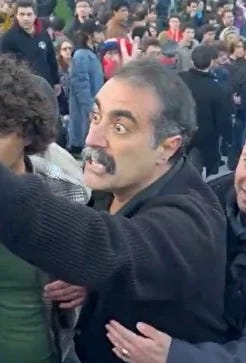
The person who attacked the Turkish youths at METU has been revealed to be İlhan Kaya, the so-called Ankara head of the DHKP-C. İlhan Kaya had been arrested and sent to prison on 27 March 2012.
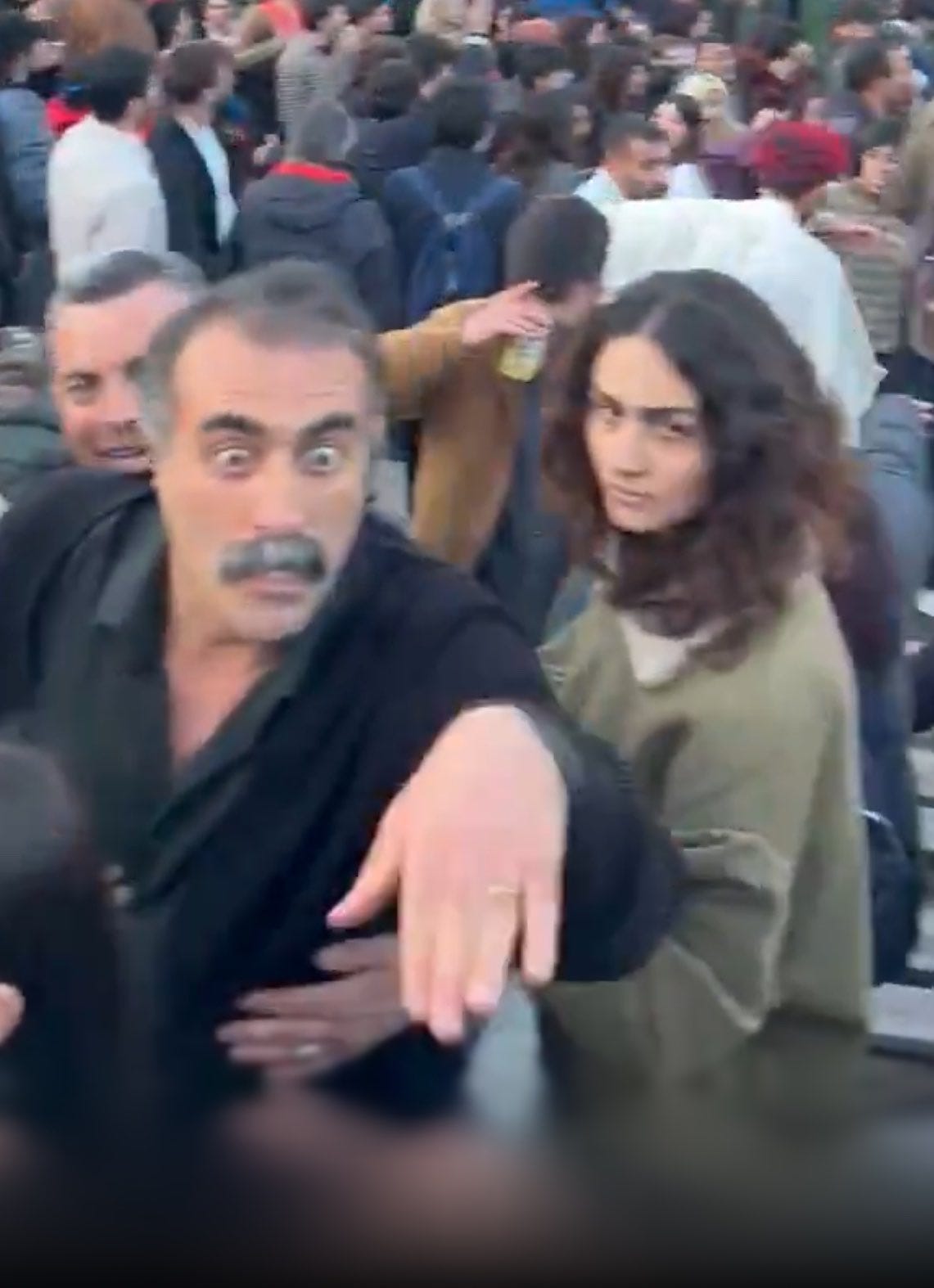
🇹🇷 Group attacked at METU concert after unfurling Turkish flag in protest
A group of young people who unfurled a Turkish flag in protest at a concert by singer İlkay Akkaya during Middle East Technical University’s (ODTÜ) spring festival in Ankara were attacked by another group, with several students reported injured and taken to hospital. According to the report, an argument broke out at the concert, held on the METU campus, between protesters who booed the stage and another group, escalating until the flag-bearing demonstrators were attacked. The fight ended with the intervention of campus security guards. Akkaya had previously been photographed in front of a poster of imprisoned PKK leader Abdullah Öcalan. According to the report, İlhan Kaya, said to be among the leading figures of the group that attacked the students, had previously served a prison sentence over membership of the DHKP-C terrorist organisation.
Opposition Parties (CHP and others)
🚽 Mineworkers’ union expert: ‘Çankaya Mayor refused even to open the toilets’
Başaran Aksu, organisation expert at Türkiye’s Independent Mine Workers’ Union (Bağımsız Maden-İş), has publicly criticised Çankaya Mayor Hüseyin Can Güner over the council’s handling of mineworkers who staged a hunger strike in the Ankara district. The Doruk Madencilik miners had camped at Kurtuluş Park demanding payment of severance, wages and benefits, ending their nine-day strike following an agreement reached at the Interior Ministry. According to Aksu, the Çankaya Municipality refused to provide the workers with accommodation and even refused to open the toilets up until the very last day, with the union expert also alleging that the mayor had directly intervened by phone to block a venue offered by the Mülkiyeliler Birliği (Civil Service School Alumni Association) for the workers to stay in, asking publicly: “Why all of this, Mr Hüseyin?” Responding to Çankaya CHP municipal councillor Aykut Canikli, who reportedly cited a wedding ceremony as the reason no space could be provided, Aksu wrote that during the entire period the miners were on site only two wedding ceremonies had been held — pointing to the thousands who came to the area as witnesses — and that the question of the toilets was beyond explanation, adding that the union’s leader had at first sent three CHP MPs to talk to the mayor separately before phoning him personally, alongside others.