

Happy Commemoration of Atatürk, Youth and Sports Day. 🇹🇷
In today's bulletin, I've only placed emojis in front of the main category headings. Let's try it this way today. That said, your opinion matters to me, should I put an emoji before every individual headline, or just the main categories? You'll find a poll at the end of the bulletin, so do have your say.
⚖️ Justice System and Everyday Life in Türkiye
Gunman alert in Mersin: 6 killed, 8 wounded in armed rampage
A man has killed six people, including his ex-wife, and wounded eight others in a series of armed attacks at a restaurant and across different neighbourhoods in Mersin, southern Türkiye. According to the account, Metin Ö. (37) shot dead his ex-wife Arzu Özden (32) with a rifle as she walked along the street in the Darıpınarı neighbourhood of the Çamlıyayla district, before fleeing the scene by car. He then drove to Sabri Pan’s (30) restaurant in the Kadelli neighbourhood of the Tarsus district and opened fire with a gun from his car window; Pan and an 18-year-old employee, Ahmet Ercan, were killed in the attack. Metin Ö. is reported to have also killed Yusuf Oktay (16) in the Kaburgediği neighbourhood, and Abdullah Koca (50) and Gökay Selfioğlu in the Yeniköy neighbourhood, wounding eight people along his escape route. Efforts to capture the attacker are continuing by land and air, with gendarmerie and police teams taking measures on roads in the Tarsus and Çamlıyayla districts and the Pozantı district of Adana, and searching the area with helicopters and drones.
Broadcast ban imposed over Mersin armed attack
Türkiye’s Radio and Television Supreme Council (RTÜK) has announced that a broadcast ban has been imposed in connection with the armed attack in Mersin. In a statement on its social media account, RTÜK said that, as part of an investigation conducted by the Tarsus Chief Public Prosecutor’s Office and in line with a decision by the Tarsus 2nd Penal Court of Peace, a broadcast ban had been issued concerning the incident in Mersin’s Tarsus district. It reminded broadcasters that, under Law No 6112 and the relevant legislation, they should scrupulously comply with the court decision.
Rasim Ozan Kütahyalı arrested
Journalist Rasim Ozan Kütahyalı, detained in an Adana-centred operation across 21 provinces targeting offences of “illegal betting”, “aggravated fraud” and “bribery and money laundering”, has been formally arrested by the court he was brought before following his processing at the police station. Of the 161 suspects detained in the investigation, 154 had previously been referred to the courthouse. Investigators examined transfers of millions of lira and transactions carried out through electronic payment institutions, while Kütahyalı rejected the accusations in his police statement. He argued that he had worked with certain financial circles in order to manage his credit card debts, while the investigation file was reported to contain MASAK (Financial Crimes Investigation Board) reports and findings on numerous money movements. Kütahyalı, who is said to have given a statement of around four hours at the Cyber Crimes Combat Branch, reportedly said he did not wish to benefit from the effective remorse provisions. Commenting in his statement on the scope of the operation, Kütahyalı said: “I will recount everything I know and have experienced. As a result of the conversations I had with the people I was held in custody with, I believe this operation was a very correct and accurate decision.” Insisting he had no connection to illegal betting organisations and had never gambled officially or unofficially in his life, he said: “Let my whole life be investigated — no trace of betting or gambling will be found.” Saying his family had been psychologically worn down by the process, Kütahyalı added: “I have made mistakes in life, but I did not commit any of the accusations that led to my detention.”
Operation against Beşiktaş Municipality: five detained
Five people, including a former deputy mayor and municipal council members, have been detained as part of an investigation conducted by the Istanbul Chief Public Prosecutor’s Office into Beşiktaş Municipality, on allegations of “taking bribes” and “laundering asset values”; digital materials were also seized in the operation. According to the prosecutor’s statement, the investigation is being carried out by teams from the Financial Crimes Combat Branch of the Istanbul Provincial Security Directorate. Five people were detained, among them a former Beşiktaş deputy mayor and municipal council members, with searches at addresses continuing and digital materials seized. Those detained were named as: former Beşiktaş Deputy Mayor Cevdet Çalı; Beşiktaş Municipality Personnel Services Manager Bülent Karakaş; Sarbel Organisation office worker Özlem Demir Karakaş; former Beşiktaş Municipality CHP council member Oylum Işık; and Beşiktaş Municipality CHP council member İlker Uluer.
110 suspects detained in ISIS operation
A total of 110 suspects have been detained in an Istanbul-centred operation across three provinces targeting the ISIS terrorist organisation. Teams from the Counter-Terrorism and Intelligence branches of the Istanbul Police Directorate carried out work to obstruct and expose the activities of ISIS, determining that suspects engaged in pro-ISIS activity were holding lessons in unlawful associations, providing education to young children in line with the organisation’s ideology, collecting money for those imprisoned over organisation-linked activities, and making radical statements at organisational meetings held within the group. The suspects were also found to be working to recruit members and selling books and magazines to cover expenses and conduct organisational propaganda. In the operation against addresses identified in the three provinces, 110 suspects were detained, with searches yielding four rifles, 90 rounds of ammunition, numerous banned publications, organisational documents and digital materials. The suspects were taken to police premises for processing.
🏛️ Politics
Erdoğan’s economy message: ‘We have made the economy resilient to shocks’
President Recep Tayyip Erdoğan has said that the Turkish economy continued to grow despite regional conflicts, announcing that national income had reached 1.6 trillion dollars and per capita income 18,000 dollars, and declaring: “We have made the Turkish economy resilient to shocks.” Speaking at the Union of Chambers and Commodity Exchanges of Türkiye (TOBB) Certificate of Honour and Plaque Presentation Ceremony, Erdoğan drew attention to the growth and export performance achieved in recent years, saying Türkiye had increased its economic resilience at a time when competition in global trade was hardening. He said that over the past 23.5 years Türkiye had made significant progress in many areas and that, with the support of the public, “we have carried Türkiye to a higher league in every field”. Erdoğan said the economy had grown by 3.6 per cent the previous year despite conflicts in the region, that national income had reached 1.6 trillion dollars and per capita income had been raised to 18,000 dollars, and that Türkiye continued to write a “success story” in exports. He said TOBB was the third-largest chamber system in the world by services produced and the locomotive of the economy, and credited it with helping bring the domestic TOGG car to life, which he said continued to adorn the roads in many European countries, adding that while Türkiye was trying to tear down “walls of learned helplessness”, some were constantly putting obstacles in its way, to whom he would give no quarter. He said foreign trade volume had been raised to 820 billion dollars and goods and services exports to 396 billion dollars, with the 400 billion dollar mark to be passed in the very near future. Acknowledging that “not everything is rosy”, Erdoğan said the government did not see the economy as merely figures, continued to keep its finger on the pulse of the street and the marketplace, and that the economic management was taking and would continue to take every measure, adding that the country faced a form of profiteering that could not be explained by increases in production and transport costs.
Erdoğan: ‘The 21st century will be the Turkish century’
The Presidential Cabinet Meeting chaired by President Recep Tayyip Erdoğan has concluded, with Erdoğan delivering an address to the nation afterwards in which he said the 21st century would be “the Turkish century”. The meeting at the Presidential Complex lasted around two hours. Erdoğan said the scale of the destruction caused by the shockwave of the US and Israeli attacks on Iran — which had struck the world “like a tsunami” — could not yet be fully gauged, and that a handful of “wild capitalists” commanding hot money were enriching themselves further by all but seizing the food from the throats of billions. He argued that, in a global system in which the region was passing through “a ring of fire”, the opposition was duty-bound to act at least as sensitively as the government and to display a “national and domestic” stance, accusing the opposition of choosing to turn the Iran war and its aftermath into a tool of exploitation for political gain rather than offering constructive criticism. He said that, although a return to the pre-war period would take some time, the country would continue on its way far stronger than before. Erdoğan said that, with the “Turkic World Vision”, the government was bringing to life the dreams of those who had been thrown into “torture chambers” during the single-party era for saying “there are Turks outside Türkiye too”, and vowed not to allow the struggle to bring Türkiye new successes to be interrupted. He added that with Türkiye’s liberation from the “shackles of terror” that had bound the country’s foot for half a century, an entirely new path would open before it.
Fidan conducts telephone diplomacy on Iran–US negotiations
Turkish Foreign Minister Hakan Fidan has held a series of telephone calls with Qatar’s Prime Minister and Foreign Minister Mohammed bin Abdulrahman Al Thani, Jordan’s Foreign Minister Ayman Safadi, and US negotiators regarding the negotiations between Tehran and Washington. According to sources at the Turkish Ministry of Foreign Affairs, in his calls with his Qatari counterpart Al Thani, his Jordanian counterpart Safadi and the US negotiators, Fidan discussed the point reached in the negotiations between Iran and the United States.
Germany to deploy Patriot system and troops to Türkiye
Germany has announced that it will deploy a Patriot air defence unit and 150 troops to Türkiye from the end of June. According to a written statement from the German Defence Ministry on 18 May, the German Armed Forces (Bundeswehr) will support NATO’s integrated air defence on the alliance’s south-eastern flank with a Patriot Air and Missile Defence Task Force in Türkiye, with the mission currently envisaged to last until September; the German task force will replace a US unit in the region, and the Patriot system will be supplied from the 1st Air Defence Missile Squadron based in Husum, Germany. The announcement came after Türkiye and Germany revived their Strategic Dialogue Mechanism following a 12-year gap, with the mechanism’s third meeting held in Berlin on 18 May, chaired by Foreign Minister Hakan Fidan and German Foreign Minister Johann Wadephul; the Strategic Dialogue enables the two countries to focus on security and defence matters, particularly strategic issues. German Defence Minister Boris Pistorius said his country was taking on greater responsibility within NATO, including on the alliance’s east, north and south-east, adding that German soldiers working in close coordination with Turkish and US partners showed how reliable cooperation with allies was. Germany’s Ambassador to Türkiye, Sibylle Katharina Sorg, said on X that the German Armed Forces were thereby “supporting Türkiye as an important NATO ally”. On the broader picture, the Ministry of National Defence (MSB) announced in March, following attacks, that Patriot systems had been deployed to İncirlik in Adana and to Malatya, supplied from the Ramstein air base in Germany; for more than a decade Türkiye had had only a single Patriot system, deployed by Spain at the İncirlik base in Adana. Patriots were first deployed to Türkiye during the 2003 Iraq War by the US, Germany and the Netherlands, and withdrawn after around two months; following the start of the Syrian civil war, Patriot systems were placed on the Syrian border at Türkiye’s request, with two US batteries deployed to Gaziantep, two German batteries to Kahramanmaraş and two Dutch batteries to Adana in 2013. In 2015 the US and Germany announced the system would be withdrawn with no extension of the deployments, and that January Spain took the Netherlands’ place, with the Spanish Patriot unit stationed in Adana for over a decade since. The Patriot is an advanced surface-to-air missile system designed to defend against aircraft, cruise missiles and ballistic missiles; production began in 1980 and it was first used in combat in 1990–91 after Iraq’s invasion of Kuwait, though its performance against Iraq’s Scud missiles proved less impressive than initial statements suggested, with numerous upgrades since giving it strong defensive capabilities, particularly against ballistic missiles. The system is produced by the American company Raytheon Technologies (RTX), and a Patriot unit consists of personnel, a fire control centre, a multifunction radar system, up to eight launchers, a power supply system and a communications team, usually supported by additional headquarters and personnel.
Claim of 13.8 million-strong illegal betting list: heavy fines may await players
An 80-terabyte digital archive said to have been seized in cyber operations is alleged to contain the identity, banking and financial data of people assessed to have placed illegal bets in Türkiye, raising a new debate that directly concerns millions. The claim of “13.8 million users’ data” emerging in the major illegal betting investigation conducted by the Istanbul Chief Public Prosecutor’s Office has brought with it questions affecting millions of people. According to the investigation file, a digital finance network said to have been set up along a Malta–Bulgaria–TRNC–Dubai axis is alleged to have managed roughly 3 billion dollars a month in illegal betting and online gambling traffic, with one of the figures at the centre of the system said to be Burak Başel, presented in the TRNC as a “FinTech entrepreneur”. One of the most critical dimensions of the investigation, however, concerns the legal consequences for the millions of users alleged to feature in the systems. Under Turkish law, “playing” illegal bets is not a crime in the criminal-law sense but a “misdemeanour”: under Article 5 of Law No 7258, those who place illegal bets face an administrative fine, while those who run betting, facilitate money transfers, advertise or provide system infrastructure face imprisonment. In practice, however, experts say the process may not be limited to a fine alone. Investigations are said to identify illegal betting users mostly through bank account movements, FAST/EFT records, Papara-type payment systems, crypto transfers and virtual POS records, and if the vast seized data archive is decoded, the payment movements of millions could come under MASAK (Financial Crimes Investigation Board) and prosecutorial scrutiny. According to lawyers, merely being a member of a betting site is not in itself a crime, but membership records combined with money transfers can be treated as the “beginning of evidence”. Although the sanction for placing illegal bets is an administrative fine, individuals can first be called to give a statement as “suspects”, and lawyers note that in large operations prosecutors can resort to measures such as freezing bank accounts, examining digital assets and imposing foreign travel bans, while it is also separately investigated whether the person was merely a player or engaged in activities such as moving money into the system, brokerage or letting others use their account — since under the Turkish Penal Code and Law No 7258, lending an IBAN, facilitating money transfers, providing a virtual POS, advertising and steering are among the offences directly requiring imprisonment. Although the basic penalty range in Law No 7258 appears lower, owing to revaluation rates the administrative fines applied to those placing illegal bets as of 2026 are said to reach between 100,000 and 400,000 lira, with such fines open to challenge before the Penal Court of Peace within 15 days of notification.
Young people change cities most often for education
Türkiye’s Statistical Institute (TÜİK) has published its “Statistical Information Document on Youth” to mark 19 May Commemoration of Atatürk, Youth and Sports Day. According to the figures, one in every seven people in Türkiye is young, with the population aged 17–24 standing at 12.7 million. The secondary education completion rate among young people is 81.3 per cent, while Türkiye’s net higher education enrolment rate is 39.9 per cent for men and 53 per cent for women. The proportion of married young women is 3.5 times that of married young men, indicating that women marry at much younger ages. In the 15–24 age group, roughly one in every 14 young people migrates between provinces, with education the leading reason at 48.7 per cent, followed by finding or starting a job at 11.1 per cent; the proportion of women migrating for education is 52.9 per cent against 42.9 per cent for men, while the proportion migrating to find or start a job is 9.7 per cent for women and 13.1 per cent for men. The rate of young people aged 15–24 who are neither in education nor employment was calculated at 23.3 per cent. Of young people in employment, 11 per cent work in agriculture, 30.5 per cent in industry and 57.9 per cent in services. Four in every ten young people use artificial intelligence — 38.3 per cent of men and 40.5 per cent of women — with AI used most for personal purposes at 75.3 per cent, for education at 53.9 per cent and for work at 19.7 per cent.
🤝Ruling Government (AKP, MHP and DEM coalition aka People’s Alliance)
AKP responds to youth festival criticism: ‘You should really ask Eser Yenenler why he wanted to host it’
AKP Central Executive Committee member and head of Promotion and Media, Faruk Acar, has responded to social media criticism over the party’s youth festival, saying: “You should really ask Eser Yenenler. Why did he want to be on the AK Party’s programme? Why, having said ‘Everything will be very beautiful’ that day, did he now want to host the AK Party’s programme?” The AKP Youth Branches’ festival has been among the most-discussed topics on social media in recent days, with claims that some students were taken to the event under the guise of a “free trip” without their knowledge, and that 100,000 people were gathered in a stadium with a 35,000 capacity. Also debated was the fact that Eser Yenenler — who had tweeted “Everything will be very beautiful”, a phrase associated with support for detained Istanbul Metropolitan Mayor and CHP presidential candidate Ekrem İmamoğlu — was the host of the night, with the AKP event criticised from both government and opposition quarters. Responding, Acar said the AKP was “a centre party”, that the Presidential Government System required 50 per cent plus one, and that it was a mass party and a leader’s party, noting that “there were our sisters in headscarves there, and there were also our siblings who embrace a secular style”. Speaking to İsmail Saymaz of Halk TV, Acar rejected claims that the young people did not know where they were going, saying the buses bore logos and AK Party branding, that they knew where they were going, and that they were invited people. On the criticism of Yenenler hosting, Acar said it was a “completely professional process”, suggesting Yenenler should be asked why he wanted to take part, that perhaps there had also been a fee-based arrangement that day — he could not know — and that he did not wish to encroach on anyone’s rights, adding that they were not approaching the matter through the lens of Yenenler’s support for İmamoğlu. Describing the presence of an influencer who had posted about Emine Erdoğan on social media as an “oversight”, Acar said the person had not given the president an award but a picture, having made a request that the party had approved, in a decision taken by the youth branches that “developed spontaneously”. Asked whether the grassroots were right to be angry, he said they were “absolutely right” and that such anger was fair enough, suggesting the situation may have arisen in connection with protecting “the lady’s sensitivity”, and that they had themselves posted asking “how was this not noticed”, adding that they had been told no award was in question and that the girl had handed over a picture — “I wish it had been noticed; we would not have allowed it.”
MHP holds ‘Grand Congress of Turkish Youth’ in Ankara
The “Grand Congress of Turkish Youth”, prepared on the instructions of MHP leader Devlet Bahçeli, is to be held today at the Ankara Sports Hall with the participation of numerous guests from the Turkic world. Ahmet Yiğit Yıldırım, head of the Idealist Hearths (Ülkü Ocakları) Education and Culture Foundation, said in a statement that the congress would begin at 10:00, that it would be a historic gathering setting out the intellectual, technological and moral claim of Turkish youth, and that a preceding “Turkish Youth Workshop” had been held in which topics such as education, technology, culture, national identity, the Turkic world, digital transformation, family structure and combating addiction were discussed with academics and experts, with the workshop report’s final declaration to be shared on the day of the congress. Yıldırım said the aim was to create a youth structure that did not merely talk but produced ideas, developed solutions and shaped the future, and that the technology and innovation fair held within the congress was of great importance because “we are directing the energy of our young people not to the street but to the future”. He said Bahçeli had set the “Turkish Century” as a target and that work was continuing to raise, under the Idealist Hearths foundation, the cadres who would make the 21st century a Turkish one, stressing that Bahçeli attached great importance to youth and offered them broad opportunities. Saying Bahçeli would address young people at the congress, Yıldırım invited all young people to attend, declaring that “today, in the light of Independence, we will show everyone how we are walking towards the Turkish Century”, and said plaques would be presented to members of the “Asena” organisations who had won championships in sports competitions, followed by performances from Idealist Hearths central artists. He said large numbers of young people from across Türkiye and the Turkic world would attend — “God willing, we will see hundreds of thousands of our grey wolves in Ankara” — and that the congress would send “a very strong message from Ankara to the world”, showing the will and determination of Turkish youth to “circles making calculations over Türkiye” and demonstrating that a disciplined, orderly youth of high national consciousness was being raised. Yıldırım also highlighted the “Tekno Ocak Festival” to be held as part of the congress, where projects developed by university students would be exhibited; the festival would take place after the congress at the ATO Congresium and could be visited by congress guests. Among the festival’s prominent elements, he said, would be the “Göktay 1” and “Göktay 2” racing vehicles developed by the İzmir and Bursa Idealist Hearths and the “Türkan” unmanned aerial vehicle — all named personally by Bahçeli — with first test drives to be carried out and the projects set to represent Turkish youth abroad, demonstrating what Turkish youth could achieve in science, technology and defence. The leader’s desired youth, he said, was not merely a crowded one but disciplined, moral and of high patriotism and national consciousness, which would be shown together in the hall on the day of the congress.
AKP cool again as Bahçeli’s process message stirs coalition tensions
MHP leader Devlet Bahçeli’s latest remarks on the resolution process — emphasising that “moves that will reach a result must now be made”, that “a communication gap is being experienced” and the need for “legal regulations” — have stirred AKP back-channels and brought differences within the ruling People’s Alliance over the management of the process back onto the agenda. According to a report by Merve Kılıç in Cumhuriyet, Bahçeli’s listing one by one of the steps the state should take prompted comments in Ankara that “MHP is uncomfortable with the government’s failure to act”, with his references to “activating institutions”, “making legal and administrative arrangements” and “authorising state institutions to monitor developments” read within the AKP as “MHP now expecting concrete steps on the political and legal ground”. AKP sources said the weight of the security bureaucracy had increased of late and that the expectation of the organisation disarming with all its elements continued, while MHP was said to be keeping its distance from advancing the process only through its security dimension; Bahçeli’s particular emphasis on the commission report was interpreted as a message that “the parliamentary track should not be deferred any further”. Some figures within the AKP were said to argue that “the process should advance in a controlled manner”, whereas MHP wanted the political and legal headings advanced simultaneously, with Bahçeli’s “communication gap” remark also seen as aimed directly at the management of the process. One of the most striking parts of his statements concerned disarmament: after saying that “the determination to lay down arms must be brought to a conclusion by being put into practice”, Bahçeli’s use of the phrase that the state should act “with the power to neutralise those who do not lay down arms” was assessed in Ankara as “an open admission that the organisation has not yet fully disarmed”. AKP strategists likewise argued that the security dimension was not yet complete and that “the picture on the ground must become clear” before moving to the legal stage, with assessments within the party that “discussions of a new status or political role are premature before disarmament is completed”. AKP sources said Bahçeli too had stated that the organisation had not disarmed with all its elements, voicing the view that “under these conditions no legal regulation can come onto the agenda — the organisation must first lay down arms completely”, with the party’s emphasis on “state reflex” and the “national security line” coming to the fore and President Recep Tayyip Erdoğan said to be pursuing a “controlled and cautious” approach. Another point drawing attention in the corridors was Bahçeli’s language on PKK leader Abdullah Öcalan: having previously raised the “right to hope” debate, he was said to be making the “status” emphasis more visible as the process advanced, with his latest phrase about Öcalan being “equipped with a social status, his state of conviction notwithstanding” carefully assessed in government circles. Bahçeli’s “Peace Process and Political Engagement Coordinator” proposal was reported to have prompted differing interpretations within the AKP, whose strategists insisted their line had not changed, repeating the “full disarmament first” condition and saying no legal regulation or political-role discussion would arise if the organisation did not disarm with all its elements — with a broad section within the AKP said to be keeping its distance from proposals to assign Öcalan a new mission during the process. In Ankara back-channels, Bahçeli’s remarks were said to have created “a new ground for bargaining over the direction and tempo of the process” within the People’s Alliance, with both the security bureaucracy and contacts on the parliamentary track expected to pick up pace again in the coming days.
Şamil Tayyar’s ‘black bag’ admission: ‘No trace of the alleged set-up against Veli Ağbaba’
AKP MP Şamil Tayyar has said that the “250,000-dollar black bag” claim raised about CHP Malatya MP Veli Ağbaba some two years ago was investigated and that no findings were reached. Tayyar said that two investigators assigned on the instruction of Parliament Speaker Numan Kurtulmuş had taken the statements of nearly 50 people — from cleaning staff to advisers — and examined camera footage second by second, and that the comprehensive inquiry had officially established that no incident of a bag full of money, as alleged, had taken place. In his post, Tayyar recalled that about two years ago it had been claimed that a black bag containing 250,000 dollars had been found in parliament and that Ağbaba had later taken it, saying “it’s mine”. He said he had spoken to a contact in the parliamentary administration about what had become of the bag, recalling that three MPs, including Ağbaba, had petitioned the Parliament Speaker’s Office for the claims to be investigated, that on Kurtulmuş’s instruction two investigators had been assigned, nearly 50 people such as cleaning staff, tea servers and advisers had given statements, and corridor camera footage had been examined — with the result that the investigators could not establish a black bag incident as alleged. Tayyar added that anyone with information, documents, or who had heard or seen anything could apply, in which case investigators would be reassigned and the matter reinvestigated, saying the Speaker had pursued every claim but the allegation could not be confirmed in the inquiry, and signing off: “Right is right, wrong is wrong.”
🗳️ Opposition Parties (CHP and others)
New ruling in İmamoğlu diploma cancellation case
The Istanbul 7th Administrative Litigation Chamber has rejected the appeal lodged by Ekrem İmamoğlu after the Istanbul 5th Administrative Court dismissed the case he had brought against the cancellation of his diploma, finding the lower court’s ruling to be in accordance with procedure and law. İmamoğlu’s lawyers had brought a case against the cancellation of his university bachelor’s degree diploma, which the Istanbul 5th Administrative Court rejected; in the grounds for that rejection, the court had stated that the errors made by the administration during the granting of the lateral transfer were not at the level of oversights or mistakes made through carelessness (inadvertently), and that it would be contrary to the ordinary course of life for such grave legal defects and erroneous situations to have been unknown to the claimant. İmamoğlu’s lawyers appealed against the Administrative Court ruling to the Istanbul Regional Administrative Court, requesting that the 5th Administrative Court’s ruling of 23 January 2026 be examined and overturned on the grounds that the action subject to the case had been established through a usurpation of authority by a body that was not competent or authorised — that the decision should have been taken by the Faculty Board of Directors but was instead taken by the University Board of Directors, and that the constitution of the University Board of Directors without the Dean of the Faculty of Business Administration was unlawful — and that a fresh decision be given on the merits. The Istanbul 7th Administrative Litigation Chamber rejected the appeal, also declining the claimant’s request for a hearing at the appeal stage and examining the application on the basis of the file. In its grounds, the chamber recalled that under Article 45(3) of Administrative Procedure Law No 2577, a regional administrative court that finds the first-instance court’s ruling to be in accordance with law shall reject the appeal, making any possible correction of material errors and issuing the same ruling. It stated that, as the Administrative Court ruling subject to the appeal was in accordance with procedure and law and the arguments raised in the appeal petition were not of a nature to require the ruling’s annulment, the appeal had been rejected under Article 45(3). İmamoğlu’s lawyers may apply to the Council of State on appeal within 30 days of notification against the chamber’s ruling, taken unanimously on 13 May 2026.
İYİ Party MP Ersin Beyaz resigns from his party
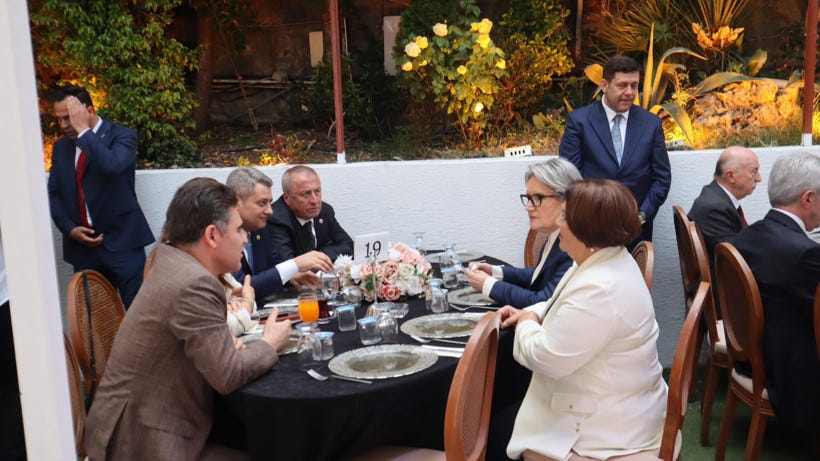
İYİ Party Istanbul MP Ersin Beyaz has announced his resignation from the party, saying that “the incompatibility between the principles we believe in and actual reality has made it impossible for me to continue my political activities under the İYİ Party roof”. In a statement on social media, Beyaz said his İYİ Party period — during which he took office as Founding Istanbul Provincial Chair on 1 November 2017, assuming all material and moral responsibility — would always remain a valuable memory for him, and that he had striven to do politics with an approach that did not disrespect its past, struggle and values, and would continue to do politics with the same respect for the nation. Saying it was clear that politics in Türkiye was increasingly proceeding along an axis of sharpening bloc divisions, in which the room for expansion of political structures seeking to balance different political lines was narrowing and their capacity to generate social resonance was being limited, Beyaz said he observed with sorrow that the strong claim and wave of hope İYİ Party had carried at its founding had failed to produce the expected effect. His thoughts, experiences and observations showed, he said, that the effort carried out with a sense of responsibility towards the nation had been frustrated by an implicit alliance of approaches lacking a will to grow, with a passive continuity being reinforced instead of a vision to mobilise the organisation’s dynamism — and, moreover, that this stagnation had been institutionalised, contrary to the organisation’s expectations, with central backing. The public could see, he said, that there was a clear distance between expectations of a political leap and the current approach, and that priority was being given to continuing the existing political understanding rather than a new vision responsive to changing social and political needs; observing the gap between the values he represented and the current functioning widening by the day had created a deep contradiction between his political responsibility and his personal conviction, making it impossible to continue. With Beyaz’s resignation, İYİ Party’s number of seats in parliament fell to 29.
Thanks for reading this far, I will see you tomorrow. ☕