

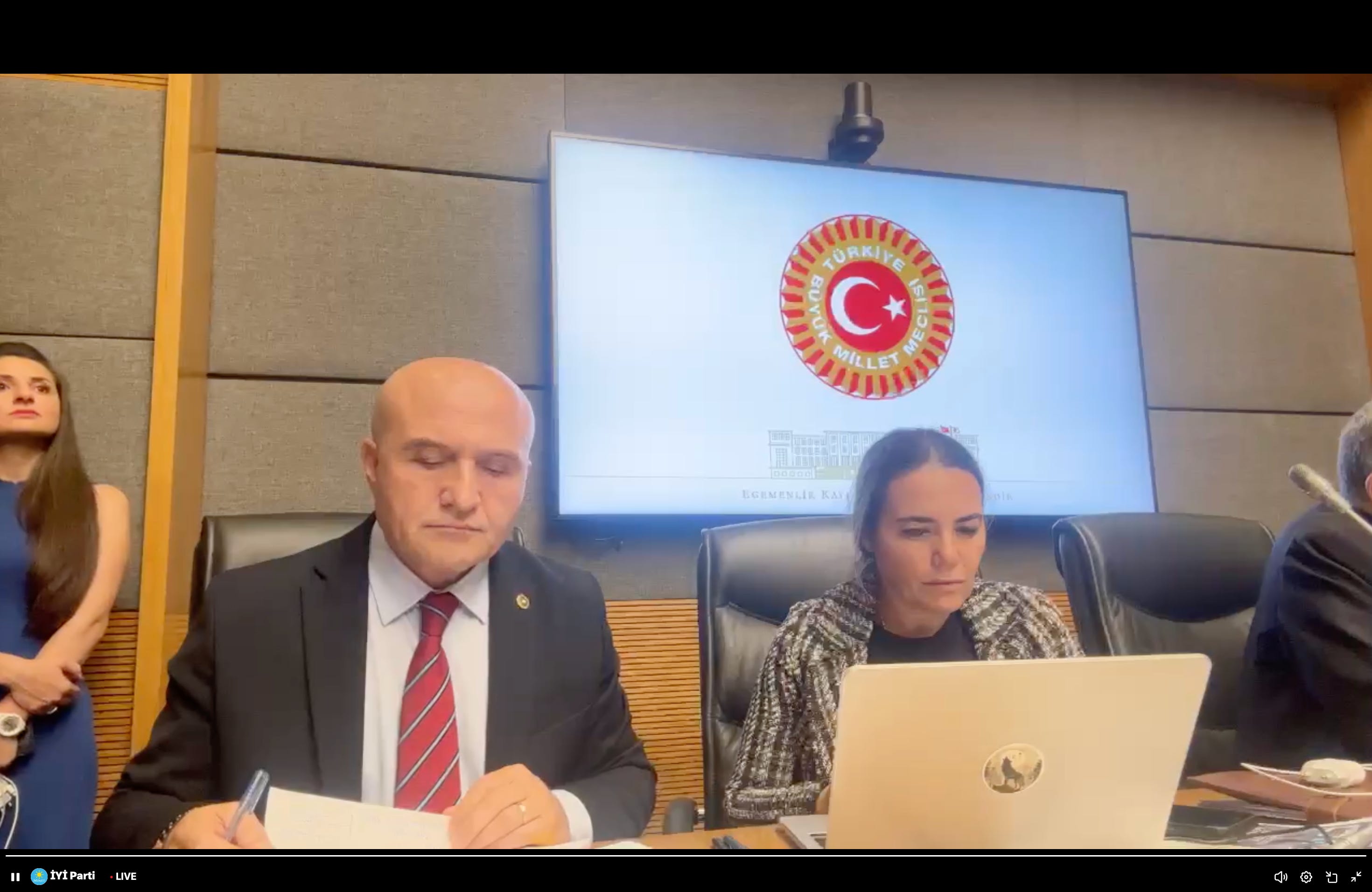
Below, you can watch the ongoing debates on the “Millî Dayanışma ve Toplumsal Bütünleşmenin Güçlendirilmesine Dair Kanun Teklifi” (Draft Law on Strengthening National Solidarity and Social Integration):
https://x.com/iyiparti
It was a long day for me in the parliament. Tomorrow I’ll be on duty, so whether I can manage an early bulletin or not, we shall see.
⚖️ Justice System and Everyday Life in Türkiye
Four aircraft that served in forest fires in Spain and France return to Turkey
The General Directorate of Forestry (OGM) has announced that four aircraft which took part in firefighting efforts in Spain and France have completed their missions and returned to Turkey. In a statement on social media, the OGM said the four aircraft assigned to firefighting work in the two countries had successfully completed their missions and returned home, adding that since 2020 Turkey had provided 24 aircraft and 23 helicopters to eight countries and would continue to take on international responsibility in the awareness that forests are a shared value of all humanity. The directorate thanked President Recep Tayyip Erdoğan, who ordered the deployment, Agriculture and Forestry Minister İbrahim Yumaklı, and the pilots and crew who completed their duties, and warned that fire risk persists in Turkey as across Europe, calling for caution to protect the country’s “green homeland” and shared future.
🏛️ Politics
Defence agreement between Turkey, Saudi Arabia and Pakistan
As President Erdoğan set off for Saudi Arabia on a day-long working visit, security sources have reported that Turkey, Saudi Arabia and Pakistan will sign a trilateral defence agreement in Jeddah today. During his contacts, Erdoğan is expected to meet Saudi Crown Prince Mohammed bin Salman and Pakistani Prime Minister Shehbaz Sharif, with an agreement to strengthen defence cooperation between the three countries also anticipated. According to information from security sources, a defence alliance between Turkey, Saudi Arabia and Pakistan is expected to be signed today — a development reached after months of negotiation and diplomatic efforts and regarded as significant for preserving peace and stability in the region and the wider area.
President Erdoğan to visit Saudi Arabia tomorrow
Communications Director Burhanettin Duran has announced that President Recep Tayyip Erdoğan will make a day-long working visit to Saudi Arabia on 7 August, during which he is expected to meet Saudi Crown Prince and Prime Minister Mohammed bin Salman bin Abdulaziz Al Saud and Pakistani Prime Minister Shehbaz Sharif. In a statement on social media, Duran said Erdoğan would carry out the day-long working visit on 7 August 2026, and that the president was expected to come together with the Saudi crown prince and the Pakistani prime minister within the framework of the visit.
Minister Gürlek: end of terrorism will increase the security of trade corridors
Justice Minister Akın Gürlek has said that the end of terrorism will narrow the scope for external intervention and increase the security of trade corridors, energy projects and transport lines, in his assessment of the Bill on Strengthening National Solidarity and Social Integration submitted to parliament. In a video post on social media, Gürlek said the bill aimed to strengthen social solidarity, reinforce a shared sense of belonging and eliminate the grounds on which terrorism could again be exploited. He said its provisions could only be applied once the terrorist organisation’s de facto existence had entirely ended and all weapons and ammunition under its control had been irreversibly destroyed — a determination to be made by the security institutions, confirmed by the National Security Council (MGK) and published in the Official Gazette — with a board chaired by the vice president and a monitoring commission in parliament overseeing the process. Gürlek stressed that the bill contained no provision for those who issued terror orders or killed members of the security forces, granted no one special status, and would be conducted within the framework of the constitution and the rule of law, with the sensitivities of the families of the fallen and of veterans as its fundamental measure. He described a terror-free Turkey as the shared goal of the country’s 86 million, meaning a stronger economy, democracy, investment climate and development, and said the vision extended beyond internal security to a Syria cleansed of terrorism, a more stable Iraq, a more peaceful Middle East and stronger regional cooperation. The report adds that Gürlek held two meetings the previous day — with the family of former Special Operations Department head Behçet Oktay, who want the role of FETÖ in his death re-examined, and with the family of investigative journalist Uğur Mumcu, killed in a bombing in Ankara on 24 January 1993, to discuss the latest status of and new work on the cases.
Two critical meetings for Justice Minister Gürlek: Uğur Mumcu and Behçet Oktay files on the table
Justice Minister Akın Gürlek held separate meetings with the families of Special Operations Department head Behçet Oktay and journalist Uğur Mumcu, at which requests for the re-examination of two long-disputed cases were addressed. Gürlek first met the family of former Special Operations Department head Behçet Oktay — who died in Ankara’s Dikmen district in 2009, found gravely wounded beside his car and pronounced dead in hospital — at 10am; no perpetrator was identified in the ensuing investigation, and the then prosecutor’s office issued a decision of non-prosecution for lack of sufficient evidence of another person’s intent or involvement. Oktay’s family, who maintain the death was not suicide, argue that FETÖ played a role and want the file reconsidered on that basis, with his elder brother having previously said Oktay had spoken of being “heavily pressured” and of having reached significant information about FETÖ. Gürlek’s second meeting was with the family of journalist Uğur Mumcu, killed in a 1993 car bombing, who had requested an appointment seeking the re-examination of the assassination file within the Justice Ministry and the resolution of uncertainties in the case, to which the minister responded positively.
Stay silent and you’re ‘free’: 76 violations in six months
Pressure on social opposition and interference with press freedom in Turkey have reached the level of interference with the right to freedom of expression, with the Constitutional Court (AYM) finding 76 violations of freedom of expression in the cases it examined in the first half of 2026 alone, according to a report in BirGün. The article argues that Turkey’s justice system has been badly damaged by decisions said to be taken on political grounds, that public trust in the judiciary has collapsed, and that debate over judicial independence and impartiality has deepened year on year under AKP governments. It notes that the right of individual application to the Constitutional Court, granted to citizens from 23 September 2012, has made increasingly frequent rights violations visible: a total of 85,004 rights-violation rulings were issued between 3 September 2012 and 30 June 2026, with 485 in the January–June 2026 period alone. Of these, the 76 freedom-of-expression violations found in the first half of 2026 brought the total identified since September 2012 to 4,972. The report contends that the obstructive approach to freedom of expression targets the whole of the social opposition, with journalists the most affected — many facing investigation over their journalism, and new names added each year to those imprisoned as detainees or convicts over their reporting.
Constitutional Court: failure to update trans person’s diploma details violates right to respect for private life
Turkey’s Constitutional Court (AYM) has ruled that the failure to reissue a trans man’s university diploma in line with his new identity details violated his right to respect for private life, finding that the lower and appellate courts had failed to set out sufficient reasons for rejecting his request. According to the decision published in the Official Gazette, the applicant, E.D., changed his first name by court order in 2016 and had his sex record corrected from female to male by a court decision that became final in 2018; a 2014 graduate of Bartın University’s Faculty of Economics and Administrative Sciences, he asked for his diploma — issued with his former name and sex — to be reissued to match his new details. The university, relying on Higher Education Council regulations, said the diploma could not be reissued but that an explanatory annotation could be added, and E.D.’s case was rejected by the administrative and appellate courts. The Constitutional Court held that information about a person’s gender transition and former identity falls within the right to privacy, that the administrative and first-instance courts had not substantively assessed E.D.’s arguments but relied only on secondary legislation, and that they had failed to give relevant and sufficient reasons as to why refusing to reissue the diploma was necessary and proportionate — upsetting, to the applicant’s detriment, the balance to be struck between the public interest and his individual interest in his private life. On these grounds the court ruled that the right to respect for private life guaranteed under Article 20 of the constitution had been violated. Two members, Muhterem İnce and Ömer Çınar, dissented, arguing that the name change did not alter the applicant’s personal situation, that adding an annotation to the diploma was sufficient, and that not reissuing it did not impose an excessive burden on him.
Lieutenant İzzet Talip Akarsu, dismissed from the armed forces, backs veterans on hunger strike: ‘A martyr or veteran holds no rank!’
İzzet Talip Akarsu, a lieutenant dismissed from the Turkish Armed Forces, has visited the families of fallen conscripts and the veterans protesting in Ankara’s Güvenpark for equal personal and social rights, expressing support for their cause. In a statement on social media recalling that the protesters had waited in the rain and gone on hunger strike, Akarsu said he stood shoulder to shoulder with the veterans in the park he had often passed through in his school days. He said the protesters had struggled for a long time to make their demands heard, that they had “laid themselves under the flag while still alive”, and that they summed up their wishes in a single sentence: “A martyr or veteran holds no rank.” Concluding that he was by their side, Akarsu said he stood with the veterans who are witnesses to the fallen and wished the protest’s leader, Erdem Çerçioğlu, success in their just struggle.
Minister Ersoy meets Acun Ilıcalı: they exchanged views
Culture and Tourism Minister Mehmet Nuri Ersoy has hosted the television presenter and producer Acun Ilıcalı at the Culture and Tourism Ministry, where new ideas for bringing Turkey’s cultural, artistic and tourism assets to wider audiences were discussed. The meeting, also attended by the minister’s chief adviser Tayfun Topal, addressed efforts to increase Turkey’s promotional strength in culture, art and tourism, and considered the role that media and content production could play in reaching broader audiences. In a post on social media afterwards, Ersoy said they had assessed ways to boost the country’s promotional power in these fields, examined the part media and content creation could play, and held a productive discussion on new ideas to bring Turkey’s rich cultural heritage and unique tourism assets to wide audiences, thanking Ilıcalı for his visit and his valuable input.
Second year of the stray animals regulation: what happened on the ground, and what the sides say
Two years after the amendment to the Animal Protection Law — dubbed the “massacre law” by some animal lovers — came into force on 2 August 2024, BBC Türkçe has examined the situation of stray animals, amid official figures of mass collection and disputed claims of mass killings. The regulation provides for stray animals to be gathered and cared for in shelters, and allows euthanasia for those posing a danger to human or animal health, with uncontrollable behaviour, or with contagious or incurable illness. Interior Minister Mustafa Çiftçi said on 18 July that 92.35 per cent of Turkey’s stray animals had been collected, framing the policy as making streets safer and improving animal welfare, while ministry officials had earlier put the number of street dogs at around 1.25 million; the Agriculture and Forestry Ministry reported 386 shelters and 102 natural habitats with a 413,000-animal capacity as of February 2026, housing 244,000 animals. Animal rights advocates painted a grimmer picture: lawyers Deniz Tavşancıl and Tuğba Gürsoy alleged that animals were being collected brutally across the country, with many dying in vehicles from high-dose anaesthetics, overcrowding or neglect, and Gürsoy questioned how 52,000 dogs said to be collected in Ankara squared with a shelter capacity of around 13,000. Activist Alper Karmış described extreme overcrowding and high death rates in shelters he visited, citing one in Kars — a claim the municipality denied, saying no evidence supported it and that medical care was provided without delay. Ankara Metropolitan Municipality veterinary affairs head Mustafa Şener rejected claims of stacking animals in vehicles and of violence, saying its vehicles were ventilated and air-conditioned and that no collection team was sent without a vet, while arguing that complaints against municipalities were linked to donations collected by private facilities. On solutions, dog behaviour expert Gökçen Yücekaya called adoption the animals’ only route out; Tavşancıl proposed a three-year ban on animal sales; and HAYKONFED deputy head Haydar Özkan stressed neutering, warning that gathering animals without it would not stop uncontrolled breeding and calling for a law that keeps animals alive.
‘Terror-free Turkey’ emphasis at National Security Council
The National Security Council (MGK), meeting under the chairmanship of President Recep Tayyip Erdoğan, has assessed the progress made in work towards the goals of a “Terror-Free Turkey” and a “Terror-Free Region”, holding consultations on the subsequent stages of a process meant to make security, stability and prosperity permanent. In its written statement following the meeting at the Presidential Complex on 6 August 2026, the council said it had been briefed on activities conducted against threats to national unity and survival — chiefly the PKK/KCK-PYD/YPG, FETÖ and DAESH terrorist organisations — and on recent international developments. The council said progress towards the terror-free goals constituted a historic milestone, and, on the tenth anniversary of the national resistance to the 15 July coup attempt, that measures to eliminate FETÖ entirely would be pursued carefully. It described the NATO Summit hosted by Turkey as a critical threshold for the alliance’s future, pointed to the risks of renewed Iran–US clashes spreading to regional countries and global trade routes, and called on all parties to refrain from using force and return to negotiations. The council also warned against the Russia–Ukraine war turning the Black Sea and Caspian regions into conflict zones, underlined the importance of multidimensional cooperation with Syria and Iraq, and stressed that the international community must take a clear and uncompromising stance against Israel — which, it said, continued to violate the ceasefire despite recent progress under the Gaza Peace Plan, escalated settler terror in Palestinian territories and pursued provocative attacks on holy sites including al-Aqsa Mosque.
🤝Ruling Government (AKP, MHP, CHP and DEM coalition aka People’s Alliance)
Framework law submitted to parliament: what happens to PKK members in northern Iraq and Syria?
The framework bill, the Bill on Strengthening National Solidarity and Social Integration, has been submitted to the parliamentary speaker’s office with the signatures of close to 360 MPs, and is due to be debated in committee on Friday 7 August and in the General Assembly on Sunday 9 August, raising the question of what will happen to PKK members in northern Iraq and Syria and whether their return is possible. The bill was submitted with the support of the AKP and MHP, and also signed by CHP group deputy chairs, the co-chairs, group deputy chairs and a parliamentary deputy speaker from the DEM Party, HÜDA PAR, two Yeni Yol MPs, DBP MPs and independents; the Yeni Party said it would decide after examining the text, while the İYİ Party, which did not sign and argues the bill is unconstitutional, had its proposal for a general debate rejected. A comprehensive process is expected regarding organisation members in northern Iraq and Syria. According to a report by Nefes, around 2,500 people who have severed their ties with the PKK and built jobs and families now live in northern Iraq, and the bill would open the door for their return: those living with the Kurdistan Regional Government’s permission in and around Erbil, Sulaymaniyah, Duhok and Salahaddin are reportedly preparing to cross via Habur to Silopi to surrender. A further 1,500 people with finalised terror convictions upheld by the Court of Cassation are said to be in northern Iraq, where the number of armed organisation members is put at 3,800, with members to hand over their weapons at centres in Sulaymaniyah and Erbil.
Erdoğan instructs AKP organisation on framework law: no general amnesty, no special status, get this across
President and AKP leader Recep Tayyip Erdoğan has described the submission of the framework bill to parliament as a “historic step” and instructed the party organisation to correctly explain the new peace process, known as “Terror-Free Turkey”, to the public, with the AKP set to take to the field across all 81 provinces from September. The Bill on Strengthening National Solidarity and Social Integration and the process were among the main items at the AKP central executive committee (MKYK) meeting chaired by Erdoğan, who reportedly said the process had been well managed and must be completed with the same care, and asked the organisation to meet citizens face to face to counter misunderstanding and disinformation. According to the Türkiye newspaper, the fieldwork will explain that the bill contains no general amnesty, defines no special status for individuals and excludes serious crimes, while stressing the contribution of ending terrorism to security, social solidarity, the economy and regional stability. The report notes that some MKYK members voiced concerns, while some serving in eastern provinces remarked that the PKK would never have agreed to such a settlement ten years ago and that this had come about only through Turkey’s strength and determination. It adds that MHP leader Devlet Bahçeli’s remark that “Selahattin Demirtaş should return home, the ‘Ahmets’ to their posts, and Öcalan attain the right to hope” was discussed, with the meeting said to hold that this statement had no connection to the framework bill and should not cause confusion.
He hadn’t signed the framework law: MHP statement on İzzet Ulvi Yönter
The MHP has issued a statement after it was noted that Istanbul MP İzzet Ulvi Yönter was absent from the list of signatories to the framework bill, which all the party’s other MPs signed following the first signature of leader Devlet Bahçeli. The Bill on Strengthening National Solidarity and Social Integration, which forms the legal basis of the “Terror-Free Turkey” process, was submitted to the parliamentary speaker’s office with 360 signatures and the MHP group’s full support, though the absence of one name drew attention. MHP group deputy chair Erkan Akçay said the party’s parliamentary group had signed the bill together with all its MPs after the leader’s first signature, and that reports in some media outlets that an MP had not signed did not reflect the truth, since the MP.
‘No investigation permission’ decision on criminal complaint against Melih Gökçek
A criminal complaint over the Tatlar Wastewater Treatment Plant — one of the files prepared by Ankara Metropolitan Municipality (ABB) relating to the era of former mayor Melih Gökçek — alleging that a loan taken to renew the plant was used for purposes other than intended, has not been processed because the Interior Ministry did not grant permission to investigate, meaning another of the files against Gökçek has been removed without reaching the investigation stage. According to a report by Mustafa Bildircin in BirGün, close to 100 complaint files were prepared concerning Gökçek’s era — he was made to resign as ABB mayor in October 2017 — and sent to the prosecutor’s office by the municipality under Mansur Yavaş. The report recounts that Gökçek was granted borrowing authority by the municipal council to renew the plant, that ABB drew 536 million lira in loans under decisions in early 2009, but that the plant was not renewed despite this. Yavaş filed a complaint with the Ankara Chief Public Prosecutor’s Office in 2020, arguing that Gökçek and others had committed misconduct in office by neglecting the urgently needed revision of the plant, seriously endangering public health, and that the 536 million lira borrowed in May 2007 for a Tatlar recycled-water project was not used for the plant. The complaint sought an investigation on grounds of abuse of office and negligent pollution of the environment, but could not be processed owing to the refusal of permission to investigate Gökçek, and the long-shelved file has now been removed.
MHP’s Feti Yıldız: investigations and sentence enforcement to be postponed if weapons are surrendered
MHP deputy leader Feti Yıldız has shared the scope of the Bill on Strengthening National Solidarity and Social Integration, stating that all its measures will be carried out only after the security institutions establish that the PKK/KCK terrorist organisation and all associated formations have ended their de facto existence and surrendered all weapons and ammunition under their control, and after a National Security Council decision confirming this is published in the Official Gazette. In a post on social media setting out the text, Yıldız explained that the law would cover offences such as founding or running the organisation, membership, knowing assistance and propaganda, along with crimes committed in the course of the organisation’s activities and terrorism-financing offences committed in its favour. Under the bill, and excluding intentional killing committed within the organisation’s activity and offences committed before 1 June 2005 carrying life or aggravated life sentences, investigations and prosecutions would be postponed for five years for offences carrying up to fifteen years and for ten years for those carrying more, with the statute of limitations suspended during that period and confiscated property liquidated and recorded as Treasury revenue. The enforcement of finalised sentences would likewise be postponed — by five years for total sentences up to fifteen years and by ten years for longer or life sentences — by decision of an enforcement judge, with the sentence deemed served if the period passes without a terror offence, or enforcement resumed if one is committed. Follow-up, coordination and implementation would be handled by a board chaired by the vice president and including the justice, foreign, interior and defence ministers, the presidential general secretary, the MİT head and the National Security Council secretary-general, which could form sub-commissions, periodically assess the organisation’s complete liquidation, and request the removal of rights deprivations after two or three years depending on the postponement length. A 17-member parliamentary monitoring commission, allocated by party group proportions, would oversee the process and make recommendations, and the provisions would apply to those who notify the relevant prosecutor’s offices in writing within six months of the National Security Council decision’s publication.
Regulation on children driven to crime: provision lowering age exception from 18 to 15 removed from bill
A provision that would have lowered from 18 to 15 the age exception in applying the recidivism rules of the Turkish Penal Code has been removed from the bill, as parliament’s General Assembly adopted the first two articles of the Bill Amending the Child Protection Law and Certain Other Laws, which contains regulations on children driven to crime. Under the adopted articles, a new provision is added to the law on firearms and knives, punishing anyone who, by failing in their duty of care in storing a firearm, allows it to be obtained by a child — where the act does not constitute a more serious offence — with one to three years’ imprisonment. Under the penal code changes, those aged 12 to 15 who cannot perceive the legal meaning and consequences of their act, or whose ability to direct their behaviour is insufficiently developed, will bear no criminal responsibility but be subject to child-specific security measures; where such capacity exists, they may face 13 to 18 years for offences carrying aggravated life and 10 to 12 years for those carrying life, with other sentences halved and capped at nine years per act. For those aged 15 to 18, the ranges are 19 to 27 years and 15 to 18 years respectively, with other sentences reduced by a third and capped at 15 years per act. An adopted motion amended the age reduction for aggravated injury by result, allowing the reduction to be withheld for 15-to-18-year-olds in certain grave cases — such as intentional killing or injuries causing incurable illness, a vegetative state or death — considering factors such as the gravity of fault, motive and prior convictions, while judges are given discretion to apply the next age group’s sentencing regime to 12-to-15-year-olds. Another motion removed the third article, which would have lowered the recidivism age exception from 18 to 15. Justice Committee chair Cüneyt Yüksel said the regulation did not increase court-imposed sentences but only changed how conditional release is calculated for a limited number of serious offences, so that rehabilitation activities could be applied for a sufficient period, and aimed to prevent a perception of impunity in the child justice system and to stop children becoming more open to the influence of criminal organisations.
🗳️ Opposition Parties (New Party and others)
Yeni Party preparations in Ankara: headquarters to open its doors on 30 August
Renovation is under way at the headquarters of the Yeni Party — founded by Özgür Özel together with 91 MPs who left the CHP — in Ankara’s Mustafa Kemal neighbourhood, with the eight-storey building, previously used by the Future Party, due to be ready for its opening on 30 August. Interior and exterior work is nearing completion; the building, said to have a monthly rent of more than 4 million lira with the first payment due in October, has had its water and gas connections finished, while final electrical work continues and the party sign will be hung once the facade is done. According to a report in the Türkiye newspaper, the building — comprising a ground floor, three basements and four upper floors — has around 100 rooms, conference and meeting halls, office and executive floors, a canteen and an indoor car park, with furniture to be brought in gradually from next week. The third-floor office previously used by Ahmet Davutoğlu has been allocated to Özel, while a work area for the press is being prepared on the ground floor along with a meeting hall arranged for Party Council and Central Executive Committee meetings. The building, whose official opening is planned for 30 August, is about two kilometres from the CHP headquarters and within walking distance of the İYİ Party and DEVA Party headquarters.
SONAR poll: Yeni Party’s vote share revealed
The latest poll by the SONAR research company has measured the Yeni Party as the leading party on 34.3 per cent, with the AKP second on 30.2 per cent and the CHP — under its “absolute nullity” leadership — on 5 per cent. In response to the question of which party respondents would vote for in a general election this Sunday, the Yeni Party, led by Özgür Özel and founded two weeks earlier, was measured at 24.1 per cent before undecided voters were distributed and 34.3 per cent afterwards. The full shares were: Özel’s new party 34.3 per cent, AKP 30.2 per cent, DEM Party 8.5 per cent, İYİ Party 7 per cent, MHP 5.1 per cent, CHP 5 per cent, Anahtar Party 2.6 per cent and Zafer Party 2.3 per cent. The report notes that a SONAR poll on 18 June, before the party was founded, had put the vote share of the new party Özel was expected to form at 26 per cent. On early elections, 59.4 per cent of respondents said a general election should be held ahead of schedule, while 32.9 per cent said it should not.
New party, new alliance: is the İYİ Party the obstacle to the framework law — and what is the AKP afraid of?
A framework bill forming part of the government’s “Terror-Free Türkiye” process has reached parliament, and this Yeniçağ column argues that it has set Ankara’s political corridors buzzing. Drafted, the writer says, on the basis of a report prepared by the National Intelligence Organisation and not seen by MPs, the bill is characterised in the piece as opening the door to a general amnesty for the imprisoned PKK leader Abdullah Öcalan and the organisation’s members. The İYİ Party, the column notes, has taken the clearest line of any party by refusing to nominate members to the parliamentary commission, with its leader Müsavat Dervişoğlu holding a series of “Flag Rallies”, while the Communist Party of Türkiye is presented as the most outspoken party on the left. Attention has now turned to the newly formed YENİ Party — several of whose founders sat on the commission as CHP members — and to three days of visible indecision, attributed in the piece to Özgür Özel and his advisers, over whether to sign the bill; the column suggests the party’s hesitation stems from the prospect of an electoral alliance with the İYİ Party should a return to the CHP prove impossible, since Dervişoğlu would be unlikely to ally with a party carrying such a signature. On the government side, the writer claims the AKP’s central worry is the perception of a general amnesty: lawyers cited in an earlier column of the author’s are said to warn that a measure applying only to PKK members would breach the constitution’s equality principle and could be widened to benefit those convicted in the FETÖ cases. President Erdoğan is reported to have instructed the party’s central executive to complete the process with the same care, sending organisations out to meet voters face to face and stress that the framework contains no general amnesty, confers no special personal status and excludes serious offences. The column closes by recalling a September 2025 piece by Sedat Bozkurt reporting talk that Öcalan was preparing to found a new party, and by citing Prof. Dr. İzzet Özgenç, a former legal adviser to Erdoğan, who has written that the measure amounts to an amnesty law.
Third wave of arrests hits Kuşadası town hall as MP’s daughter and son-in-law detained
Fifteen people have been detained in a third round of raids targeting Kuşadası municipality in Aydın province, among them Ezgi Tezcan Yaşar and Umut Yaşar — respectively the daughter and son-in-law of YENİ Party MP for Aydın Bülent Tezcan, both of whom are lawyers. The operation forms part of a bribery and extortion inquiry run by the Istanbul chief public prosecutor’s office, the same investigation under which Kuşadası’s CHP mayor, Ömer Günel, was detained on the morning of 13 March and remanded in custody three days later on charges of bribery and abuse of office. In its statement, the prosecutor’s office said reasonable suspicion that the offences had been committed had been established on the basis of witness testimony, statements given by suspects under effective remorse provisions, telephone call records and account movements examined in reports drawn up by the financial crimes board MASAK. Simultaneous detentions, searches and seizures were carried out on 7 August 2026 across İzmir, Antalya and Aydın in relation to twenty-one named suspects, among them the mayor’s private secretary, a former deputy mayor, a CHP council member, and a range of construction and hotel proprietors, business figures and professionals, of whom fifteen were apprehended, with arrest warrants issued for a further seven.
Avcılar mayor Çaykara ordered released in Aziz İhsan Aktaş bribery case
A court has ordered the release of Utku Caner Çaykara, mayor of the Istanbul district of Avcılar, who had been held on remand as part of the investigation into Aziz İhsan Aktaş. The decision came during a review of detention in the case in which 200 defendants are standing trial, following an indictment alleging that a criminal organisation said to be led by Aktaş orchestrated tender processes by paying bribes to mayors. Istanbul’s 1st High Criminal Court ruled that five defendants — Celal Tekin, Ceyhan Kayhan, Erhan Daka, Oya Tekin and Rıza Akpolat — should each remain in custody, citing the nature of the alleged offences, the state of the evidence, concrete material pointing to strong suspicion of guilt, the length of sentence in prospect, a strong risk of flight, and its assessment that judicial control measures would be insufficient under the principle of proportionality. In the cases of Özcan Zenger and Çaykara, however, the court found that continued detention would no longer be proportionate given the time already served and the health problems set out in petitions from the defendants and their counsel and evident during hearings, and ordered both freed subject to judicial control, provided they are not held or convicted in connection with any other offence.
Menderes Mayor Among 16 Referred to Court in İzmir Corruption Investigation
Authorities in İzmir have referred 16 suspects, including Menderes Mayor İlkay Çiçek, to court following their detention as part of an investigation into alleged bribery and misconduct in public office. The probe, led by the İzmir Chief Public Prosecutor’s Office, concerns allegations including forming and participating in a criminal organisation, bribery, extortion by a public official, forgery of official documents, abuse of office and planning-related offences. The suspects were detained during coordinated operations earlier this week, with one deputy mayor arrested separately in a subsequent operation involving intelligence and gendarmerie units. All 16 have now been transferred to the courthouse as judicial proceedings continue.
15 Detained in Third Wave of Kuşadası Municipality Corruption Investigation
Turkish authorities have detained 15 people and issued arrest warrants for a further seven as part of the third phase of an investigation into alleged bribery and extortion linked to Kuşadası Municipality. The operation, coordinated by the Istanbul Chief Public Prosecutor’s Office, was carried out simultaneously across İzmir, Aydın and Antalya, following an investigation based on witness testimony, financial intelligence reports and communications records. Among those named are Kuşadası Municipality’s Chief of Staff Şebnem Kars Şenol, former deputy mayor Oğuzhan Turan, a municipal councillor, lawyers and several business figures. The daughter and son-in-law of Aydın MP Bülent Tezcan, both lawyers representing the suspended Kuşadası Mayor Ömer Günel, are also subject to detention orders but are currently abroad. Tezcan dismissed the investigation as politically motivated, while the municipality said public services remain unaffected and called for respect for due process and the presumption of innocence.
Gezi Convict Tayfun Kahraman Marks Daughter’s Seventh Birthday with Emotional Message
Tayfun Kahraman, who is serving a prison sentence in connection with the Gezi Park trial, has shared a heartfelt birthday message for his daughter, Vera, as she turned seven. In a post on social media, Kahraman reflected on how her birth had given his life greater meaning and said her presence had been a source of strength during difficult times. Acknowledging the family’s prolonged separation, he wrote that although life had subjected them to the hardship of being apart, it had also taught them the value of being together. He ended the message by wishing Vera a happy birthday and thanking her for bringing joy and hope into his life.
Two Remanded in Custody as İzmir Municipality Procurement Investigation Widens
Two suspects, including Hür Ağbaba, the brother of Malatya MP Veli Ağbaba, have been remanded in custody as part of an investigation into alleged bid-rigging linked to İzmir Metropolitan Municipality. According to the İzmir Chief Public Prosecutor’s Office, prosecutors are examining claims that procurement offences were carried out by an organised group. Hür Ağbaba and Ferat Yetişsin were detained after investigators identified alleged links to the already imprisoned general manager of the municipal company Egeşehir. Following police questioning, both suspects were brought before a criminal court of peace, which ordered their pre-trial detention. Prosecutors said the investigation remains ongoing.