

⚖️ Justice System and Everyday Life in Türkiye
Final hajj convoy sets off
The final convoy of pilgrims travelling from Türkiye to the holy lands to perform the hajj is to depart tomorrow, bringing the journey that began on 18 April under the Directorate of Religious Affairs’ “2026 Hajj Organisation” to a close. With this final convoy heading for Mecca, the departure of around 85,000 pilgrim candidates to the holy lands will be completed. After performing the rites of hajj, the pilgrims will set out for Arafat from the evening of 25 May, where they will perform the vakfe (standing). From there they will travel on to Muzdalifah and Mina, and after stoning the devil at Jamaraat will proceed to the Kaaba to perform the tawaf and sa’y circuits. Following this, the pilgrims will leave the state of ihram and mark Eid al-Adha — beginning on 27 May — in the holy lands. The pilgrims’ return journey home will start on 31 May, with the homecoming of the convoys to continue until 19 June.
D-100 tunnel floods as traffic grinds to a halt
A tunnel on the D-100 service road in Istanbul’s Maltepe district has been flooded as heavy rain hit the Asian side of the city, with drivers struggling to get through and kilometres of traffic backing up in the direction of Kartal. Following the downpour that started in the morning hours, the tunnel on the Altıntepe service road of the D-100 Motorway was submerged, with drivers having difficulty passing through and traffic congestion building up towards Kartal.
Mirgün Cabas, sought in drugs investigation, issues statement
Journalist Mirgün Cabas, who is the subject of a detention order in a fresh wave of drug operations targeting well-known figures, has issued a statement, saying: “This morning I learnt from the press that my name had come up in an investigation. I lost my father yesterday, and I am in Izmir for his funeral.” Operations targeting famous figures over drugs are continuing, with detention orders issued for 25 people including Serenay Sarıkaya, Mabel Matiz and Feyza Civelek, and 14 of them taken into custody. In his statement on social media, Cabas added: “My lawyers are in contact with the investigation authorities. Once I have the information, I will do what is required. Don’t worry.”
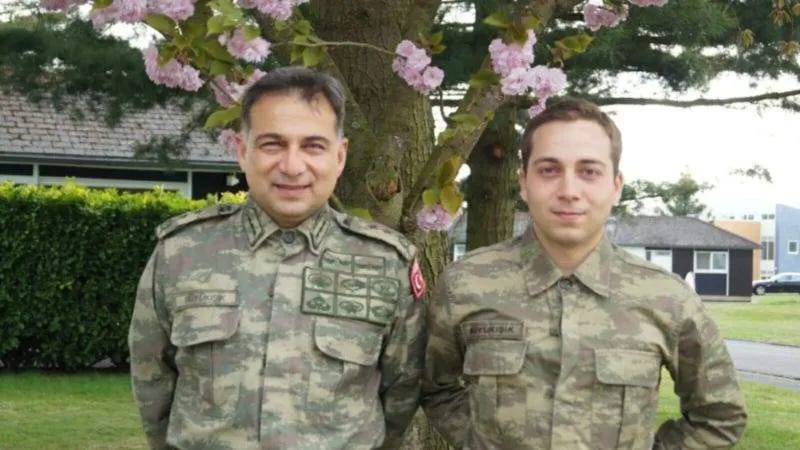
26 detention orders in Dorukhan Büyükışık’s death case once labelled ‘suicide’
Detention orders have been issued for 26 suspects in the investigation into the death of Dorukhan Büyükışık — found dead in Izmir’s Narlıdere district in 2018 in a case originally described as “suicide” — after fresh evidence came to light. Türkiye’s Justice Minister Akın Gürlek announced that, in line with expert reports, HTS (call detail) records, narrowed-down base station records and findings indicating that evidence had been suppressed, a simultaneous operation had been launched in nine provinces centred on Izmir, declaring: “We will not allow any file to be covered up, or any evidence to be suppressed.” Gürlek said action had been taken under the coordination of the Unsolved Crimes Investigation Department, established within the Ministry of Justice, as part of the investigation conducted by the Izmir Chief Public Prosecutor’s Office, in the light of fresh evidence, expert reports, technical examinations, HTS and narrowed-down base station records, and findings that evidence had been suppressed. According to Gürlek’s statement, detention orders had been issued for 26 suspects in the Dorukhan Büyükışık file, with a simultaneous operation launched in nine provinces centred on Izmir this morning. “However much time may pass,” he added, “we will continue working with all our means to bring the material truth to light and to ensure justice is done.”
Indictment against Mehmet Akif Ersoy completed
An indictment has been drawn up against Mehmet Akif Ersoy and seven other suspects, with prosecutors seeking his punishment on charges of forming and running a criminal organisation, aggravated sexual assault on 11 occasions, trafficking or supplying narcotic or stimulant substances, and facilitating the use of narcotic substances; the indictment has been sent to the Istanbul 19th High Criminal Court. According to a statement from the Istanbul Chief Public Prosecutor’s Office, the indictment drawn up against Mehmet Akif Ersoy and the seven other suspects, who were detained as part of a drugs investigation, has been forwarded to the Istanbul 19th High Criminal Court. The statement said: “It is requested that the suspect Mehmet Akif Ersoy be punished for the offences of ‘forming and running a criminal organisation’, ‘aggravated sexual assault (11 times)’, ‘trafficking or supplying narcotic or stimulant substances’ and ‘facilitating the use of narcotic substances’.”
Dilovası fire trial: ‘Inspectors just took perfume and left’
The second hearing in the trial over the cosmetics factory fire in Dilovası, in which seven workers — three of them children — lost their lives, has resulted in the formal arrest of one defendant, with a 17-year-old victim worker testifying that the factory had operated without insurance, protective equipment or fire stairs, and that inspectors visited only to “take perfume and leave”. The case concerns the fire at Ravive Kozmetik in Kocaeli’s Dilovası district on 8 November 2025, and was heard at the Kandıra Prison Campus by the Gebze 7th High Criminal Court. Ahead of the hearing, the victims’ families gave a press statement. In court, the non-detained defendant Abdurrahman Bayatlı — who had been subject to an arrest warrant — was formally arrested; the court asked for a hospital report on whether Aleyna Oransal, an official of LYKEE Kozmetik who is pregnant and reportedly underwent surgery, could remain in prison, and adjourned the case until Thursday so that other witnesses could be heard. Alongside the families, the hearing was followed by CHP MP Nail Çiler, EMEP chair Seyit Aslan, DEM Party Kocaeli MP Ömer Faruk Gergerlioğlu, DGD-Sen chair Nedlihan Acar, Petrol-İş Gebze branch chair Şivan Kırmızıçiçek, CHP provincial chair Erdem Arcan, the Birleşik Metal-İş Gebze Representatives’ Board and a Nakliyat-İş representative; the detained and non-detained defendants, the complainants and party lawyers were in attendance, with some defendants joining via the SEGBİS video-link system. Caner Özgür Y., an official of the company that bought the factory building who joined via SEGBİS, said: “We did not know products were being made at the factory. We knew that the operating licence existed. I actually run the work at the company; my father and uncle only have signing authority.” Asked about the day of the incident, he said that on hearing of the fire he had called Kurtuluş Oransal — who had not recognised him — to obtain information, that he had not known there were people inside, and that he thought it was a small-scale fire. When the lawyer pressed him on what he had done at the factory where the incident took place, he replied: “We were content just to look from a distance.” Muhammed D. and Seyfullah Ç., non-detained defendants working at an occupational health and safety firm, claimed that after being assigned to Ravive they had gone to the stated address only to find a different firm at the site, and that they had informed their manager. Muhammed D. said he had been assigned as occupational physician to Ravive and gone to the address with Ünal A., found another firm in place of Ravive, and returned, with Ünal A. saying he would deal with it. Seyfullah Ç., an occupational safety expert working for Küresel OSGB, said he had also been assigned to Ravive but had found another business at the address, and had informed his manager Ünal A., who said he would handle the matter. Zeynep Hüseyin (17), a victim who is filing complaints against the defendants, said: “I worked at Ravive for about two years from the age of 15. Kurtuluş Oransal hired me. We did packaging and labelling. Perfume and cologne were being produced at the workplace. İsmail Oransal would come to the workplace and do the mixing. Aleyna would sometimes come to help, and Gökberk would make goods. Tuncay and Hürol did mixing while we generally did packaging.” She said the workers had no protective equipment, had received no occupational health and safety training, and that on the day of the incident she had been packaging near the door while Tuncay was making cologne for Gökberk when an explosion and fire suddenly broke out; she escaped outside but was injured. She added that she had been paid 800 lira, was not insured — only one person was — and, because they were so busy, sometimes worked nights, with no fire stairs, and that the inspectors (zabıta) came every two days but did not carry out inspections, only taking perfume and leaving. Police officer E.E.C., who testified as a witness, said Onay Y. had called from a police internal line saying the factory owners had fled to Tekirdağ and intended to flee abroad from there, that police teams in Kocaeli and Tekirdağ had quickly caught İsmail Oransal and Altay Ali Oransal at the house where they were staying, and that Onay Y. had told them Ali Osman Akat had given instructions to put the fugitives up in the house. Before the hearing, the families of the workers who lost their lives, their lawyers, and labour and democracy organisations gave a statement, delivered on behalf of the families by Tuba Gülek Laç. She said that at the first hearing the principal responsible figures had boasted of how reputable and prudent they were as business people and of their exports, taking no stance to show they accepted responsibility for the massacre or were saddened by it, but had instead committed the folly of trying to lay all responsibility on Kurtuluş Oransal, who died in prison, and Tuncay Yıldız, who died in the massacre — but after defences that ignored the massacre, the complainants and witnesses heard had brought the truth to light and laid waste to the reputations they had built on uninsured child and women’s labour for a pittance. She said the families wanted a judiciary that delivered justice rather than protecting the perpetrators, criticised the investigation as having been incomplete and biased to date — especially as no progress had been made for months on the inquiry into public officials, who had still not been brought before the courts — and said the arrest of private company owners and occupational safety experts alone was not enough. Vedat Taşdemir, father of 15-year-old Nisanur Taşdemir who died in the fire, addressed the Justice Minister before the hearing to demand justice: “This is our right, our justice is not this. I am calling on the Justice Minister: give me my right, give me my daughter back. Bring my daughter back, I want nothing else. If he cannot do that, then let him punish those inside.”
Contractor extradited from Thailand defends himself: ‘The building didn’t collapse — it split in two’
Contractor Abdullah Aybaba, extradited from Thailand and formally arrested over the collapse of the Sami Bey Apartment Building in Adana during the 6 February earthquakes — in which 40 people lost their lives — has defended himself in court, saying: “None of the buildings I built in Adana collapsed. The building subject to this case did not collapse either, it split in two.” In the Kahramanmaraş-centred earthquakes of 6 February, the collapse of the Sami Bey Apartment Building in Adana’s Çukurova district killed 40 people and injured two. The Adana Chief Public Prosecutor’s Office brought charges against the building’s contractor and technical implementation officer Abdullah Aybaba, along with four defendants including public officials, on a charge of “causing the death and injury of more than one person by conscious negligence”, seeking up to 22 years and 6 months in prison for each. During the proceedings it was established that Aybaba had left Türkiye from Istanbul Airport the day after the earthquake and not returned; a red notice was issued, and after being detained in Thailand he was brought back to Türkiye on 15 May and his arrest ordered after appearing before the Adana 4th High Criminal Court via the SEGBİS video link. In his defence, Aybaba did not accept the charges. Stating that he had worked as a civil engineer and contractor since 1977 and had built more than 50 buildings, he said he was both the engineer and contractor of the Sami Bey Apartment, that he had constructed it in line with the approval and project obtained from the municipality, and that “the core (karot) values in the building comply with the regulations and are at the level they should be. None of the buildings I built in Adana collapsed. The building subject to this case did not collapse either, it split in two.” Rejecting the expert reports and arguing that he had acted in accordance with all earthquake regulations and applicable legislation, Aybaba said: “Beams and columns may have been cut after the building was constructed. This may have caused the building first to split in two and then to collapse. The building immediately behind it, built in the same period under the same conditions and belonging to the same brothers, was also built under the same conditions. The cores taken from there comply with the earthquake regulations. It was built soundly. A natural gas line was later passed through the building, and I do not know where they routed it. It may have come about as a result of a piece of iron in the beams or columns, or the weakening of the concrete. That may be why the building split in two. Most experts may also assess the reason for the building splitting in two in this direction.” The panel reportedly ordered Aybaba’s arrest on grounds of “strong suspicion of crime, the nature of the offence, the expected sentence and the inadequacy of judicial control”.
Cache of weapons found at home in Ankara: suspect faces judicial action
Judicial proceedings have been initiated against a suspect at whose home in Ankara’s Keçiören district numerous weapons and weapon parts were seized in an operation against organised crime. Teams from the Anti-Organised Crime Branch of the Ankara Police Directorate launched work to apprehend suspects in violation of Law No 6136 on Firearms, Knives and Other Tools. In searches at the suspect’s residence in Keçiören, police seized 14 rifled long guns, 44 pistols, 11 smoothbore long guns, 10,066 rounds of ammunition, 155 magazines, 54 rifle barrels, three wooden rifle barrels, 39 rifle bodies with wooden stocks, various numbers and sizes of firing pin and magazine springs, 830 bullet cores, two wooden stocks and numerous weapon parts. Also seized in the searches were a drill, an engraving machine, a spiral machine, a spiral wheel machine, a vice, 26 pistol laser attachments, various drill bits, three hand tools used in loading rounds and cartridges, and a substance assessed to be gunpowder. The suspect now faces judicial action.
Nurse İkra Avcı, suspended for braiding her hair, acquitted
Nurse İkra Avcı, who had been suspended from her profession for joining a hair-braiding protest on her social media account, has been acquitted in the case opened against her. The protest campaign began after a member of HTŞ in north and east Syria cut the braided hair of a YPJ female fighter, prompting Avcı to show solidarity by braiding her own hair. In a statement on her social media account following her acquittal, Avcı said: “The court today ruled for my acquittal in the judicial investigation conducted against me. Within the scope of the administrative investigation, the hospital where I worked requested my dismissal from the profession. My lawyer will make the necessary objections on this matter. I owe thanks to everyone who stood by me during this process.”
🏛️ Politics
Erdoğan wins 300,000 lira in damages from CHP leader Özel
President Recep Tayyip Erdoğan has been awarded 300,000 lira in moral damages in a case he brought against CHP leader Özgür Özel on grounds of violation of personal rights. The Ankara 32nd Civil Court of First Instance ruled that Özel should pay the sum. The announcement came from Erdoğan’s lawyer, Hüseyin Aydın, in a social media post setting out the case. Aydın said: “Over the unbecoming statements and unjust accusations targeting our President in his speech at CHP headquarters on 5 July 2025, the court in the case we brought against CHP leader Özgür Özel at the Ankara 32nd Civil Court of First Instance has ruled for 300,000 lira in moral damages.”
Cevdet Yılmaz meets Sudanese Prime Minister Idris
Türkiye’s Vice President Cevdet Yılmaz has met Sudanese Prime Minister Kamil Idris, with talks focusing on Türkiye–Sudan relations and cooperation in the political, economic, commercial and cultural spheres. Yılmaz met Idris, who is in Türkiye on a working visit, at the Presidential Complex; following one-on-one and inter-delegation talks, a working dinner was held, with Agriculture and Forestry Minister İbrahim Yumaklı and Energy and Natural Resources Minister Alparslan Bayraktar also taking part. In a statement on social media, Yılmaz stressed that Türkiye was determined to advance its relations with Sudan in the political, economic, commercial and cultural fields, saying: “We see Sudan’s unity, sovereignty, independence and territorial integrity as extremely important for regional stability and for the peace and security of Africa. We continue to support all international efforts based on dialogue and diplomacy to end the conflicts in the region, secure a lasting ceasefire and implement a comprehensive political process.” Saying Türkiye would continue to stand by the Sudanese people and contribute to the reconstruction and development process, Yılmaz added: “I believe the Joint Economic Commission (KEK) meeting to be held in Ankara tomorrow will be an important turning point that will carry our trade volume to more advanced levels, strengthen cooperation between our business worlds, and reinforce our shared vision with concrete steps.”
Foreign Minister Fidan to head to Sweden for NATO meeting
Foreign Minister Hakan Fidan is to attend the NATO Foreign Ministers’ Meeting to be held in the Swedish city of Helsingborg on 21–22 May, with talks focusing on preparations for the NATO Summit Türkiye is to host in Ankara in July, support for Ukraine, defence spending, transatlantic cooperation and the impact of developments in the Strait of Hormuz on Euro-Atlantic security. According to Foreign Ministry sources, the meeting is expected to cover the preparations for the NATO Summit Türkiye will host in Ankara on 7–8 July, the alliance’s unity, transatlantic cooperation, the strengthening of the defence industry and the increase in its production capacity, the continuation of aid to Ukraine, and the conversion of rising defence spending into capabilities. Also expected to be discussed are the implications for Euro-Atlantic security of developments around Iran and the situation in the Strait of Hormuz and their effects on the global security environment, the alliance’s policies towards the South, and other recent Euro-Atlantic security developments, foremost among them the Russia–Ukraine war. The meeting will open on 21 May with an informal working dinner in the NATO–Ukraine Council format, to be attended by Ukrainian Foreign Minister Andrii Sybiha and EU High Representative for Foreign Affairs and Security Policy and European Commission Vice President Kaja Kallas. At the dinner, Fidan is to reiterate Türkiye’s support for Ukraine’s independence, sovereignty and territorial integrity, and refer to Türkiye’s ongoing diplomatic efforts to end the Russia–Ukraine war. The meeting will continue on 22 May with a session attended by the foreign ministers of only the 32 NATO allies, in which — as this is the last NATO Foreign Ministers’ Meeting before the Ankara Summit — Fidan will brief allies on the preparations for the summit. He will share Türkiye’s expectations of the summit and set out the efforts being made to ensure the Ankara Summit is a top-level event reaffirming NATO’s unity and integrity, while also conveying Türkiye’s views on burden-sharing among allies and the preservation of the transatlantic bond. Providing information on Türkiye’s contributions to NATO, Fidan will set out Türkiye’s exemplary practices on converting defence spending into capabilities, stressing in this context that transatlantic defence industry cooperation should be developed within the alliance without any restrictions. He will also underline the importance of a “360-degree security approach” to respond to threats from every direction, and note that in this context developing the alliance’s engagement with its southern neighbourhood and advancing the fight against terrorism is essential.
Foreign Ministry responds on missing 15 million dollars at Astana embassy
The Turkish Foreign Ministry has admitted that payments related to a long-running dispute over the construction of Türkiye’s embassy in Astana were made in cash, but insists no debt remains to the contracting firm — even as the dispute drags on amid forged signatures, court rulings and allegations that politically-connected intermediaries sought commissions of up to 50 per cent to resolve the matter. The case concerns Yapı Uluslararası İnşaat AŞ, which signed a contract with the ministry in 2007 for the construction of Türkiye’s embassy in Astana, Kazakhstan, completing 96.4 per cent of the work before falling out with the ministry. The company maintained it was owed 15 million dollars; after appealing to the ministry — which said its payments appeared complete — the company sued, with the Ankara 12th Administrative Court ruling in its favour and the appeal court upholding the ruling, at which point the payment documents came to light. The documents featured records of three cash payments of 4.5 million dollars and one of 1.5 million dollars made by hand, but were confusing: while the 15 million dollars appeared to have been paid in cash, Ambassador Taner Seben and Administrative Attaché Bülent Yükseltürk — whose signatures appeared on the documents — both said the signatures were not theirs. Company official Muzaffer Nişancı, on the basis of these documents, reapplied to the ministry, arguing that the 15 million dollars due to him had been routed via forged documents to others’ accounts. The ministry’s response, requested both before and after the original column, came yesterday. Its statement began by recalling that the tender for the construction of the Astana embassy chancery, residence and staff housing had been held on 3 May 2007, with a construction contract signed on 13 June 2007 for 26,250,000 dollars. The ministry said 10 progress payments had been drawn up for the company, of which nine had been paid, providing not the documents but a list of the payments totalling 25,398,252 dollars; the tenth and final payment, it said, had been paid directly into the relevant court treasuries to settle the company’s workers’ claims finalised by court ruling, meaning all progress payments had been made and the company had no remaining claim on the administration. On the method of payment, the ministry’s statement added that payments had been made in cash and recorded by minutes, with such cash payments to the contractor — recorded by minute or supported by payment documents — made by the relevant Mission where local conditions, including problems or restrictions in the banking system and security needs, required or made it necessary, as had been the case in Astana at the time. The ministry has thereby acknowledged that the payments in Astana were made by hand. While the ministry says it paid the construction money in cash and “paid the lot”, the company official says: “No, we did not receive it.” The four documents totalling 15 million dollars that surfaced at court present problems of their own: Ambassador Taner Seben and Administrative Attaché Bülent Yükseltürk both deny the signatures are theirs, with Seben, contacted while the original piece was being written, clearly and explicitly stating he had not signed any such document. Atilla Güven, whose signature appears on behalf of the company, is also not, according to the company’s own statement, a company official, and no such official appears in the Trade Registry gazettes; the documents’ wording is also said to fall outside the format of official documents, with a series of errors apparent. There is also an intriguing further turn. The earlier column had said that during the process certain lawyers claiming closeness to the government and to the Presidential Complex had stepped in offering to recover the money, with talk of commissions in the air. Concrete information has now been obtained: Yapı İnşaat signed a contract with Ahmet Nuri Elvan, son of former Treasury Minister Lütfi Elvan, under which Elvan would mediate for the payment of the 15 million dollars in claims, with any money recovered to be split 50/50. The company also signed a contract with Ahmet Kabakcı, husband of AKP Women’s Branches board member Hande Görkem Kabakcı, under which the “adviser” would receive 40 per cent. A confidentiality agreement was also signed between the company and Senhur Nabi Yıldırım, said to be a relative of former Prime Minister Binali Yıldırım, although the commission contract collapsed when Yıldırım’s demand was too high. The result is a strange tale of 15 million dollars: a ministry that says it “paid in cash”, a company that says it received nothing, and AKP-linked political figures’ relatives signing commission contracts on the promise that they would “sort it out”. Whether closeness to politicians is more powerful than the courts is not known, the column concludes, but someone has clearly been trying to turn the dispute at the Foreign Ministry into an opportunity — and if closed doors had a tongue, perhaps they would tell a story even more telling than the money itself.
New rules at AKP: ministers decline to answer reporters’ questions
A new arrangement at the AKP saw ministers decline to answer journalists’ questions at the party’s parliamentary group meeting, following a warning letter sent to ministers and MPs the previous day. The decisions taken by the AKP Group Chair’s Office about the order of the group meeting hall were put into effect at today’s meeting. Ministers arriving at the room for the group meeting did not respond to journalists’ questions, nor to those waiting in the corridor outside the meeting room. Asked by a journalist, “Questions used to be taken — can we no longer ask questions?”, Justice Minister Akın Gürlek replied: “No, thank you.” An official at the same time issued the warning: “We are not filming.” Other ministers, when approached for questions, said: “We are not taking questions, but if you wish we can meet at the ministry.” Leaving the group meeting, Trade Minister Ömer Bolat, asked whether inspections were being carried out against excessive price rises ahead of Eid al-Adha, said: “We are doing it accompanied by the television channels. So far we have imposed fines totalling 1.2 billion lira.” Bolat then added: “We are not making statements as ministers at group meetings.” AKP Group Deputy Chair Muhammet Emin Akbaşoğlu, asked by reporters why ministers were not taking questions, said: “So as not to get ahead of the president’s speech... Questions to ministers can be put on entry to or exit from the group meeting hall. Please understand us.” New rules on the areas in which journalists work in the group meeting hall were also enforced: aside from press photographers, photographers from the ministries, the party and MPs’ own photographers were not allowed in the area in front of the rostrum where President Erdoğan speaks; reporters working in their designated area were also repeatedly warned against filming on their phones. The letter sent by the AKP Group Chair’s Office to ministers on 18 May had asked them not to make press statements in the group meeting hall, stating: “Dear Ministers, at our weekly Ordinary Group General Assembly meetings, agenda assessments and necessary briefings on behalf of our party and group are made by our President and Leader. Ahead of our group meetings, the giving of statements, interviews or briefings to the press or agencies by our ministers in the group meeting hall also creates difficulties in preparing the room. We therefore ask our ministers to take care not to give any briefings to the press in the room ahead of our group meeting.” The letter to MPs noted overcrowding in the group meeting hall, pointed to the room’s capacity and issued warnings regarding visitors. At AKP’s previous group meeting, while leader and President Erdoğan was speaking from the rostrum, tensions had arisen between journalists in the press gallery and party members watching the meeting and chanting slogans behind it.
Türkiye’s Disability Association: ‘We want equality, not festivals’
Türkiye’s Disability Association has reacted strongly to the symbolic events held during the 10–16 May Disabled People’s Week, with chair Şükrü Boyraz declaring: “We want a rights-based policy, not the language of compassion.” Disabled citizens — who, the association notes, face inequality across many areas of life from education and health to transport and working life and make up around 12.29 per cent of the country’s population — pointed out that they still cannot access basic public services, and that their problems are being rendered invisible through festivals and awareness programmes, calling instead for equal citizenship. The association said the great majority of events held throughout the 10–16 May week had been limited to poetry recitals, food organisations and protocol speeches, stressing that the week should be a period of struggle in which rights violations were discussed rather than a “celebration”. Recalling that various events had been held across the country during the week, Boyraz said: “Unfortunately, the great majority of these events have remained limited to poetry recitals, food organisations, picnics, stage performances, protocol speeches and representational ‘awareness’ programmes. In particular, public institutions and some disability associations have turned the week into a festival atmosphere, rendering the real problems experienced by disabled individuals invisible.” Stressing that the week was not a celebration but a week of struggle in which rights violations should be aired, the gaps in accessibility brought to the agenda, discrimination exposed and demands for equal citizenship raised, Boyraz set out the long list of problems disabled people still face: pavements, roads and public buildings remained inaccessible; public transport was unusable for many disabled people; there were serious inequalities in access to education; disabled individuals were left to face unemployment and poverty; and accessibility in public services, although a legal obligation, was not being implemented, with disabled citizens systematically excluded from social life. Against all this, he said, the “entertainment programmes” served to mask the structural problems disabled people experienced. “We do not want representational events that get a round of applause — we want concrete solutions,” he added. “We do not want the language of compassion, but rights-based policy. We do not want decorated halls, but accessible cities. Disabled individuals are not people to be remembered for one week a year. Disabled people’s right to life, to independent living, to education, to work and to equal participation in public life are not open to debate. We call on public institutions, local governments and all relevant bodies to produce lasting solutions rather than token events. Because what disabled people need is not festivals, but equality. Not silence, but the struggle for rights. And we will not be silent until our rights cease to be made invisible.”
🗳️ Opposition Parties (CHP and others)
Özgür Özel: ‘We will not abandon CHP, and the nation will not abandon us’
CHP leader Özgür Özel has declared that his party would not give up, telling reporters: “Even if they do something to obstruct all the party’s processes, we will win this election. We will try every avenue.” The remarks come as the debate within CHP — fuelled by the recent statements of seventh CHP leader Kemal Kılıçdaroğlu and the responses from the current leadership — continues, with the “absolute nullity” (mutlak butlan) case also remaining on the agenda. The three statements given by detained and suspended Uşak Mayor Özkan Yalım under “effective remorse” had been forwarded to the 36th Civil Chamber of the Ankara Regional Court of Justice, which is conducting the appeal review in the absolute nullity case. A fresh claim came from Fatih Atik, Ankara representative of the pro-government TGRT, who said: “I expect such a decision to come out of the appeal court by Friday 22 May at the latest. My information also points in that direction.” Speaking to Yıldız Yazıcıoğlu and Can Bursalı of Gazete Pencere, Özel said: “We will not abandon our party. We will not give up CHP, we will not leave this party. And the nation will not abandon us.” On reserve parties, Özel said the question of a “back-up party” was relevant to the possibility of a party closure rather than the absolute nullity case: every party has one, he said, and every party ought to. “They have risked everything,” he added. “But no — what they want is a snap election, to grip CHP by the throat, to take the party out of our hands. They cannot take Türkiye from us. We will win this election one way or another.” He argued that when state and nation were set against each other, the nation won, and that Turks had respect for the state; Erdoğan, he said, had once used the grievance caused by some of the state’s unjust practices against the people’s demands as a lever to come to power, but was now making a historic mistake by doing the opposite and personally setting the state against the nation — a mistake from which, if he did not turn back, he would suffer a very heavy defeat. Saying CHP would win even a very sudden election, Özel said he was offering Erdoğan every option to draw him to the ballot box — by-election, early election, early local election, holding them together, or simply rerunning the elections in Istanbul — as long as Erdoğan met him at the ballot box, since by fleeing the polls and using the judicial and state apparatus he was making himself appear strong, the same approach he was taking by absorbing the Aydın and Afyon mayors into his party through blackmail and threats. On parliamentary arithmetic, Özel offered what he called a sincere reading: that the AKP might fear losing too much ground in parliament, and that “if they can return more than 200 MPs, on their own they will not have the power to amend the Constitution” — and that, given the long-pending Yüce Divan (Supreme Council) trials, including those of four ministers, they might also be planning to go to the polls while holding on to an MP arithmetic that would block the formation of investigation commissions in parliament. He said he was prepared even for a snap election called by Erdoğan, and that the only thing he objected to was an election held by gripping CHP by the throat and taking the party out of CHP members’ hands.
Striking Kılıçdaroğlu video message: ‘The trust cannot be soiled’
The former leader of Türkiye’s main opposition CHP, Kemal Kılıçdaroğlu, has used a video message on social media to renew his call for “purification” and “internal accounting” within the party, declaring CHP a “sacred trust” and saying: “The trust cannot be soiled, the trust cannot be sullied.” Responding to criticism directed at him, the former leader said: “I will speak the truth, I will stand by the truth.” MPs reportedly close to Kılıçdaroğlu retweeted the post. In the roughly three-and-a-half-minute video, Kılıçdaroğlu addressed the public as “my dear friends, my brave fellow travellers and comrades, and the noble citizens of conscience of this beautiful country”, saying that the future of a nation took shape through the wisdom, conscience and morality of its politics, and that the lawful tables of the nation were blessed by clean politics. Dirty politics, he argued, first decayed the conscience, then destroyed morality, and finally set its sights on the people’s bread — making it the duty of honour of everyone doing politics in this country to keep politics clean and to bring abundance to the nation’s table. He said this heavy responsibility lay first and foremost on CHP members, calling CHP “a vast plane tree” and “the nation’s will to rise from poverty”, which had seen coups but never bowed, been closed but never surrendered, and faced pressures but never knelt or been subdued. He went on: “My friends, the Republican People’s Party is the spirit on which our nation’s will of independence has been manifested, with its founder, the Great Leader Gazi Mustafa Kemal Atatürk. There can be no betrayal of that spirit. The Republican People’s Party is not an inheritance left to us — our party is a sacred trust left to us. The trust cannot be soiled, the trust cannot be sullied.” Kılıçdaroğlu addressed the criticism and expectations directed at him: “My brothers and sisters, above all the shadow of this great plane tree can never, ever be a shelter for what is forbidden or for filth. When need be, it knows how to purify itself, how to take its own internal account. But it never turns back from its path. Because this walk is a walk to power. Because this walk is a walk to lift the people’s hope to its feet once again.” He continued: “There are those who expect me to fall silent or to say other things. Listen to me well: Kemal Kılıçdaroğlu does not negotiate the interests of the nation and his party for his own fortunes! A thousand times he may become earth and a thousand times he will bloom into a flower in the hands of his honest, upright children — but he will not bend or be twisted! Your slanders and your threats are nothing to me! I will speak the truth, I will stand by the truth.” Shared at 12:46, the video quickly drew a wide response on social media, reaching more than one million views within roughly an hour and a half and drawing numerous comments. Some users linked Kılıçdaroğlu’s statements to the ongoing legal process seeking the annulment of the congress he lost on grounds of “absolute nullity”. A number of CHP MPs reportedly close to him also reshared the post, among them Gamze Akkuş İlgezdi, Deniz Demir, Hüseyin Yıldız, Mahir Polat, Rıfat Nalbantoğlu, Semra Dinçer, Sevda Erdan Kılıç, Barış Bektaş, Ali Fazıl Kasap, Mustafa Adıgüzel, Hasan Öztürkmen, Gürsel Erol, Ali Öztunç, Ali Karaoba, Faik Öztrak, Kadim Durmaz and İnan Akgün Alp.
60 detained in İBB investigation referred to courthouse
Sixty people detained in connection with allegations of irregularities in tenders held by Boğaziçi Tesis Yönetim Hizmetleri Anonim Şirketi — one of the affiliates of Istanbul Metropolitan Municipality (İBB) — have been referred to the courthouse. As part of an investigation conducted by the Istanbul Chief Public Prosecutor’s Office into İBB, the operation centred on allegations that the tenders held by the affiliated firm Boğaziçi Tesis Yönetim Hizmetleri Anonim Şirketi had been organised by the suspects, that procedures contrary to the legislation had been carried out during tender processes, and that the offence of “rigging procurement” had been committed. The 60 people detained completed their procedures at the police station and, after health checks, were transferred to the Istanbul Courthouse in Çağlayan. The operation had been launched on 18 May, with simultaneous raids by teams from the Financial Crimes Combat Branch of the Istanbul Police Directorate at addresses identified in Istanbul, Adana, Bursa, Diyarbakır, Konya and Yalova, leading to the detention of 57 people; three more were subsequently detained as the operation continued.
Şişli trustee out after just eight days — another takes his place
A striking change of guard has taken place at Şişli Municipality in Istanbul, with the trustee (kayyım) appointed on 12 May, Ayhan Terzi, replaced after just eight days in the post. Istanbul Deputy Governor Terzi had been appointed as Şişli Acting Mayor on 12 May, but managed to remain in the seat for only eight days before being assigned as the District Governor of Güngören. He has been succeeded as acting mayor by Ali İkram Tuna, making it the second trustee change at the municipality in short order. In a statement on the municipality’s social media account, Şişli Municipality said: “Our Şişli Acting Mayor, Mr Ali İkram Tuna, has taken up his duties.” Tuna’s own message added: “As of today, we have taken up our duties as Şişli Acting Mayor to serve the Şişli district, the heart of our business, art and culture world. Throughout the time we carry this trust entrusted to us, we will take as our basis an impartial, equal and fair understanding of governance that identifies problems on the spot and includes our people in the solution. With a transparent and accountable approach, we will use all of Şişli Municipality’s resources and means solely and exclusively on the principle of public benefit, to directly ease the lives of our citizens. I extend my gratitude to our President Recep Tayyip Erdoğan and Interior Minister Mustafa Çiftçi, who have entrusted this duty — which I hope will be auspicious for Şişli and for all citizens whose path passes through Şişli — to me personally.”