

It’s been a busy week, as you’ll see below. Grab a coffee and enjoy the read. ☕
Justice System and Everyday Life in Türkiye
🌹 Rabia Naz Vatan case revived as family to meet with Justice Minister
The case of Rabia Naz Vatan, the eight-year-old girl found injured outside her home in Giresun and later pronounced dead in hospital eight years ago, has come back onto Türkiye’s agenda after a recent statement by Justice Minister Akın Gürlek; her family is now expected to meet ministry officials in the coming days. As part of the wider process to review unsolved files, the Rabia Naz Vatan case was brought back into focus alongside those of Gülistan Doku and Rojin Kabaiş after Gürlek said all three were being looked at. According to Türkiye Gazetesi, Rabia Naz’s father Şaban Vatan said the family had been contacted by the ministry and that a date for the meeting would be set. In September, Türkiye’s Constitutional Court (AYM) ruled that the investigation into Rabia Naz Vatan’s death had been carried out “far from the necessary care and seriousness”, finding a violation of the procedural aspect of the right to life and awarding the family 350,000 lira in moral compensation. Şaban Vatan had argued that the AYM decision had laid bare the breaches in the file, that evidence had been suppressed and that some statements had not been taken; the case was subsequently taken to the European Court of Human Rights.
🌷 Mother of detained journalist İsmail Arı pleads on Mother’s Day: ‘Set my son free’
The mother of BirGün reporter İsmail Arı, who has been held at Sincan Prison for 49 days on charges of “publicly disseminating misleading information”, has used Mother’s Day to call for her son’s release. In her message, Nurhayat Arı said: “Today is Mother’s Day, but my son İsmail Arı is not by my side — he is in prison just for doing journalism. Release my son.” Arı was detained on 21 March while visiting family for the religious holiday in the Turhal district of Tokat, as part of an investigation conducted by the Ankara Chief Public Prosecutor’s Office, and was brought to Ankara the following day. In a message sent through his lawyers while in custody, the reporter said he had been detained over a video from three months earlier, that fresh tweets and old videos were continuing to be added to his file in what he believed was an effort to “pad it out” so he could be arrested, and that the authorities had been looking for an excuse to arrest him for the past year. He said his only crime was practising journalism in this country, that journalism was not a crime, and asked the public to stand by journalists. He was formally remanded in custody on 22 March on the charge of “publicly disseminating misleading information”.
🎓 ODTÜ Spring Festival students sent to courthouse, two face detention
Following on from the events at the Middle East Technical University (ODTÜ) Spring Festival reported earlier this week, six students taken into custody after the İlkay Akkaya concert have now been transferred to court after completing their procedures at the police station. The prosecutor’s office has requested the formal arrest of two of the six, while the remaining four have been referred to the judgeship with a request for judicial control. The students had been detained in dawn raids on their homes on 8 May. As previously reported, the controversy began at the concert held at ODTÜ’s Devrim Stadium on the first day of the festival, when a group of fans in the stands unfurled a giant Turkish flag, booed the artist and threw glass bottles at the stage; the group, said to have made the “wolf sign”, was met with chants of “ODTÜ will be the grave of fascism” by other students at the venue. After the university’s private security tried to intervene, the group was escorted out of the stadium with the help of students. In the aftermath of the concert, the students were targeted on social media by certain groups; shortly after a post by a formation calling itself the “Independence Women’s Movement” reading “Wait for the detention news tonight”, the home raids were carried out overnight from 7 to 8 May.
🚨 Pazarcı’s daughter fined and banned over ‘flashing-light’ car video
Istanbul Police Directorate has issued a statement on the social media footage showing Begüm Ece Pazarcı, the lawyer daughter of pro-government Akşam newspaper columnist Emin Pazarcı, travelling to a Galatasaray match in a car fitted with police-style flashing lights. The video had gone viral on social media. In its written statement, the directorate said that under the Protection Services Regulation, no protection order or right of way had been issued in Begüm Ece Pazarcı’s name. An administrative fine of 173,392 lira was imposed on her, the car was banned from traffic for 30 days, and her driving licence was confiscated for the same period. The directorate added that inspections targeting the misuse of right-of-way privileges were continuing without interruption, and that no use contrary to the legislation would be tolerated.
🔍 Lawyer in Gülistan Doku case: ‘This is not just a murder file but a corruption and organised crime case’
Ali Çimen, lawyer for the family of Gülistan Doku — the young woman who has been missing for six years from Tunceli — has set out striking allegations about how the investigation has been handled, telling Evrensel that evidence has been suppressed, records falsified and a cover-up engineered through public office. Çimen argued that the first four years of the inquiry made no progress because then-Governor and now-suspect Tuncay Sonel used his influence to bury the file, and said the case would have been closed altogether were it not for the persistence of Aygül Doku, the follow-up by women’s organisations and public pressure. The greatest achievement, he said, had been not letting that door close and preventing the physical destruction of certain critical pieces of evidence. He alleged that an attempt had been made to manufacture the perception that Gülistan Doku had taken her own life, despite the absence of supporting evidence, and that most of the records in the file had turned out to be fabricated; he cited the case of six hours of footage that surfaced years later from a hard drive belonging to a workplace called Baymak, calling this not an error but a deliberate choice. Çimen also alleged that digital data in the file had been tampered with and that there were indicators of payments being made to witnesses and families, including one transfer of 150,000 dollars at a stroke, describing the dossier as a case of “corruption and organised crime” and arguing that Mustafa Türkay Sonel and Zeynal Abarakov had acted together to plan and commit the crime, based on the statements of anonymous witnesses. He identified fugitive suspect Umut Altaş as a critical figure in the file, saying that bringing him back to Türkiye could shed light on how the events unfolded and where Gülistan Doku’s body lies.
🎤 Three years sought for Turkish comedian over Suleiman the Magnificent joke
Tuba Ulu, the comedian taken into custody after a joke about Ottoman Sultan Suleiman the Magnificent did the rounds on social media, now finds herself facing up to three years in prison — proof, if any were needed, that one of history’s most powerful rulers still requires the protection of the modern Turkish judiciary. The Istanbul Chief Public Prosecutor’s Office launched an investigation after a clip from her show began circulating online, and Ulu was detained on charges of “insulting historical, national and moral values”, before being released under judicial control; she had subsequently issued an apology on social media, acknowledging that her words may have gone too far. According to Armağan Yılmaz in Sabah, the investigation has now wrapped up, with the indictment concluding that her line — “Even Suleiman the Magnificent married his f… buddy” — amounted to an insult and that there was sufficient evidence to bring a prosecution. Ulu has been charged with “inciting the public to hatred and enmity”, with three years’ imprisonment sought; the case will be heard at the Istanbul Magistrates’ Criminal Court.
New details emerge in Israeli Consulate attack: kebab seller’s road to ‘jihad’
Fresh details have emerged in the investigation into the 7 April armed attack on the Israeli Consulate in Istanbul, shedding light on the past and radicalisation of detained suspect Ahmet İmrak. Said to be the third figure in the attack, İmrak is reported to have worked for a time as a kebab seller, moved in Hizb ut-Tahrir circles, attended a religious seminary (medrese), and previously been investigated on suspicion of membership of HTŞ. According to journalist İsmail Saymaz, İmrak was born in the Nizip district of Gaziantep and grew up in Adana; after his family broke up he dropped out of secondary school and went to work in kebab shops, later moving to Gebze in Kocaeli, where through his older brothers he became involved with the Köklü Değişim circle linked to Hizb ut-Tahrir, joined religious discussion meetings and gradually radicalised. The investigation file indicates that he took part for a time in protests organised by Hizb ut-Tahrir on Palestine, Syria and East Turkestan, but left the group in 2019 over what he described as a “disagreement on the question of jihad”, going on to spend around five months at the “İtidal” seminary in Diyarbakır studying Arabic and religious subjects. He had also figured among the suspects in a 2018 investigation by the Kocaeli Chief Public Prosecutor’s Office into members of an association described as Salafi in orientation; his phone was tapped in 2021, but in 2022 the file was dropped for lack of sufficient evidence. In 2024 he spent around two months in Montenegro, returning home when he could not find work. In his statement to the Counter-Terrorism Branch of the Istanbul Police Directorate on 18 April, İmrak said: “I do not accept Türkiye’s constitutional order. I do not vote. For the past 7–8 years I have believed that jihad is a religious obligation.” He claimed in his statement to have no knowledge of ISIS, al-Qaeda or Hizb ut-Tahrir, while acknowledging that he knew their “aim was to wage jihad”. Saymaz’s piece also sets out details of the preparations for the attack: İmrak began speaking regularly about Israel’s strikes on Palestine with Onur Çelik, whom he had met through his brother, and following what Çelik described as a “jihad dream” the idea of an attack reportedly took hold within the group. According to his statement, on 1 April the group saw a social media post claiming that Israel would execute 12,000 Palestinian prisoners, and began discussing taking “revenge against Israel”; the same day they met Yunus Emre Sarban, who is said to have accepted the proposal for an attack. The location and opening hours of the Israeli Consulate were then researched and the group travelled to Istanbul to carry out reconnaissance around the building. According to the testimony reported by Saymaz, the group also discussed whether the attack was “religiously permissible”; İmrak’s older brother is said to have argued it would not be right and to have backed out. The group nonetheless pressed ahead, with Onur Çelik selling his car for 230,000 lira before the attack to buy weapons and ammunition, and using the remainder to pay off his debts. In the attempted attack on 7 April, Yunus Emre Sarban was killed, while Çelik and İmrak were captured wounded. In his statement, İmrak claimed they had mistaken the people they encountered around the consulate for “Israeli security forces” and that this is when the clash began, insisting that they had not carried out the attack at the direction of any organisation: “We decided to carry out the act because of Israel’s attacks and oppression against the Palestinians.”
Supermarket manager filmed beating and kicking female employee
A regional manager at one of Türkiye’s largest supermarket chains has prompted public outrage after being caught on CCTV slapping, punching and then kicking a female employee at a branch in the Atakent neighbourhood of Istanbul’s Küçükçekmece district. The footage, recorded during working hours, shows the man approaching the young woman as she went about her work at a computer and laying into her with no warning whatsoever; once she dropped to the floor in an attempt to shield herself, he obligingly carried on, raining down further kicks and slaps on her as she lay there defenceless. After the images sparked a fierce backlash, the authorities moved in: a criminal investigation has been opened by the judicial authorities, while the supermarket chain — which has thousands of branches across the country — felt compelled to issue a statement, announcing that the regional manager had been removed from his post and that an internal administrative investigation had been launched.
💧 Controlled water release planned at Türkiye’s Keban Dam
A controlled water release is to be carried out at the Keban Dam in eastern Türkiye on 11–12 May, according to the General Directorate of State Hydraulic Works (DSİ) 9th Regional Directorate. In a statement on its social media accounts, the directorate said heavy rainfall and snowmelt in the region had brought high inflows into the dam’s reservoir, and that the release was being carried out to manage the water safely. Residents have been urged to follow official announcements and to stay well clear of the dam and riverbeds during the release, as water levels are expected to rise. The directorate also called for the necessary precautions to be taken for transport routes, agricultural land and other features located close to riverbeds, and warned the public to be on the alert for sudden rises in water levels.
Politics
📞 Erdoğan and UAE’s Al Nahyan hold phone call
President Recep Tayyip Erdoğan has spoken by telephone with the President of the United Arab Emirates, Sheikh Mohammed bin Zayed Al Nahyan, with the call covering bilateral relations between Türkiye and the UAE as well as regional and global issues. During the conversation, Erdoğan said Türkiye would continue to give its full support to the UAE’s sovereignty and security amid the ongoing conflict between Iran and the United States.
☎️ Turkish foreign minister Fidan speaks with Egyptian counterpart Abdulati
Foreign Minister Hakan Fidan has held a telephone call with his Egyptian counterpart Badr Abdelatty, according to sources at the Turkish Ministry of Foreign Affairs. The two ministers used the call to assess developments in the negotiation process between Iran and the United States.
🇵🇰 Türkiye condemns terrorist attack in Pakistan’s Khyber Pakhtunkhwa
The Turkish Ministry of Foreign Affairs has condemned a terrorist attack on a police station in Pakistan’s Khyber Pakhtunkhwa province on 9 May. In its statement, the ministry said it strongly condemned the attack, offered its condolences to those killed, their loved ones and the Pakistani people, and pledged that Türkiye would continue to stand in solidarity with Pakistan in the fight against terrorism in all its forms and manifestations.
🏛️ Türkiye’s parliamentary week to focus on tax reform package
The Turkish Grand National Assembly will begin its weekly proceedings on Tuesday 12 May with debate on the Bill on Amendments to Certain Laws, which includes wide-ranging tax reforms. Under the proposal, individuals deemed to have settled in Türkiye will be exempt from income tax for 20 years on their overseas earnings, provided they had no residence or tax liability in the country in the three calendar years prior to becoming resident. Public debts will be eligible for deferral over a maximum of 72 months, up from 36, while the limit for unsecured deferrals will rise to 1 million lira. An income tax exemption will apply to the portion of qualified service personnel salaries up to three times the gross minimum wage at designated qualified service centres. Real and legal persons declaring overseas cash, gold, foreign exchange, securities and other capital market instruments to banks or brokerages by 31 July 2027 will face no tax inspection or assessment on the corresponding amounts. The 100 per cent corporate tax reduction enjoyed by institutions operating with a participant certificate at the Istanbul Finance Centre will be extended until 2047, and the existing five-year financial activity fee exemption for the establishment and licensing of such institutions will be lengthened to 20 years. The Parliamentary Foreign Affairs Committee will meet to discuss five international agreements on its agenda, while the Joint Commission made up of members from the Petitions Committee and the Human Rights Inquiry Committee will take up its own agenda. Group meetings of the parties represented in parliament will be held on Tuesday and Wednesday.
📊 Türkiye poll: AKP and CHP neck-and-neck, but most reject government’s economic record
A new SONAR poll has put Türkiye’s ruling AKP and main opposition CHP within touching distance of one another, while sounding loud alarms over the public’s view of the economy. According to figures shared by Hürriyet columnist Abdulkadir Selvi, AKP stands at 32.3 per cent and CHP at 31.4 per cent, with SONAR chair Hakan Bayrakçı pointing out that 35.9 per cent of respondents declined to state a preference — a figure he said made it difficult to gauge the parties’ vote shares with confidence. DEM Party is on 9.9 per cent, MHP on 7.2, İYİ Party on 6.1, Zafer Party on 3.3, Anahtar Party on 3.3, Yeniden Refah Partisi on 2.7, BBP on 1.5, TİP on 1.2, with 1.2 per cent for others. On the economy, 63.9 per cent of respondents said they did not approve of the government’s economic policies, against just 22.7 per cent who did, while 69.7 per cent said their income increases were not keeping up with their expenses, compared to 25.9 per cent who said they were. Asked whether their financial situation had improved or deteriorated in recent weeks, 66.5 per cent said they had experienced a deterioration, 25.5 per cent reported no change, and just 6.9 per cent said they had seen an improvement. Outside essential needs, food and drink topped the list of household spending at 43.7 per cent, followed by clothing on 10.1, spending on children on 6.5 and household shopping on 5.5. Some 74.2 per cent of respondents felt that tensions in the Strait of Hormuz were directly affecting prices in supermarkets and shops. On Türkiye’s policy in the US–Iran war, 47.6 per cent rated it positively, 33.1 per cent negatively, and 19.3 per cent were undecided or had no view.
🇧🇪 Belgian Queen Mathilde arrives in Istanbul on economic mission
Belgium’s Queen Mathilde has arrived in Istanbul at the head of a high-level delegation as part of an “Economic Mission” to Türkiye. The aircraft carrying the queen and her party landed at Istanbul Airport at 12:00, where they were welcomed by Family and Social Services Minister Mahinur Özdemir Göktaş and other officials. The delegation includes Belgian Deputy Prime Minister and Foreign Minister Maxime Prevot, Defence Minister and Minister for Foreign Trade Theo Francken, Brussels-Capital Region Prime Minister Boris Dillies, Flemish Regional Government Prime Minister Matthias Diependaele, and Walloon Regional Government Deputy Prime Minister Pierre-Yves Jeholet, alongside 428 private sector representatives. The visit is expected to demonstrate joint commitment to strengthening recently accelerating Türkiye–Belgium relations through diversified areas of cooperation, and to provide a comprehensive review of bilateral economic and trade ties. The programme will focus on assessing investment and business opportunities in key sectors including energy, defence industry, aviation, logistics, health and life sciences, banking, technology and digitalisation, alongside company visits, bilateral talks and business-to-business meetings. Belgium holds its Economic Mission visits twice a year as a flagship economic diplomacy activity with strong political backing, with each mission centred on the key sectors of bilateral economic relations with the host country. Belgium’s previous Economic Mission to Türkiye, in 2012, was led by then-Crown Prince Philippe — now King — and accompanied by Queen Mathilde in her then capacity as Princess.
⛪ Bartholomew: Halki Theological School to reopen in September after 54 years
Ecumenical Patriarch Bartholomew has announced that the Halki Theological School (Heybeliada Ruhban Okulu), shut for 54 years, is set to reopen in September with a “grand inauguration”. According to a report by Duygu Leloğlu in Hürriyet, Bartholomew, currently on an official visit to Athens, said that comprehensive renovation work on the school complex would be completed in the coming months, with the reopening to be celebrated in September. He described Istanbul as “a meeting point of civilisations” and invited everyone to come to Istanbul and the Fener neighbourhood to experience its spiritual atmosphere. Founded by the Ecumenical Patriarchate in 1844, the seminary on Heybeliada in the Princes’ Islands was closed in 1971 after Türkiye’s Constitutional Court annulled the provisions of the 1965 Private Education Institutions Law allowing private higher education, on the grounds that higher education could only be provided by the state.
⛪ Bulgarian church in Edirne closes its doors over ‘Greek-language liturgy’ row
A liturgy that was due to be held at the Bulgarian Orthodox Sveti Georgi Church in the Turkish border city of Edirne to mark its name day has been cancelled amid a dispute over language, with the church’s board announcing it would shut its doors to services until a Bulgarian-language liturgy could be conducted. The standoff was triggered when two priests sent to the city by Greek Metropolitan Amfilohios in Istanbul informed the congregation that the service would be conducted in Greek, prompting objections from the Bulgarian delegation and an argument inside the church. In the end the Bulgarian Exarchate Orthodox Church Foundation cancelled the liturgy altogether, with only a prayer led by Father Karalampi Nichev of the Istanbul Church taking place; the prayer was attended by Bulgaria’s Consul General in Edirne Radoslava Kafedzhiyska, Foundation Board Chair Dimitri Yotev and members of the congregation. Yotev said the owners and congregation of the church were they themselves and that their decision was clear: “When we arrived, we were told via the priests sent by the Metropolitan of Edirne that we could not hold the service in Bulgarian and that it would instead be conducted by Greek priests. We did not accept this. This is a Bulgarian church. As the board, from today onwards we are closing our church to services until a Bulgarian-language liturgy can be held.” He added that the board had also decided to ban the metropolitan from entering the church, though the building would remain open to visitors wishing to pray and light candles. Recalling the death three years ago of the church’s late priest Aleksandır Çıkırık, Yotev said that since then they had been under serious pressure from the metropolitan, and that they would meet senior officials in the coming days to set out a way forward. Consul General Kafedzhiyska said the incident reflected a long-running problem and stressed that the Republic of Türkiye protects the rights of different faith groups equally, noting that in any church or place of worship in Türkiye, services and worship were conducted in the language of the community concerned. She said the metropolitan had failed to grasp their sensitivity on the issue, that the matter at stake was language, culture and the right of the community to live out its faith in its own tongue, and that they had not lost hope that the dispute could be resolved with common sense, in a spirit of brotherhood, and peacefully.
🎭 State Theatres chief Tamer Karadağlı booed at Aspendos festival opening
Tamer Karadağlı, the Director General of Türkiye’s State Theatres, was booed by some members of the audience during his opening speech at the State Theatres’ 16th International Antalya Theatre Festival held at the ancient theatre of Aspendos. The moments at the festival opening were captured on mobile phone cameras. Speaking before the opening play, Karadağlı said the event was not simply the launch of a festival but the resurrection of a dream, a passion and a millennia-old heritage, declaring that “if there is theatre, Antalya is a stage”, and noting with pride and enthusiasm that the festival’s curtains were rising for the 16th time. He added that, in bringing together theatre companies from three continents, they were uniting not only plays but cultures, emotions and stories. The boos, however, made clear that not everyone in the audience was quite as moved by the occasion.
Ruling Government (AKP, MHP and DEM coalition aka People’s Alliance)
⚖️ Justice Minister Gürlek hits back at CHP leader Özel: ‘Slanderous attempt to taint our communications with the president’
Türkiye’s Justice Minister Akın Gürlek has hit back at CHP leader Özgür Özel after the opposition chief accused him on television of personally briefing President Recep Tayyip Erdoğan and of feeding him false claims about Istanbul Mayor Ekrem İmamoğlu’s father. Özel had said that since he had publicly called out Gürlek for meeting Erdoğan in the VIP room of the Hazreti Ali Mosque, the minister had switched to encrypted phones, claiming around his circle that “I am briefing Erdoğan, they cannot do anything to me”, and had told the president that ten urns of gold had been found in the garden of İmamoğlu’s father — something Özel insisted was untrue and that he said Erdoğan’s family was uncomfortable with. In a statement on social media, Gürlek said he was working day and night, as a member of the Turkish government, to make the “Türkiye Century” a “Century of Justice” in line with Erdoğan’s vision, vowing to protect children from crime and families from disorder, to combat all centres of crime from street dealers to barons and from money launderers to betting gangs, to hold to account criminal organisations plundering municipalities, and to shed light on unsolved cases, adding that throughout his career he had fought terrorist groups, criminal networks and tutelage centres only through the power of law and had paid no heed to character assassination then or now. Gürlek described Özel’s allegations as “a manifestation of a politics of slander” by which the leader was trying to cover his political exhaustion with fantasy scenarios, accusing him of acting as a “guardian of criminals” by branding ongoing judicial proceedings a “coup”, and calling it at best a great distortion to equate his own fears about the case for his party’s potential annulment with the struggle of those who defended democracy with their lives on 15 July. He said attempts to taint communications between him and the president with “vile slander” were the product of a politics that had lost its sense of responsibility — not befitting an opposition leader — and described the claims as an open attack on the seriousness of the state and on national security. He reminded Özel — whom he accused of threatening judges and prosecutors by saying “they will be afraid” and trying to manipulate judicial processes — that the Turkish judiciary took orders from no one and would not bow to threats, and that the facts in the files were too solid to be affected by Özel’s “winds of lies”. Just as he had won the cases brought against the same person’s earlier slanders, Gürlek said he would take the necessary legal steps against the new ones, confident that the discernment of the nation would, as always, frustrate the politics of falsehood.
🏛️ AKP weighs the political fallout of CHP ‘absolute nullity’ case
Internal discussions are reportedly under way within Türkiye’s ruling AKP over the possible political consequences of the “absolute nullity” (mutlak butlan) case brought against main opposition CHP’s 38th Ordinary Congress, even as the party publicly maintains that “everyone must respect whatever decision the judiciary takes”. According to a report by Merve Kılıç in Cumhuriyet, two distinct views are taking shape behind the scenes. One faction within the AKP believes the row will keep CHP turned in on itself for some time, with strategists arguing that CHP can no longer set the agenda, that internal infighting has eclipsed politics, and that while the country talks about the economic crisis, CHP is associated with a congress dispute; the same circles suggest the case could also generate fresh tensions within the wider opposition bloc. A second group, however, is said to be far more cautious about the political effects of a possible “absolute nullity” ruling, warning that it may not remain a purely internal CHP matter but could trigger new debates affecting the political system as a whole — and could in particular amplify the perception of “political interference” among the opposition’s grassroots if the dispute comes to be shaped via the judiciary. Among the lines reportedly circulating in these party corridors are: “The court will issue the ruling, but the political consequences will be far greater”; “Such a decision could re-consolidate the opposition”; and “The dispute within CHP could turn into yet another field of grievance”. Some AKP strategists are said to be flagging that, if the process drags on, the debate over politics and the judiciary in Türkiye could flare up again in both domestic and international opinion, which is why the party leadership is said to be trying to keep its public language particularly measured. Officials’ statements are reported to avoid any appearance of intervening directly in the case, with the emphasis instead placed firmly on “judicial independence”. In Ankara political circles, however, the CHP case is being talked about as one of the issues capable of shaping not just the main opposition’s trajectory but the broader political balance of the coming period.
🤔 AKP cool on Bahçeli’s ‘coordinator status’ proposal for Öcalan
Türkiye’s ruling AKP is reportedly cool to the suggestion by MHP leader Devlet Bahçeli that a formal “status” be created for imprisoned PKK leader Abdullah Öcalan, according to a back-channel report in the pro-government Türkiye newspaper. Bahçeli had told his parliamentary group last week that the process could not advance soundly while pretending the matter did not exist, proposing that any required mechanism — whose essence, he said, should serve social repair, political normalisation, democratic participation, brotherhood, public order, national security and a peaceful future — be called the “Peace Process and Political Engagement Coordinator”, while leaving the door open to alternatives. The proposal drew full backing from the DEM Party, with co-chair Tuncer Bakırhan signing up to Bahçeli’s framework on status and legal steps, while CHP leader Özgür Özel said the resolution process could be neither an area of enmity nor of opposition but a historic responsibility, and that his party was ready for government and to take on any responsibility. İYİ Party leader Müsavat Dervişoğlu, however, branded the proposal “madness”, saying his party could not allow such intrusion into the country. According to Yücel Kayaoğlu’s report in Türkiye, AKP figures argue that rather than conferring a legal status on Öcalan, the conditions of his confinement on İmralı should be relaxed, with the door opened to meetings between him and different sections of society, including journalists and academics. The party’s sources reportedly say that any legal framework remains tied to the steps the organisation takes, complaining that arms depots and caves are not being emptied — something they say DEM Party never mentions — and that there are groups within the organisation resisting disarmament, with some caves even being resupplied with weapons and training continuing; they argue Türkiye will not legislate on the basis of possibilities until arms are laid down. AKP figures stress that under existing legislation, anyone who has laid down arms and not been involved in crime can return to Türkiye, citing the cases of children of the Diyarbakır mothers who have come home under current law; once the organisation lays down arms entirely and that is confirmed in concrete terms on the ground, they say, a framework law will of course be drawn up. The party leadership is reported to view it as impossible to grant a legal status to a person sentenced to aggravated life imprisonment, regarding such a privilege as out of the question; instead, it is said to be open to easing Öcalan’s conditions on İmralı, allowing him direct communication with Kandil and meetings with broader segments of society. Sources also reportedly note that “this process has three main actors: the President, Mr Bahçeli and Öcalan — and for Öcalan, what could be more important than this status?”
🕊️ DEM co-chair Bakırhan: ‘Consensus has formed for peace’ in Türkiye
DEM Party co-chair Tuncer Bakırhan has told Cumhuriyet that a political consensus around peace has emerged in Türkiye, while warning that the lack of legal steps remains the weakest link in the process the ruling alliance calls “Terror-Free Türkiye” and his own party describes as the “Call for Peace and a Democratic Society”. Bakırhan, speaking to journalist Taylan Gülkanat, said that while the pace had slowed of late, developments of historic significance had taken place — “the pyramid has been inverted”, with the PKK dissolving itself in the very early stages of the process and weapons not merely silenced but burned, in a step closing the door to any future return to arms. He noted that parliament had not remained indifferent to this historic call, with the broadest political consensus in Turkish history forming around a resolution of the Kurdish issue and a commission being established. He insisted that disarmament and legal steps must move in tandem rather than one before the other, and welcomed signs of progress including the 23 April speeches in parliament and the subsequent reception, his party’s proposed “Peace Monitoring and Follow-up Council”, MHP leader Bahçeli’s proposed “Peace Process and Political Engagement Coordinator” mechanism, and President Erdoğan’s message that there is “no going back from this process”. Reports, he said, gain meaning only through legislation, and the commission report must now be tied to a concrete timetable; DEM, he stressed, took a strategic view of the process, seeking lasting peace rather than day-to-day political gains. Asked about citizens’ views, he said the main thrust of criticism centred on the absence of concrete steps, with people supporting peace but rejecting uncertainty and asking why no moves had been made even on matters not requiring legislation, while trustee appointments to municipalities, political operations, detentions, arrests and harsh prison conditions continued in parallel with peace talk. Bakırhan said responsibility for peace did not lie with DEM alone but with all political parties, civil society, labour organisations, women, young people, intellectuals and faith communities, and that citizens were calling for parliament to play a more decisive, faster and braver role. He paid tribute to the contribution of CHP, saying it would be unfair to cast the position of leader Özgür Özel and the CHP leadership as standing against the process; despite judicial pressure on the party and nationalist-racist pressures from various quarters, CHP had offered significant support, including its participation and contributions to the parliamentary commission and the strong embrace of the process by Özel and Istanbul mayor Ekrem İmamoğlu — even if DEM had hoped for a stronger commission report. A resolution of the Kurdish issue with CHP inside it, he argued, would rest on firmer ground, and CHP, along with the wider opposition, needed democratic and legal guarantees to operate; he believed CHP could play a still stronger, more active role as the main opposition in making peace happen. Turning to his speech at the 23 April special parliamentary session — in which he described the Republic as a revolutionary idea — Bakırhan said that in its own conditions the transition to a Republic had been a revolution in thought, but that the country had to come to terms with the past hundred years of that journey, in which legislative, executive and judicial powers had never been truly separated, the principle of separation of powers had remained on paper, judicial independence had been weak, parliament’s oversight had fallen short and the executive had grown stronger as the others weakened — the greatest obstacle, he argued, to the Republic’s democratic maturation. He said the state had remained timid on rights and freedoms, treating thought, expression and the right to organise as threats rather than guarantees, and restricting the presence of different identities, languages and beliefs in the public sphere; the Republic, he warned, would remain “a fruit harbouring its worm” unless it was rooted in the people and democratised, and his party’s call was for a “Democratic Republic” understood as a project of equality, freedom and justice. The “big idea” of the 20th century on these lands, he concluded, was the Republic, but the Republic was not completed by mere proclamation — it would be completed only by democracy, equal citizenship, the rule of law and freedoms, and the task ahead was not to reject the Republic but to take it out of the narrow logic of the state and truly hand it over to the people, so that Kurds and Turks, Alevis and Sunnis, women and young people, workers and all differences could take part in a shared future equally and freely.
Opposition Parties (CHP and others)
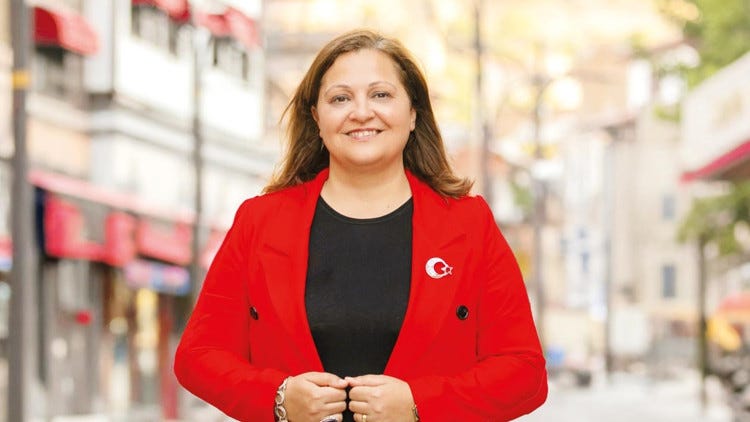
📢 CHP’s Başarır urges public to protest defecting mayor Burcu Köksal ‘wherever you see her’
CHP Group Deputy Chair Ali Mahir Başarır has called on residents of Afyonkarahisar to protest mayor Burcu Köksal — set to defect to the ruling AKP — wherever they encounter her, addressing demonstrators gathered outside the municipality. “For us and for you, such a mayor no longer exists,” Başarır told the crowd, saying Köksal owed her votes and her mandate to the people of Afyon and urging them to “protest her wherever you see her — don’t let her walk these streets.” Başarır said his heart ached watching President Recep Tayyip Erdoğan use judicial pressure to take places he could not win at the ballot box, claiming Erdoğan had taken the reins of the judiciary in hand and was using them to harness those he intimidated and park them at the palace. He saluted the jailed mayors waging a struggle for democracy at Silivri — naming Ekrem İmamoğlu, “Rıza Başkan”, “Emrah Başkan”, and the mayors of Beyoğlu and Beykoz — and pouring scorn on what he called the cowards and the crushed. He drew a contrast between mayors prosecuted on charges of corruption or worse and those who, on switching to AKP, suddenly find themselves “cleansed”, citing Aydın Mayor Özlem Çerçioğlu — whom he said he had once been embarrassed to walk alongside — as an example, and noting that Köksal had been claiming that she, her husband and her family were being threatened, only to be received with open arms by Erdoğan. “What kind of water is there in this AKP?” he asked, arguing the issue was not the fight against corruption but the assault on the people’s will: extracting through judicial rulings the votes Erdoğan could not obtain at the ballot box, given that Afyonkarahisar had handed the municipality not to AKP but to CHP. He put a series of pointed questions to Erdoğan and to AKP’s Afyon MPs: in the elections, Erdoğan had called Köksal “a fascist”, so was he now a fascist too — or had she ceased to be one? Local AKP MPs had branded her a “Fethullahist” (FETÖ member); were they no longer such members, or had Köksal now become one? And he asked the families of the country’s martyrs and veterans how things now stood, given that Köksal had said in parliamentary records that the “bones of martyrs and hearts of veterans were aching”. Nothing had changed, Başarır said: the cruel were still there, and so were the cowards. He told Afyonkarahisar that, while “God and the people of Afyon” might forgive her, Köksal had committed an unforgivable crime — betraying the will of the people. Addressing the government, Başarır urged it not to inflict this “wickedness and immorality” on itself or on the mayors it transferred, warning that those who trampled on the people’s will throughout history had lost, those who jailed or transferred elected representatives had lost, and AKP too would lose, recalling that “in two years we are coming”. He vowed accountability for “the cruel and those who handed them the oars”, promising that those who had threatened Köksal, her husband, family and child would also be put on trial. Recounting that he had been told a few days earlier that Köksal might join AKP, he said he had rung her himself but she had not called back or even looked at her phone — leaving him to laugh wryly at someone who had strutted in parliament hurling labels like “thief”, “Fethullahist”, “fesli Kadir” and “snotty” at the government, only to fail to pick up a fellow party member’s call out of fear. He predicted the pro-government media — “the nightingales of the pool media” and “the staff reporters of TGRT” — would frame the news as a “shedding of leaves” in CHP, retorting: “No — we are carrying out a clean-up. It’s not a shedding of leaves; the rotten branches and leaves of that tree are being pruned and sorted out.” Despite having 30 dossiers against him and being told he would be jailed, Başarır said being jailed was no disgrace — but switching parties out of fear of arrest was a shameful and disgraceful thing — so people could rest easy.
🎯 Investigation greenlit against Balıkesir’s CHP mayor as ‘judicial baton’ shifts to another opposition city
Türkiye’s Interior Ministry has authorised an investigation into Balıkesir Metropolitan Mayor Ahmet Akın over a 2024 procurement, drawing fresh accusations from BirGün that the government’s “judicial baton” continues to come down on CHP-run municipalities. The news, as has become customary, surfaced via the pro-government Sabah newspaper, which reported allegations of irregularities in a 2 million lira decoration job carried out as part of Republic Day celebrations, claiming that the work was completed by a company on 28 October but the tender was held only on 31 December 2024 and the contract signed on 15 January 2025; the complaint was reportedly brought to the Interior Ministry by AKP councillor and audit committee member, lawyer Birol Şahin. Balıkesir Metropolitan Municipality, however, said no payment had been made from the municipal budget and no public loss had therefore occurred, calling the granting of an investigation permission incompatible with the principles of the rule of law and announcing that the necessary objections and appeals would be lodged with the Council of State in the coming days. In its statement, the municipality noted that under the Public Procurement Law, mayors do not act as tender or expenditure authorities, and that Akın had given no instruction, written order or input into how the work in question was carried out. As soon as the matter was identified, the process was halted immediately, with the relevant department head removed from his post, an administrative inquiry opened against him, the disciplinary board imposing one of the heaviest sanctions — “suspension of grade advancement” — and the file forwarded to Balıkesir Governor’s Office for the necessary criminal proceedings. Recalling that similar irregularities had occurred in earlier periods without mayors being drawn into the process or investigation permissions issued, the municipality said it was striking that an authorisation had nonetheless been granted in this case and that the decision was deemed devoid of legal grounds. With no indictment or court ruling in place, the statement added, reports based solely on an administrative decision were seen as undermining the presumption of innocence and intended to steer public opinion.
⚖️ ‘Espionage’ trial of İmamoğlu, Yanardağ and Özkan opens in Türkiye today
The first hearing of the “political espionage” trial of suspended Istanbul Metropolitan Mayor and CHP presidential candidate Ekrem İmamoğlu, Tele 1 editor-in-chief Merdan Yanardağ and İmamoğlu’s detained adviser and campaign director Necati Özkan begins today, with all three appearing before a judge for the first time in the case. The hearing at Istanbul’s 25th High Criminal Court will be held at the Silivri courthouse complex and is scheduled to start at 10:00. The indictment seeks sentences of between 15 and 20 years in prison for Hüseyin Gün, İmamoğlu, Özkan and Yanardağ on charges of “political espionage”. İmamoğlu, Yanardağ and Özkan were detained on the night of 27 October on the same espionage allegation; for İmamoğlu it marked a second arrest, following his earlier detention in the corruption inquiry. In its statement, the Chief Public Prosecutor’s Office described İmamoğlu as the leader of an organisation, alleging that the “İmamoğlu Profit-Seeking Criminal Organisation” had seized control of CHP through unlawful methods, that funds had been raised for his presidential candidacy and financial crimes committed in pursuit of that aim, and that espionage had been committed by transferring the personal data of citizens, primarily in Istanbul, to foreign state intelligence units. The indictment also accuses İmamoğlu of activities aimed at “manipulating” the 2019 local elections. With the espionage trial now opening alongside the existing case against him, İmamoğlu is being tried in two different cases simultaneously at the Silivri prison complex, and is expected to move to the courtroom hearing the İBB case once today’s espionage hearing concludes.
🕵️ Suspended Antalya Mayor Muhittin Böcek ‘applies for effective remorse’
A fresh development has emerged in the “bribery” and “corruption” investigation into Türkiye’s Antalya Metropolitan Municipality, with reports that suspended mayor Muhittin Böcek has applied to the Antalya Chief Public Prosecutor’s Office to benefit from the country’s “effective remorse” provisions. Detained on 5 July and remanded in custody on the same day, Böcek is said to have made the application and was brought to Antalya Courthouse at midday, where his statement-taking process is reported to be continuing. His son, Gökhan Böcek, who is also held under the same case, had already made an effective remorse application and given a statement on 2 May as part of an investigation conducted by the Istanbul Chief Public Prosecutor’s Office.
🤝 İYİ Party’s Poyraz: ‘Backing Mansur Yavaş for President would be good for Türkiye’
İYİ Party Group Deputy Chair Uğur Poyraz has said that if his party were to decide to back Ankara Metropolitan Mayor Mansur Yavaş as a presidential candidate, it would be in Türkiye’s interests. Speaking on TV100, Poyraz noted his long-standing personal closeness to Yavaş, whom he referred to as “abi” (older brother), and pointed out that no negative headlines had ever been published about the Ankara mayor.
🪞 Columnist Fatih Altaylı on defections: ‘They think they’re democrats — they’re just dimwits’
Veteran journalist Fatih Altaylı has hit back at critics dredging up Burcu Köksal’s old broadsides against the AKP now that the Afyonkarahisar mayor is set to defect to the ruling party, arguing in his column that few political journeys in Türkiye are quite as one-way as her detractors imply. A pro-opposition newspaper, he writes, has cited Köksal’s CV against AKP — from “Porsche owners snorting icing sugar” to mothers unable to afford baby formula, with the suggestion that under AKP only AKP officials prospered — and asked how anyone who had said all this could possibly become an AKP member. Altaylı’s response is to ask, in effect: so what? Does anyone seriously imagine that the AKP doesn’t already know all this, or that a newspaper headline will make it say “perhaps we shouldn’t take her then”? He then reels off a roll-call of the AKP’s harshest critics-turned-officeholders: Numan Kurtulmuş, author of the line about politicians who “came like Harun and grew rich like Karun”, and now Speaker of Parliament after stints as deputy prime minister and minister; Süleyman Soylu, whose attacks Altaylı says no opposition leader of today — including Özgür Özel, against whom investigations are opened daily — has matched, and who went on to serve for years as Social Security Minister and then as a powerful Interior Minister under the presidential system; an officer once jailed in the Ergenekon case whose name now escapes him, and Hulki Cevizoğlu; and Devlet Bahçeli, who at least did not formally join AKP. As he has written before, says Altaylı, the asymmetry is glaring: in CHP, if you agree on 99 out of 100 issues but differ on one you are not accepted, while in AKP, if you disagree on 99 and agree on just one, you can become an AKP member. There is, he argues, an even sharper twist: after 23 years of cursing the AKP, the moment you say “I cursed it but I’ve changed my mind”, the door opens; but if you once voted AKP and joined CHP saying “I wish my arm had snapped before I cast that vote”, you face constant abuse with the line, “But you used to be AKP”. He stresses this is not the work of the CHP leadership but of what he calls an “ahmak” (foolish) group that fancies itself the most AKP-hostile and the most genuine of CHP voters — the very constituency, in his view, that the CHP leadership has to take on. These people, Altaylı writes, imagine that without taking anyone over from the other side, CHP or the opposition can secure a majority and come to power by sheer “reproduction”, failing to grasp that democracy is a regime of changing minds, and concludes that they are not democrats at all but, at best, “dangalak” — dimwits.
Thanks for reading this far, I will see you tomorrow.