

⚖️ Justice System and Everyday Life in Türkiye
Mine closes in Soma as 1,361 workers’ contracts terminated
Yeni Anadolu Madencilik A.Ş., which operates the Işıklar coal mine in the Soma district of Manisa, has decided to halt operations, announcing that the contracts of 1,361 workers will be terminated as of 9 July, while the Independent Maden-İş trade union argued that Turkish Coal Enterprises lay behind the decision. The company stopped operations at the Işıklar mine, citing the dissolution of its royalty (rödövans) agreement with the Turkish Coal Enterprises Authority. According to a report by Cumhuriyet, a document headed “Announcement Regarding Workplace Closure” distributed to workers named Turkish Coal Enterprises Authority as responsible for the decision, while the termination notice stated that workers’ wages, severance and notice pay and other entitlements would be deposited into their accounts in a single payment. Başaran Aksu, an organising specialist for the Independent Maden-İş union, objected that Turkish Coal Enterprises Authority was behind the process, calling it a fraudulent transaction; he said the Turkish Coal Enterprises Authority general manager was also the chairman of Yeni Anadolu’s board, that the majority of the company’s shares belonged to Turkish Coal Enterprises Authority, and that Turkish Coal Enterprises Authority had first eliminated the royalty agreement and then used this as grounds to close the operation. Claiming the process was being driven through an imposition of mediation, Aksu alleged that more than 2,000 workers, including subcontracted staff, were to be cleared out and that the operation would later be transferred to another company.
Suspicious death of teacher Irmak: school head suspended
The headteacher accused of subjecting Irmak Ayşe Koparan — a pre-school teacher found dead at her home in the Hamur district of Ağrı — to workplace bullying has been suspended as the investigation into her death continues. According to a report by the pro-government Sabah, headteacher Melahat İleri was removed from her post as part of the inquiry opened after Koparan, a kindergarten teacher in Hamur, was found dead at home on 7 June. It had emerged that physical contact occurred between Koparan and İleri, head of Karakazan Primary School, following a dispute on the school bus on 17 April 2026, after which the headteacher obtained a medical report documenting assault and complained to the police and the District Directorate of National Education. The same day, Koparan’s temporary assignment was reportedly ended and she was sent back to her substantive post at Soğanlıtepe Primary School. İleri, alleged to have driven the teacher to suicide, said in her statement that she had no authority over the change of posting, and was released after giving her statement. National Education Minister Yusuf Tekin said the ministry’s inspection board had begun the necessary process in coordination with judicial authorities and the police, adding that one should act without heeding the comments of newspapers or people unaware of the details, since every word risked violating a fundamental right and tarnishing innocent people, and that the ministry preferred to speak cautiously; he said its concern was to protect teachers’ rights and ensure they worked in a safe, healthy and peaceful environment, and that if any colleague had been negligent, whoever it might be, the necessary action would be taken without mercy. Koparan, a contracted teacher in Hamur, was found dead at home, after which allegations surfaced about the problems she had faced in the period leading to her death. Her family and colleagues said the young teacher had applied to numerous institutions over months of problems with her posting, transport, accommodation and the school administration, but to no avail. Allegations that she had been subjected to bullying and physical violence at her school also reached the public; colleagues claimed she had repeatedly raised her problems with the district governorate and education officials without any solution being produced, and that she faced costly and lengthy transport difficulties in reaching her school.
Three killed, including a baby, in North Marmara crash
Three people, one of them a baby, have died in a crash on the North Marmara Motorway in İstanbul. The collision occurred at around 6 a.m. at the Reşadiye location in Çekmeköy, when a light commercial vehicle struck a lorry. Police, medical and fire crews were dispatched to the scene.
🏛️ Politics
Defence Ministry hits back on Cyprus: ‘No military alliance against Turkey has any chance of success’
Turkey’s Ministry of National Defence has responded to a status-of-forces agreement signed between France and the Greek Cypriot Administration, stating that it was reiterating the fact that no military alliance targeting the rights and interests of Turkey and the TRNC stood any chance of success against Turkey. In its weekly press briefing, the ministry said it was closely following provocations aimed at undermining stability and raising tension in the Eastern Mediterranean, and argued that the agreement — signed between the Greek Cypriot Administration and France, which has no guarantor status in Cyprus — sought unilaterally to alter the island’s delicate balances and disregarded the will and sovereign equal rights of Turkish Cypriots, in breach of the 1960 Cyprus Treaties and international law. It warned that such steps, lacking any legitimacy and taken without careful thought as to their consequences, could produce dangerous outcomes for the south of the island, and pledged that, as guarantor, Turkey would continue to protect the rights, interests and security of the TRNC, with the Turkish Armed Forces having the power and resolve to give the harshest response to hostile conduct threatening Turkish Cypriots’ security. The ministry also dismissed as untrue what it called organised and deliberate provocative claims in some media and on social media that Turkish jets had harassed aircraft carrying the Greek defence minister and European ministers. It said that on 7 June 2026, four of six air traffic movements flying the Greece–Greek Cypriot Administration route had violated TRNC airspace, prompting two F-16s on alert-reaction duty in the TRNC to be scrambled immediately as a precaution; the jets, it said, operated over TRNC airspace without violating Greek Cypriot airspace and did not harass the said traffic, adding that attempts to create a sense of victimhood and raise tension were unacceptable. On the conflict in the Middle East, the ministry said clashes that began with attacks on Iran by Israel and the United States, and intensified after Iran targeted third countries, had harmed global and regional stability; it said it was closely following developments as the clashes resumed and reiterated that the attacks should end at once, that the fighting would benefit no side, and that it favoured resolving the problem through diplomacy.
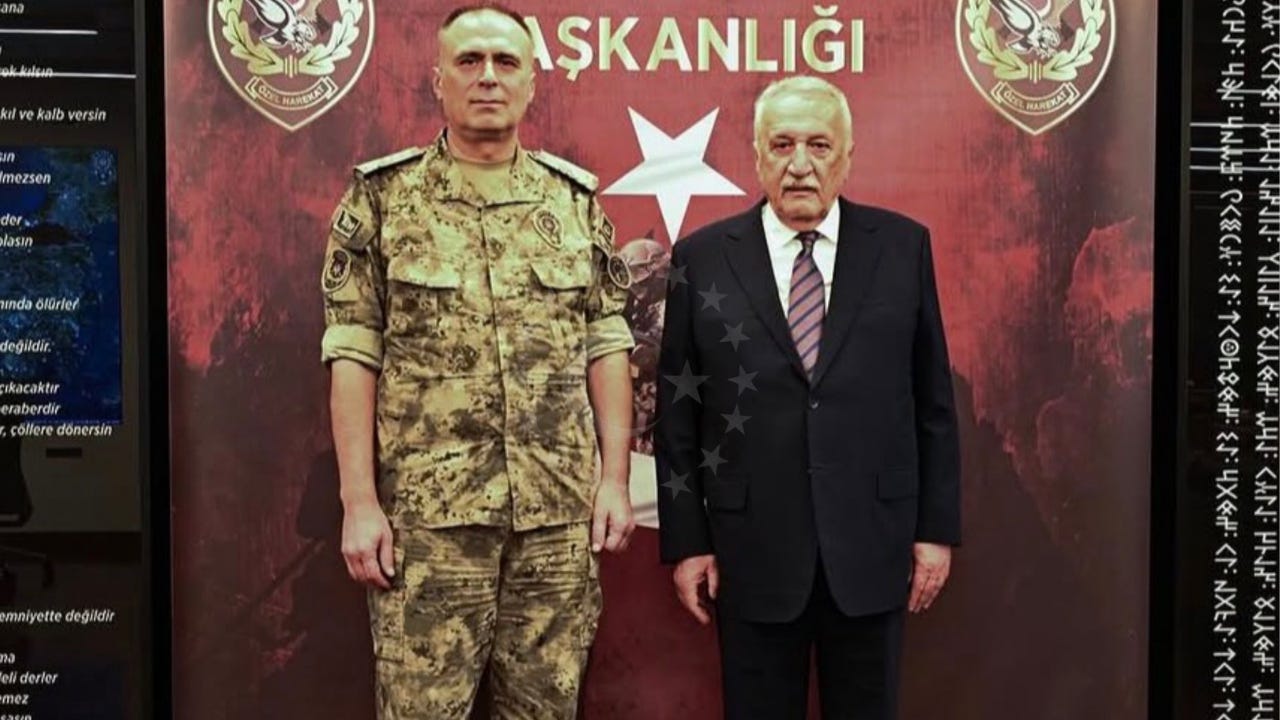
Mehmet Ağar’s curious visits continue: he calls at the Special Operations Directorate
Mehmet Ağar — a defendant in the Susurluk case who is also associated with the unsolved murders committed in the 1990s — has visited the Special Operations Directorate. Ağar, one of the darkest figures of his era, served as interior minister under the government of Tansu Çiller, having previously held the post of national police chief and other senior policing roles, and his curious visits are continuing. The former bureaucrat and politician most recently called at the Special Operations Directorate, which said in a statement that Mehmet Ağar, justice minister in the 53rd government and interior minister in the 54th, had visited the directorate, thanking him for his gracious attendance and offering its respects. Ağar has, particularly since 2016, strengthened his ties with the AKP and visited various ministries and police chiefs. In recent months he had also visited Interior Minister Mustafa Çiftçi, who took office a short time ago.
Nine-year US case against Halkbank dropped
A petition has been filed for the dismissal of the nine-year-long case against Halkbank in the United States, with the bank announcing through a Public Disclosure Platform (KAP) statement that the long-running case had been dropped. According to the statement, Halkbank and the Southern District of New York prosecutor’s office submitted a jointly signed petition for the dismissal of the criminal case to the US District Court for the Southern District of New York the previous day, and the court is now expected to process the petition as soon as possible and approve the dismissal of the criminal case that has continued for nine years. The bank said that the compliance report envisaged under the Deferred Prosecution Agreement (DPA) signed between the US Department of Justice’s Southern District of New York prosecutor’s office and the bank, which took effect on 11 March 2026, had been prepared by a specialist organisation and delivered on time to the prosecutor’s office and to the US Treasury Department’s Office of Foreign Assets Control (OFAC). It said that, following the report’s submission and in accordance with the settlement agreement, Halkbank and the prosecutor’s office had submitted the jointly signed petition for dismissal to the court on 10 June 2026, and that once the court takes the joint request into account and approves the dismissal, the criminal case that has continued for nine years will come to a complete end.
TMSF puts up for sale the major company it was appointed trustee of
The Savings Deposit Insurance Fund (TMSF) has announced it is putting up for sale, through compulsory enforcement, the Assan Group Commercial and Economic Integrity formed from the assets of Assan Group Makine Savunma Sanayi A.Ş., of which it was appointed trustee, with the tender to be held on 8 July. The commercial and economic integrity on sale comprises the company’s real estate allocated to defence industry activities, pre-allocated land, machinery, equipment and fixtures, goods subject to financial leasing contracts, trademarks, a domain name and contracts to which it is a party. According to a report by NTV, the estimated value set for the tender was announced as 416.5 million US dollars, with companies and individuals wishing to take part required to deposit a guarantee of 41.65 million dollars; participants must pay 50,000 dollars to examine or purchase the tender specification and 100,000 dollars to make use of the information room and a site visit, with the information room open between 10 June and 6 July 2026. Bids will be submitted in US dollars on a cash basis, with sealed-envelope and open-auction methods applied together, and offers comprising administrative and financial envelopes must be delivered by hand to the Sales Commission by 4 p.m. on 7 July 2026. The tender will take place at 11 a.m. on 8 July 2026 at the TMSF’s building in Esentepe, İstanbul, with the open-auction stage following the opening of the sealed envelopes; should the highest bid fall below the estimated value, the tender may continue by negotiation on 10 July 2026 by decision of the Fund Board. The case arose in 2025 when, as part of military espionage investigations conducted by the İstanbul Chief Public Prosecutor’s Office, ASSAN Group owner Emin Öner and company general manager Gürcan Okumuş — found to have links to FETÖ and to be engaged in military espionage — were detained on charges of “membership of an armed terrorist organisation” and “military espionage”, taking into account the importance of the sectors in which they operated; the TMSF was appointed trustee of the 10 companies operating under ASSAN Group as part of the investigation.
Mehmet Ağar’s curious visits continue: he calls at the Special Operations Directorate
Mehmet Ağar — a defendant in the Susurluk case who is also associated with the unsolved murders committed in the 1990s — has visited the Special Operations Directorate. Ağar, one of the darkest figures of his era, served as interior minister under the government of Tansu Çiller, having previously held the post of national police chief and other senior policing roles, and his curious visits are continuing. The former bureaucrat and politician most recently called at the Special Operations Directorate, which said in a statement that Mehmet Ağar, justice minister in the 53rd government and interior minister in the 54th, had visited the directorate, thanking him for his gracious attendance and offering its respects. Ağar has, particularly since 2016, strengthened his ties with the AKP and visited various ministries and police chiefs. In recent months he had also visited Interior Minister Mustafa Çiftçi, who took office a short time ago.
Election analysis: the real loser in the six-town vote was not the CHP but the MHP
In his assessment of the local by-elections held on 7 June 2026, Tele2 Haber columnist Süleyman Karan argued that the results pointed not to a decline for the CHP but to a loss of votes in areas where the People’s Alliance has traditionally been strong, noting that the number of registered voters across the six towns had risen by 152 per cent in two years. Writing under the headline “According to the town-election results, the People’s Alliance’s strongholds are shaking too”, Karan objected to drawing a general anti-CHP political conclusion from the results, arguing the votes in Tokat’s Yolüstü, Çevrecik, Bağtaşı and Kuşçu, Gümüşhane’s Tekke and Nevşehir’s Mustafapaşa should be read through two main themes: the extraordinary rise in voter numbers and the loss of votes suffered by the People’s Alliance in its traditional areas of strength. Citing data shared by CHP deputy chair for local government Gökan Zeybek, Karan said the number of voters across the six towns stood at 4,275 in the 31 March 2024 local elections but had risen to 10,791 by 6 May 2026 — an increase of 6,516 people, or 152.42 per cent in total. He relayed the CHP’s claim that voters had been improperly transferred into these towns from other regions via population directorates, and that some district governors had acted in favour of the government rather than preserving the state’s neutrality, while noting that moving population to gain town status had become a frequently used method in Turkey, often by having city-dwellers transfer their primary residence to their hometowns — producing an increase “on paper” rather than a genuine population movement.
Karan rejected assessments interpreting the results as a “decline” for the CHP, arguing it was unsound to draw conclusions about the party’s nationwide voting trend from these six towns, most of which lay in districts where the AKP and MHP were strong in the 31 March 2024 elections; the results, he said, should therefore be read through the balances within the People’s Alliance, and the MHP’s losses in particular, rather than a CHP defeat. According to the results he relayed, AKP candidate Mustafa Özer won Mustafapaşa, a town in the CHP-run Ürgüp district of Nevşehir, with 52 per cent — counted as a loss for the CHP — while in Çevrecik, a town in Tokat’s Reşadiye, CHP candidate Nazım Demirkol won with 48 per cent, which Karan deemed a notable success given that the MHP had taken 54.15 per cent in Reşadiye on 31 March. AKP candidate Kemalettin Demirkıran won Tekke in central Gümüşhane with 65 per cent, AKP’s Mustafa Altın took Yolüstü in Reşadiye with 82 per cent, and AKP’s Mustafa Karadağ won Bağtaşı in Tokat’s Almus with 94.5 per cent, while in Kuşçu, in Tokat’s Yeşilyurt, MHP candidate Hikmet Temizel became mayor with 57.38 per cent.
Karan wrote that the “loser of the towns was the MHP”, noting that the party had been the leading party on 31 March in a significant share of the districts to which the towns belonged, yet on 7 June it managed to win only in Kuşçu; given how high the AKP and MHP’s combined votes had been in these areas in past elections, he argued the 7 June results were, contrary to expectations, a warning rather than a relief for the People’s Alliance. He gave the overall distribution of votes across the six towns as 62.69 per cent for the AKP, 27.6 per cent for the CHP, 5.58 per cent for the MHP and 4.13 per cent for other parties or independents, arguing that the CHP averaging above 27 per cent showed the opposition could expand its voter base even in the alliance’s strongholds. Concluding that no macro result could be drawn from a micro election, Karan criticised general “decline” readings made without regard to local, demographic and political conditions, calling the 7 June votes not a “vote-loss alarm” for the CHP but a limited yet noteworthy picture to be read through allegations of voter transfer, town-status processes and vote movement in the alliance’s traditional strongholds.
Following the by-elections, some journalists and commentators had instead read the results as a warning sign for the CHP. Cüneyt Özdemir said on social media that the elections might have different dynamics in terms of turnout and local structure, but argued that the CHP, which wants an early election, should have done better “symbolically” in these towns; he called the outcome “the first result of the absolute-nullity turmoil” and a “disappointment” for the party. Nevşin Mengü assessed the results in terms of the CHP’s push for an early election, noting the AKP won four of the six towns, the MHP one and the CHP one, and saying the CHP had built these elections up, with Özgür Özel personally taking on the contest, so that winning only one town undermined the opposition’s early-election pressure. Fatih Altaylı argued the results showed the CHP had been damaged by the trustee process, with voters in conservative areas either not shifting position or moving from the MHP to the AKP within the People’s Alliance. Karan responded sharply to such commentary, arguing those drawing nationwide conclusions had failed to take sufficient account of how the towns gained their status, the extraordinary rise in voter numbers and the region’s political-sociological make-up; under the subheading “Those teaching the CHP lessons with bogus commentary”, he criticised in particular figures who had moved from journalism to YouTube commentary and reach wide audiences, contending that some of their commentary was driven by concern for viewing figures and some by an eagerness to steer politics, and that readings made without regard to the six towns’ socio-cultural leanings, the voter-transfer allegations and the alliance’s traditional strength there were incomplete and misleading.
🤝Ruling Government (AKP, MHP and DEM coalition aka People’s Alliance)
Erdoğan: It is they who today call “traitor” those they yesterday called “the people’s hope”
President Erdoğan has launched a sharp attack on the CHP, saying it was the party’s own members who held its 38th Congress, who alleged it had been tainted by irregularity, and who took the matter to court, and that it was they who, in his words, had dragged the party founded by Mustafa Kemal “down to nightclub tables”, who said they had given bribes, and who today brand as “traitors” those they yesterday called “the people’s hope”. Speaking at his party’s group meeting, Erdoğan said certain figures in the main opposition had for some time been speaking loftily in an effort to set their own agenda, holding forth on the back of citizens they had dragged from city to city by bus and seeing themselves in a magnifying mirror, but had all vanished once the ballot results came in; those who had until recently shouted at the top of their voices, he said, had fallen silent for three days, with none speaking about the elections or apologising to the citizens they had stirred up. He likened this to the aftermath of the 14–28 May elections, accusing the opposition of having lied that they were ahead while knowing they were behind, of trying to manipulate voters with commissioned polls, and of blaming the nation rather than themselves after the results; he warned that if they continued “with this mindset” they would take more slaps from the nation at the ballot box and taste more defeat unless they corrected themselves, did realistic politics and freed themselves from the tutelage of “coup-plotters and crime organisations”.
Saying the opposition had been defeated many times over nearly a quarter-century of rivalry without once trying to change their mentality, Erdoğan accused them of blaming him, the courts and the media rather than resolving their internal disagreements calmly within the framework of judicial rulings. He repeated that, in the disputes over the CHP’s 38th Congress, it was CHP members who held the congress, who alleged it was tainted, and who took their claims to court with documents, and — “begging your pardon” — it was they who had brought the party founded by Mustafa Kemal down to nightclub tables, they who said they had taken and given bribes and paid certain people certain sums, and they who today stamp as “traitors” those they yesterday called “the people’s hope”.
Erdoğan said that in a dispute where all sides were members of the CHP, the judiciary had made the necessary assessment and given its ruling, and that what followed had confirmed his position; despite what he called numerous insults against his party, he said they had kept their distance from the disputes after the ruling, paid no heed to “political hucksters” or to “gunslingers in the media”, and merely followed events from a safe distance. He said the turmoil in the CHP did not concern him in the slightest so long as it did not harm social peace, public order and the institution of politics, that he had no wish to be dragged into the vortex, and was not and would not be a party to a “scramble for seats and halls”; his sincere wish, he said, was that the crisis — turned into a time bomb by the irresponsible conduct of certain figures unable to escape the control of crime organisations — be overcome quickly and resolved with democratic maturity within the framework of judicial rulings, before it damaged the nation’s peace, the dignity of Parliament and the standing of democracy and the country.
Erdoğan said he did not wish a party representing the nation, even a rival, to be associated with fighting, conflict and a power struggle spilling into the streets and parliamentary corridors, and would not permit the Grand National Assembly to be “terrorised” or turned into an arena for demonstrations, arguing that politics could not be done by listening little and shouting much. He said it was of no consequence to him who occupies the CHP’s leadership seat, that his struggle had never been with individuals but with what he called fascist ambitions that would, given the chance, return Turkey to “single-party darkness” — with those disturbed by the Ottoman military march, those who cannot tolerate Ramadan events at schools, and what he described as the CHP’s ideology hostile to the people and the national will, sheltering behind secularism, and a Jacobin mentality that looks down on the nation.
As CHP is purged of opposition, pro-government media revels: AKP-aligned journalists share expulsion lists
After the Kemal Kılıçdaroğlu team, brought to power by the absolute-nullity ruling, moved to expel figures close to Özgür Özel — sending nine CHP deputies to the disciplinary board with a request for definitive expulsion — pro-government journalists began circulating lists of names and even pointing to dates, with several indicating Friday. Former AKP deputy Şamil Tayyar mocked Kılıçdaroğlu on social media, saying his power had only stretched to “those poor nine deputies” and daring him to expel Cemal Enginyurt, who had reportedly challenged the leadership to expel him; TGRT’s Ankara representative Fatih Atik replied urging “a little patience... let’s see Friday”, while Sinan Burhan, speaking on Bengütürk TV, claimed a second, ten-name list was being prepared, naming Adnan Beker, Cemal Enginyurt, Mahmut Tanal, Ümit Dikbayır and Gökan Zeybek among them.
The Central Executive Board (MYK) chaired by Kılıçdaroğlu referred nine CHP members to the High Disciplinary Board over events at the previous day’s group meeting, with the administration’s spokesman Müslim Sarı naming them as Ensar Aytekin, Ali Mahir Başarır, Gökhan Günaydın, Nurhayat Altaca Kayışoğlu, Özgür Karabat, Umut Akdoğan, Veli Ağbaba, Turan Taşkın Özer and Burhanettin Bulut, and saying the decision was taken as part of Kılıçdaroğlu’s policy of “purification”. It was noted, however, that under the CHP’s bylaws the disciplinary process for deputies can only be conducted at the request of the Party Assembly, on which basis the decision was said to be in breach of the bylaws.
🗳️ Opposition Parties (CHP and others)
Censorship of visa story reaches Parliament: What harm in giving citizens this information?
A parliamentary inquiry motion submitted by the İYİ Party to examine “all aspects of the problems faced in visa application processes” was rejected by AKP and MHP votes in the General Assembly, as the visa issue returned to Parliament’s agenda following the censoring of Kısa Dalga’s “Visa Empire” series — part of the Turkish leg of a study by the international investigative platform Lighthouse Reports into the global visa-processing giant VFS. İYİ Party group chair Buğra Kavuncu, noting that no oversight was conducted over visa appointments, said that taking service fees, insurance costs and other application expenses into account, a total of 27 billion Turkish lira — 500 million dollars — had come out of citizens’ pockets to these intermediary firms from those who applied but received no visa, rising to 750 million dollars once those who did obtain visas were included; he asked where the authorities’ minds had been and, pointing to the access ban imposed on the outlets that ran the story, asked what harm there was in giving this information to citizens and dared the government to accept his motion if they were sure there was a security problem. Yeni Yol deputy group chair Selçuk Özdağ called for the ownership of the intermediary firms to be investigated, claiming they had ties to certain AKP deputies and ministers, past and present, and urging that — if the talk of “purification” and fighting corruption was sincere — everyone pursue the matter together rather than allow some to obtain visas unfairly while the deserving could not travel.
Addressing Foreign Minister Hakan Fidan, Özdağ recalled a law passed to establish a foundation under the Foreign Ministry through which such revenues would be spent and ministry staff trained, and asked whether the firms’ operations had been brought under that foundation; they had not, he said, the firms still operating, earning unfair profits and granting visas to the undeserving while denying the deserving, working through cronyism rather than like a European country. Speaking for the AKP group, İstanbul deputy Oğuz Üçüncü said investigations into seven different intermediary firms were continuing and that anyone breaching the law or mistreating citizens for unfair gain would receive the punishment they deserved; he argued that record levels of visa applications, chiefly to Schengen countries, showed the government had increased ordinary people’s mobility, but that rather than palliative fixes the visa-liberalisation issue should finally be resolved with EU counterparts as promised, contending that what was possible for Albania, Bosnia, Kosovo, Montenegro, North Macedonia and Serbia should now be made possible for Turkey, and announcing the group would vote against the motion.
Two birds with one stone for Kılıçdaroğlu: is the Party Assembly the target?
Kemal Kılıçdaroğlu, appointed CHP leader by the Ankara Regional Court of Justice ruling, has taken his first step against figures close to Özgür Özel and Ekrem İmamoğlu, with his Central Executive Board (MYK) referring nine people to the disciplinary board with a precautionary expulsion request. Spokesman for the appointed administration Müslim Sarı named those sent to the High Disciplinary Board for definitive expulsion as Ensar Aytekin, Ali Mahir Başarır, Gökhan Günaydın, Nurhayat Altaca Kayışoğlu, Özgür Karabat, Umut Akdoğan, Veli Ağbaba, Turan Taşkın Özer and Burhanettin Bulut. The Özel administration argues the MYK has no power to take such a decision, holding that the bylaws vest this authority in the Party Assembly, while Kılıçdaroğlu’s team says it is treating the deputies in their capacity as ordinary members.
Crucially, several of those referred for expulsion — including Günaydın, Karabat, Altaca, Akdoğan and Ağbaba — also sat on the Party Assembly (PM) formed after the nullity ruling. With Kılıçdaroğlu having decided to convene the Party Assembly on 11 June, and his team widely said in political circles to lack the strength to carry decisions there, the timing has fuelled talk that, with the list previously tilted in Özel’s favour, the precautionary expulsions are a means of shifting the balance on the PM in Kılıçdaroğlu’s own favour.
Detention order for son of CHP’s Adnan Beker
A detention order has been issued for Oğuzhan Beker, son of CHP Ankara deputy Adnan Beker, as part of a drugs and prostitution investigation targeting celebrities conducted by the İstanbul Chief Public Prosecutor’s Office. Earlier in the morning, 22 people, including Beren Saat, Kenan Doğulu and Enis Arıkan, had been detained in the celebrity-focused drugs investigation.
Ali Babacan: Erdoğan goes down in history as the president who made the treasury pay the most interest
DEVA Party leader Ali Babacan said President Erdoğan had gone down in history as the president who made the treasury pay the most interest, arguing that high interest was the price of lawlessness, arbitrariness and unpredictability, and that whoever loses trust is condemned to high interest. Speaking at Yeni Yol’s group meeting in Parliament, Babacan recalled Erdoğan’s remark that “there is no abundance where there is interest” and agreed it was true, but pointed out that this year’s budget allocated 2.742 trillion lira to interest against just 168 billion in total support for agriculture — sixteen times as much to interest as to farming. He asked who had prepared and sent this budget to Parliament, noting it was now drawn up at the presidential complex by a body chaired by Erdoğan himself, and argued it was hardly sincere to say there is no abundance where there is interest while signing off a budget paying out 2.742 trillion lira in interest. He accused the government of deceiving the public before the 2023 elections by lowering the central bank’s rate from 10 to 8.5 per cent by instruction, only to raise it to 50 per cent immediately afterwards — still at 40 per cent today — saying they had won the election by deception and that abundance cannot remain where the lawful and unlawful are mixed.
Babacan said Erdoğan had, the previous week, pledged to keep voicing his longing for an interest-free economy “with a loud voice”, but observed that this voice had not been heard since the 2023 elections, with the word “interest” barely passing his lips in three years; the speech, he noted, had been delivered at a meeting on Islamic finance before delegates from around the world, where he was obliged to mention it. He insisted interest does not fall by instruction but by trust, and that the figures spoke for themselves regardless of what Erdoğan said. Babacan also pointed to a Reuters-sourced report suggesting the United States might open a swap line to Turkey before elections, asking the president and the treasury and finance minister directly whether they intended to seek dollars from the US treasury or central bank, and urging them to say so openly if not, warning they were on the brink of great danger if they had such an intention but stayed silent. Turning to inflation, he noted Friday’s figure showed 16.6 per cent over the first five months alone, likely approaching 20 per cent by the end of June, meaning the 28,000-lira minimum wage set at the start of the year would have eroded by a fifth; he argued that, for years, an interim mid-year rise had been granted on 1 July as the worker’s right, that the government had skipped it for the first time last year and was again not even mentioning it, and that withholding the rise amounted to a violation of the worker’s due.