

⚖️ Justice System and Everyday Life in Türkiye
75-year-old Ayten Yakut, arrested ahead of NATO Summit, released
Ayten Yakut, a 75-year-old retired teacher and TEMA volunteer who was among 178 people arrested ahead of the NATO Summit in Ankara, has been released with a ban on leaving the country following an appeal. In operations carried out as part of an investigation by the Ankara Chief Public Prosecutor’s Office ahead of the summit, a total of 225 people had been detained and 178 of them arrested. Yakut’s lawyers lodged an appeal with the 10th Criminal Judgeship of Peace, and she was released as a result. The judgeship’s decision stated that, taking together the current state of the evidence, the suspect’s age and health and the scope of the file, it had concluded that the benefit expected from arrest could be achieved through a judicial control measure. It was ruled that Yakut be released with a ban on travelling abroad imposed.
Unexpected development in the judiciary: the presiding judge in the İBB case has been reassigned
The Council of Judges and Prosecutors (HSK) has made extensive changes to the assignments of judges at the Heavy Penal and Commercial Courts in Istanbul, with Selçuk Aylan, President of the Istanbul 40th Heavy Penal Court, which was hearing the İBB (Istanbul Metropolitan Municipality) case, appointed to the presidency of the 1st Panel of the 33rd Heavy Penal Court. According to a report on SON TV, the change came through a decree issued by the First Chamber of the HSK, which reassigned numerous presidents of heavy penal and commercial courts serving in Istanbul. Aylan’s tenure had been the subject of debate since the first day of the trial; he had been appointed president of the 1st Panel of the 40th Heavy Penal Court, with two further members added to the panel before the hearing to form the three-member bench that would hear the İBB case. With the latest decision, the 40th Heavy Penal Court where the case was being heard was closed, and its 1st and 2nd panels were assigned to the 33rd Heavy Penal Court, where the İBB case will continue to be heard. The decree also brought changes to the commercial courts: 1st Commercial Court President Özlem Aktaş was appointed to head the 23rd Commercial Court, 6th Commercial Court President Semra Tekin Doğan was brought in to head the 1st Commercial Court, and 22nd Commercial Court President Fatma Banu Polat was appointed to head the 17th Commercial Court, while Nimet Gündoğdu, Günseli Özçelik Yıldız and Harun Serdar Akyel were assigned to head the 24th, 23rd and 15th Heavy Penal Courts respectively.
Cumhuriyet reporter Gülnur Saydam, detained over “Are there gangs in Göktürk?” story, released: I stand behind my report
Cumhuriyet newspaper reporter Gülnur Saydam has been released after being detained in Istanbul over a story headlined “Is Istanbul’s popular Göktürk district the new address of the gangs?”, saying she stands behind her report and will continue doing journalism to make the public’s voice heard. According to Cumhuriyet, Saydam was detained and taken to Vatan Police Headquarters following the report, which described residents struggling to live amid attacks and asked whether organised crime had spread to the Göktürk area. Cumhuriyet News Editor Can Uğur said in a social media post that their reporter had been detained over the story that had drawn attention, adding that Cumhuriyet would continue to write the truth. In a statement on her social media account in the early hours, Saydam announced her release, saying that she would have gone herself had she been called, but was instead taken unlawfully from her home to Vatan Police Headquarters on the instruction of the prosecutor, and released after roughly four hours of giving a statement. She thanked the Cumhuriyet family who waited for hours outside the police headquarters, her colleagues in various outlets and everyone who called, messaged and supported her, adding that she stood behind her report and would be back at work the next morning.
Türkiye’s internet report is out: what do we spend most on?
The preferences of internet users in Türkiye for the first quarter of the year have been revealed, showing that YouTube accounted for 40.6 per cent of internet traffic, while Instagram led in messaging, PlayStation in online gaming and WhatsApp in internet-based voice calls. According to data compiled from the Information and Communication Technologies Authority’s (BTK) quarterly market report for the electronic communications sector, users spent much of their time online on social media applications, with the largest share going to video content. In total internet traffic for the first quarter, YouTube came first by a clear margin at 40.6 per cent, followed by Instagram at 16 per cent, and in streaming-based applications YouTube again led with 57.4 per cent, ahead of Instagram at 17.4 per cent, TikTok at 5.6 per cent and Netflix at 5.5 per cent. In instant messaging, Instagram was the most widely used at 58.5 per cent, with Facebook second at 26.4 per cent, WhatsApp third at 7.3 per cent and Telegram fourth at 6.2 per cent, indicating that users are turning to social-media-based applications for messaging while traditional messaging services see more limited use. In online gaming, PlayStation was the most widely used platform at 25.4 per cent, followed by Steam at 24.1 per cent, PUBG at 9.2 per cent and League of Legends at 6.7 per cent, while in internet-based voice calls (VOIP) WhatsApp led by a wide margin, making up 61.2 per cent of total usage traffic.
🏛️ Politics
Erdoğan reportedly says “framework law” will pass before Parliament’s recess
It has been leaked that at the AKP’s weekend camp in Sapanca, President Erdoğan gave instructions for the “framework law” — said to establish the legal basis for the resolution process — to be passed “directly” before the Grand National Assembly’s summer recess, which is due to begin on 16 July. According to BBC Turkish, an unnamed MP who attended the camp, relaying the assessments made there, said the President had not merely said the law would “pass and be submitted before Parliament closes” but had given the instruction that it be passed directly, and that the camp had also reached agreement on a new enforcement law covering all convicts. Despite this, the report notes there is no legislative procedure called “passing a law directly” in the TBMM’s rules of procedure, under which a bill is submitted to the Speaker’s office, discussed in the relevant committee or committees, voted on article by article and as a whole in the General Assembly, sent to the President if accepted, and enters into force on publication in the Official Gazette — unless the President exercises the power to send it back. Meanwhile, on Wednesday the General Assembly adopted the AKP group’s proposal on Parliament’s working calendar and agenda, with the opposition arguing it was contrary to the rules of procedure and the AKP maintaining it had been prepared within them; under the adopted proposal the assembly will continue working until certain numbered bills are completed on 1, 2 and 14 July, and until further items are finished on 16 July. Although the “framework law” does not appear in this calendar, the report says the AKP group believes the way remains open to bypass the waiting periods in the rules of procedure and to alter the order of business over the coming fortnight or, by a new decision, the date of Parliament’s closure. The proposal also provided for one numbered bill to be discussed as a “basic law” under article 91, with party group speeches on the bill as a whole limited to at most two speakers each. Opposition figures objected: Yeni Yol Group Deputy Chair Bülent Kaya raised a procedural objection, saying no reason had been given for placing the bill on the agenda before the 48-hour waiting period expired and that it did not qualify as a “basic law”, a method he said restricted the opposition’s right to speak; DEM Party Batman MP Mehmet Rüştü Tiryaki argued the AKP had for years had all manner of bills discussed as basic laws, harming the quality of legislation; while AKP Bilecik MP Halil Eldemir said that where no agreement is reached in the Advisory Committee, the order of debate can be set through group proposals under article 19. The AKP group’s proposal was adopted after the discussions.
“Economy package” and “student amnesty” bills heading to Parliament
The AKP is preparing to submit two bills to the Grand National Assembly before it enters its recess at the end of this month: a new “economy package” that includes raising the lowest pension and support for the tourism and cinema sectors, and a “student amnesty” allowing those expelled from universities to return to their education. According to the draft of the new “fiscal omnibus” bill, expected to comprise 25-30 articles and mainly concerning the economy, measures will be introduced to support the cinema sector, whose audiences have shrunk with the spread of digital platforms, along with various forms of support for the tourism sector affected by the regional war that began with US and Israeli attacks on Iran — a matter on which Deputy Culture and Tourism Minister Nadir Alpaslan, together with screenwriter and director Birol Güven, visited the AKP group chair at Parliament. The omnibus package will also include a regulation on raising the lowest pensions, with attention turning to the June inflation figure that TÜİK will announce on 3 July, which will also reveal inflation for the first half of the year; a legal change is required for the increase to the lowest pension, currently 20,000 lira, and the higher of the rates applied to the two pensioner groups is planned to be taken as the basis, though it is not yet clear whether a “welfare share” increase will be added. The package will also contain articles on highways, state airports and civil aviation, and provisions on administrative fines due to take effect in the autumn. The AKP is additionally working on exempting dual citizens who have done military service in their country of residence from service in Türkiye, with officials saying there is demand and the matter is being studied, and that any such regulation could be added by motion to the armed forces bill currently before the General Assembly or included in the omnibus bill. Separately, the long-awaited “student amnesty” bill, envisaging changes to the Higher Education Law in around 30 articles, has reached the submission stage and contains provisions allowing those expelled from universities after 2022 — when the last such law was passed — to return, including final-year students dismissed for failing to graduate within the legal period. The AKP plans to submit both bills to the Speaker’s office on Friday so that the legal period for committee discussion is completed and debate can begin after next week’s NATO Summit, during which Parliament will not sit.
Minister Fidan: corridors and connecting routes are becoming ever more important
Foreign Minister Hakan Fidan has said that Israeli Prime Minister Benjamin Netanyahu’s expansionist policy is one supporting chaos, instability, war, tears, destruction and genocide in the region, adding that corridors and connecting routes are becoming ever more important. Speaking at a joint press conference in Ankara after the seventh meeting of the Türkiye-Kyrgyzstan Joint Strategic Planning Group, co-chaired with Kyrgyz Foreign Minister Ceenbek Kulubayev, Fidan congratulated Kyrgyzstan on its election as a non-permanent member of the UN Security Council for 2027-2028, calling it a historic success and describing the country’s diplomatic achievements, and Türkiye’s contribution to them, as one of the most concrete examples of solidarity between the two brotherly nations. He said cooperation between the two countries was strengthening steadily, noted that a cooperation programme for 2027-2028 had been signed between the two foreign ministries, and recalled that Presidents Erdoğan and Sadyr Japarov had set a bilateral trade volume target of $5bn, towards which they were working, pointing out that there are 350 Turkish firms in Kyrgyzstan and the number continues to grow. Saying connectivity, financing and investment had also been discussed, Fidan argued that the recent Iran episode had shown that connectivity, cargo transport and the transmission of goods were matters of real strategic importance, and described the Organisation of Turkic States as the embodiment of the Turkic world’s common will, adding that this year’s summit would be held in Ankara, hosted by Erdoğan. On global and regional matters, he said efforts to lift what he called the unjust isolation of the Turkish Cypriots had been addressed, along with Ukraine — where the two countries wanted the war to stop as soon as possible and comprehensive peace talks to begin — and expressed shared satisfaction over the agreement reached with the United States on Iran, noting that Iran’s policies closely concern the Turkic states given its border with Central Asia. Fidan said the Palestinian question, Gaza, Lebanon and Syria had each been taken up, that Türkiye was discussing with all its international counterparts what the international community could do and what measures and action plan could be put forward to stop Netanyahu’s policy, and stressed that Kyrgyzstan and Türkiye stood in the same place on all issues, which he called a requirement of their brotherhood, adding that the meeting also laid the groundwork for the next High-Level Strategic Council Meeting.
Şimşek says “preparatory work can be carried out” for motorways: a sign of privatisation
As the government piles increases onto bridge and motorway tolls, it has also signalled privatisation, with Treasury and Finance Minister Mehmet Şimşek stating that preparatory work can be carried out under privatisation or similar methods to improve motorways and raise their capacity and service quality. Claims that the İzmir Ring Road would be privatised were brought to Parliament’s agenda by DEM Party İzmir MP İbrahim Akın, who asked Şimşek whether his ministry had any knowledge, approval or financial analysis relating to the transfer of the road’s operating rights to the private sector. In his reply, Şimşek said there was no decision or work under way to change the current operating structure of the ring roads, which are operated by the General Directorate of Highways (KGM) and provided free of charge. He noted, however, that the Privatisation Administration (ÖİB) and the KGM could carry out preparatory work under privatisation or similar methods aimed at improving motorways, increasing capacity and service quality and creating a sustainable operating model, adding that routine preparatory work for the privatisation of assets included in the privatisation programme is carried out continuously by the ÖİB.
MİT chief Kalın meets PUK leader Talabani in Sulaymaniyah
The head of Türkiye’s National Intelligence Organisation (MİT), İbrahim Kalın, has met the leader of the Patriotic Union of Kurdistan (PUK), Bafel Talabani, in the Iraqi city of Sulaymaniyah. According to a written statement from the PUK, the meeting in Sulaymaniyah’s Dabashan area took up recent developments in the region and emphasised the importance of preserving regional stability, while the two sides also assessed the “Terror-Free Türkiye” process, with Talabani reiterating the PUK’s support for its success. According to the statement, Talabani said that, continuing the line of President “Mam Celal”, they were pressing on with their work for the success of this important and historic step, with the aim of consolidating coexistence and reaching a comprehensive peace that would contribute to security and stability across the Middle East, and both sides stressed the importance of developing bilateral relations within the framework of protecting common interests. Turkish security sources said Kalın had also met Iraqi Prime Minister Ali al-Zaydi in Baghdad the previous day to discuss cooperation between the two countries, and he had previously met Kurdistan Democratic Party (KDP) leader Masoud Barzani in Erbil to discuss recent developments and current security and stability issues. Kalın also visited the Iraqi city of Kirkuk, inspecting the historic Kirkuk Castle, calling at the Iraqi Turkmen Front headquarters to meet Turkmen officials and holding talks with Kirkuk Governor Muhammed Seman Ağa. As part of an intensive round of meetings in Baghdad on 30 June, Kalın met a wide range of Iraqi figures including the Iraqi President, the Speaker of Parliament, the head of the Supreme Judicial Council, the National Security Adviser, the Foreign Minister and several political leaders, with the talks addressing the strengthening of security and intelligence cooperation between Türkiye and Iraq.
From the okey table to the business carriage
Selahattin Baykara — photographed at an okey table with the then TCDD regional director in 2021 and known for the tenders he has won from the institution — has landed another contract, with the work of supplying refreshments in the business carriages of high-speed trains and operating the cafeteria carriages awarded to his company for 55.8m lira. According to BirGün, Turkish State Railways (TCDD) held a tender for the supply of refreshment packages to be given to passengers in the business carriages and the operation of the cafeteria carriages, and the tender held on 11 June 2026 used the “Negotiation 21/B” method, which has been criticised on the grounds that it is used as a means of awarding public tenders to whomever is desired. The TCDD General Directorate produced an approximate cost estimate of 60m lira for the work, with the highest bid submitted at 58.2m lira and the lowest at 55.8m lira, and on 19 June the tender commission gave its final decision, awarding the contract to the lowest bidder, Aykar İnsan Kaynakları Temizlik İnşaat Hayvancılık Turizm Sanayi ve Ticaret Limited Şirketi, for a service period of five months at a contract value of 55.8m lira. The owner of the company that won the tender was found to be Selahattin Baykara, who came to attention through a controversial photograph in 2021 and who has won at least 17 tenders from the TCDD 3rd Regional Directorate, having been pictured that year with the then TCDD 3rd Regional Director Ergün Yurtçu.
Shelter capacity 13,000, animals collected 52,000: what happened to the rest?
Questions have been raised over the fate of Ankara’s stray animals after the city’s governor announced that 52,000 had been collected, far exceeding a shelter capacity that a former governor put at 13,045. The change to the Animal Protection Law came into force after passing through Parliament in 2024, and with it stray animals began to be collected; the government, which placed the obligation on municipalities, gave local authorities until 2028 to bring shelter conditions up to a standard fit for animals to live in, yet, according to the report, it did not keep even its own word, with some bureaucrats pressuring municipalities to resolve the matter quickly, and the work not clearly completed for lack of sufficient time. Ankara Governor Yakup Canbolat announced on social media that the number of strays collected in the capital had reached 52,000, a figure that drew public debate, since former Ankara Governor Vasip Şahin had said in May last year that there were around 52,000 strays in Ankara but a total shelter capacity of just 13,045 — implying that all the city’s strays had been collected and prompting curiosity about those exceeding capacity. Tülay Danacıoğlu, head of a nature, human and animal protection federation, told Cumhuriyet that the data was unrealistic, saying there was no way a shelter capacity of 13,000 had been raised to 52,000 this year, that adding up all the districts’ capacities would not reach half of 52,000, and asking where the animals were. She argued that current shelter conditions were fit neither for the dogs already there nor for those being brought in, questioned whom the hurried collection served when there was time until 2028, and objected that the authorities had fixated on voiceless animals instead of tackling problems such as violence reaching primary-school age and rising rates of femicide, asking whether collecting animals would produce a safe society.
🤝Ruling Government (AKP, MHP and DEM coalition aka People’s Alliance)
Election scenario in AKP corridors: the target is the ballot box in May 2027
Corridor talk in the AKP has it that President Recep Tayyip Erdoğan is preparing the party for a comprehensive process of change, with his goal, according to party sources, being to reshape both the party management and the government ahead of an early election that could be held in May 2027. According to this account, reported by Cumhuriyet’s Merve Kılıç, a succession of recent opinion polls and field reports has revived the need for wide-ranging change, with Erdoğan said not to want to enter the election process with the current cadres, and his road map consisting of four stages: first a revision in the organisations, then a cabinet reshuffle in the autumn, then a reshaping of the party management through an extraordinary congress, and finally entry into the election process alongside economic measures. The first target is said to be the provincial and district organisations, particularly those judged to have underperformed since the local elections, amid assessments that the bond with voters has weakened and the aim of a structure that will reinvigorate the base before the election. On the cabinet, party sources say a limited but notable reshuffle is expected in the autumn, with four or five ministers possibly removed and replaced, intended to give fresh momentum to economic management and to some ministries seen as worn down in public opinion. The biggest change is said to be reserved for the extraordinary congress, with Erdoğan reportedly displeased with the headquarters management and especially critical of the deputy chairs, whom assessments within the party accuse of failing to carry out the fieldwork needed to win back voters and of being cut off from society; Erdoğan is claimed to have said of some aides that they “do politics only through social media” and are “not in the field”, and a large proportion of the deputy chairs, along with the Central Decision and Executive Board, are expected to be replaced. Economic matters are also described as an important pillar of the election preparations, with regulations on pensions, the minimum wage and social support expected after January, possibly prepared as a package to boost voters’ purchasing power. The common aim of all these preparations is said to be to enter a possible May election with a strong team and a renewed party structure.
AKP MP sold the state 250,000 doses of meningitis vaccine
It has emerged that AKP MP Cantürk Alagöz — who came to public attention over environmental destruction in Giresun — has sold the state 250,000 doses of meningitis vaccine, with 4.1m dollars to be paid from the public purse to his company. According to BirGün, the General Directorate of the State Supply Office (DMO) purchased “250,000 doses of conjugate meningitis vaccine” on 15 May 2026, with the vaccines bought from Keymen İlaç, owned by AKP Iğdır MP Alagöz, and 4.1m dollars to be paid to his firm from state funds. Alagöz, who has previously sold the state tetanus, rabies, hepatitis B, hepatitis A, measles and chickenpox vaccines and whose name was linked to alleged irregularities in the procurement of vaccines from China during the Covid-19 pandemic, had been protested over an environmental disaster in Giresun, where his Alagöz Mining Company is said to be causing destruction in the Harşit Valley. In the Çatalağaç village of the Doğankent district, home to around 500 people, his “lead, zinc and copper” mine, waste storage and crushing-screening facility is expanding by the day. Most recently a citizen complained to the Presidential Communications Centre (CİMER) about a second illegal chemical waste pool built by Alagöz Mining; in a response dated 3 November 2025 the Ministry of Environment, Urbanisation and Climate Change said the company had been fined and given one year, though the ministry had earlier determined, from samples taken on 18 April 2024, that the stream was polluted and imposed a fine of 464,585 lira, and the previous year had fined Alagöz Mining just 54,783 lira for polluting the stream, reportedly on the grounds of “contaminating the stream with excavation, soil and construction material”. The then Giresun Governor Fatih Serdengeçti had visited the mine, repeatedly documented as polluting the environment and waters, on 28 January.
🗳️ Opposition Parties (CHP and others)
CHP’s Günaydın: all appeals should be withdrawn and a congress process planned
CHP Group Deputy Chair Gökhan Günaydın has said the party must be extricated from its current disputes as soon as possible, and that the only way to do so is to withdraw all appeals and plan a swift congress process. His statement follows an announcement by Müslim Sarı, spokesman for the Kemal Kılıçdaroğlu leadership installed as CHP chair by the appeal court’s “absolute nullity” ruling, that the party’s Central Executive Board (MYK) had decided to remove 26 provincial chairs. In a post on his social media account, Günaydın said that, alongside earlier dismissals, removing 26 provincial chairs elected at provincial congresses by a single decision was diametrically opposed to democratic principles and traditions and unacceptable, and that spreading the dispute begun at CHP headquarters to the provinces and districts served no purpose other than Türkiye’s complete transformation from an electoral democracy into an authoritarian regime. Arguing this was not an internal party matter but one whose effects would undoubtedly shape Türkiye’s future, he said the only way out was to withdraw all appeals and plan a rapid congress, warning that failure to do so would mean losing the future with the image of a party mired in constant disputes. He stressed that the responsibility was owed not only to the party but to the country, concluding that if the matter is the homeland, the rest is detail, and that “either we will find a way, or we will make one”.
Lawyer Beliz Özkan responds to Murat Ongun’s claim that she “asked for $1m”
Lawyer Beliz Özkan has rejected as slander a claim by Murat Ongun that she asked him for $1m, saying that neither money nor his wife’s release was raised in any way during their meeting. Ongun, the Media Inc. board chair being tried in custody in the İBB case, had said in his defence at the hearing that Özkan came to Çorlu Prison and told him his wife would not be arrested if he paid $1m, and that he had complained about her to the bar association. In a message on her social media account, Özkan said the visit Ongun referred to at the İBB hearing of 30 June took place on 27 April 2025, when she went to convey her good wishes, and consisted only of a short, courteous conversation about the political climate and mutual acquaintances, ending with a handshake — as she said would be confirmed by the camera records of Çorlu High Security Prison. She said that about a year later, when Ongun complained about her with baseless statements, she had made the necessary detailed explanation to the Istanbul Bar Association, that his statements were pure slander, and that she had no attorney relationship with the Cüneyt Yakut named in his defence, nor any phone call or meeting with him, expressing no hesitation about her single, long-used phone line’s records being examined and shared publicly. Saying she was ready to present her account records and assets, which she said would show she had never been part of any such bargain, Özkan noted she had acted as victims’ counsel in many politically driven cases and had not softened her opposition stance, pointing to her heavy criticism of the İBB investigation and the Istanbul prosecutor’s operations. She added that Ongun was not the only person she had visited — she had visited many people held in custody in the İBB case to convey her good wishes — and that around the time of the visit she had personally attended the Saraçhane rallies and given legal support to young people later arrested, concluding that she had always stood against lawlessness and would continue to do so, using all her legal rights on the matter.
İYİ Party’s Çömez: 181m lira spent on NATO panels
İYİ Party Balıkesir MP Turhan Çömez has said that 181m lira was spent on the NATO-logo panels placed along motorways ahead of the summit to be held in Ankara on 7-8 July. Speaking in front of the panels, Çömez released a video in which a dilapidated, partly burnt building could be seen behind them. Saying the panels had been placed so that the leaders coming to Ankara for the NATO Summit would not see the unfavourable view, Çömez said 181m lira had been spent on them and that they were being used to bring some things to the fore while covering and blacking out others. He asked what really lay behind the panels, answering that it was poverty, ruin, hunger and destitution, and argued that the “Erdoğan regime”, the “one-man regime”, had paid a further 181m lira to hide all this, putting up the panels at the cost of closing roads and obstructing people, which he called “exactly the AKP mindset”.
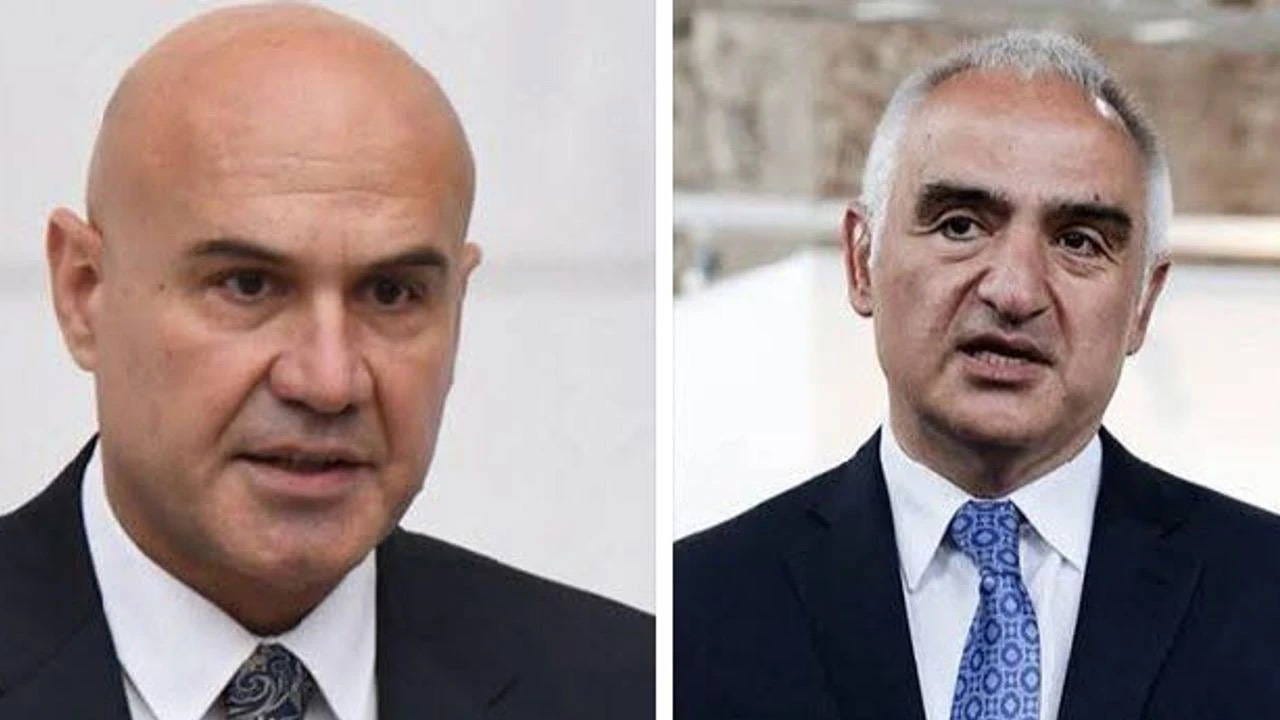
Court orders Turhan Çömez to pay damages over “profiteering” claims against Minister Ersoy
A court has ordered İYİ Party Balıkesir MP Turhan Çömez to pay 50,000 lira in non-pecuniary damages over his claims that forest land was allocated to a company belonging to Culture and Tourism Minister Mehmet Nuri Ersoy in order to generate “profiteering”, while the Sözcü newspaper, which published the same claims, was also sentenced to pay 50,000 lira. The ruling came in a non-pecuniary damages case brought by Ersoy against Çömez on the grounds that his personal rights had been violated, with the Istanbul 33rd Civil Court of First Instance ordering the payment over claims Çömez made about the minister in a video published on YouTube in 2025. In the video at issue, Çömez had alleged that forest land in the Kissebükü area of Bodrum was allocated to Ersoy’s company, that profiteering had been created in the area and that public resources had been used for this purpose, while Ersoy applied to the courts arguing the statements violated his personal rights. In the case brought over the same claims being published in the Sözcü newspaper, the Istanbul 15th Civil Court of First Instance ruled that the paper’s author, board chair and responsible company should likewise pay 50,000 lira in non-pecuniary damages.