

⚖️ Justice System and Everyday Life in Türkiye
Security operation ahead of NATO summit: 103 arrests
A total of 103 of the suspects detained in operations targeting terrorist organisations in Ankara ahead of the NATO summit have been remanded in custody, while judicial supervision was ordered for 26 others. Following the bans imposed by the Ankara Governor’s Office in connection with the summit, police and gendarmerie teams carried out simultaneous operations at numerous addresses on 23 June. The operations, conducted under the coordination of the Ankara Chief Public Prosecutor’s Office, targeted suspects assessed to be linked to the ISIS, TKP/ML, MLKP and DHKP/C terrorist organisations. Of the 225 suspects detained in the investigation, 135 were brought before the Ankara Chief Public Prosecutor’s Office in custody; the office released six and referred 129 to the magistrate’s court with a request for arrest. Following the magistrate’s assessment, 103 suspects were remanded in custody and judicial supervision was ordered for the other 26.
Third wave of operations against Şile municipality: 16 detained
In the third wave of an operation carried out as part of an investigation into Şile municipality on charges of forming an organisation to commit crime, extortion in office, bribery and rigging tenders, 16 of the 18 people for whom detention orders had been issued have been caught, with efforts continuing to apprehend the remaining two. The investigation launched by the Istanbul Anadolu Chief Public Prosecutor’s Office into the municipality on those allegations is ongoing. The operation was carried out following new evidence obtained in earlier raids, amid allegations that irregularities had been committed in the municipality’s direct-procurement, zoning, permit and occupancy-certificate processes, and that bribes had been taken to secure unfair gains. In the third wave, conducted simultaneously at 21 addresses identified in Istanbul and İzmir, 16 of the 18 people subject to detention orders were caught and taken to police for questioning, while efforts to apprehend the other two continue.
🏛️ Politics
Erdoğan tells new police graduates: let your compass be conscience and your aim justice
Speaking at a Police Academy graduation ceremony, President Recep Tayyip Erdoğan said officers would at times go without sleep and sacrifice time with their families, urging them to let their compass be conscience, their purpose public safety and their aim justice. He congratulated the graduating students and their families, paid tribute to the 51 people killed at the academy during the 15 July 2016 coup attempt — whose tenth anniversary, he noted, would fall in 20 days — and remembered the country’s fallen and its veterans. Erdoğan said 13,000 students who had completed their training at 30 different schools within the Police Academy were graduating, with 531 from the Police Academy Training Centre, 2,432 from the Police Vocational College and 10,604 from the Police Vocational Training Centre joining the force, and he also congratulated 43 guest students from 11 countries, including Gambia, Iraq, Cambodia, Kyrgyzstan, the Republic of the Congo, the Maldives, Mongolia, Rwanda, Somalia, Tajikistan and Yemen. Addressing the graduates directly, he said they were taking on an important mission and carrying the sacred trust of the country’s martyrs and veterans, that they would protect public order within the framework of the law and combat every kind of crime — from organised crime and drug trafficking to cyber gangs, antiquities smuggling and street vandalism — sometimes at the cost of their own lives, and that if their compass was conscience and their aim justice they would never lose their way. Erdoğan also highlighted the recently introduced merit-based “service points” appointment system, which he said took into account the region served, sacrifice and length of service and would strengthen predictability and the sense of fairness within the force, and he referred to the changes to the Police Organisation Law passed by parliament the previous day, expressing hope that the regulation would prove beneficial. He closed by congratulating the 13,610 graduating officers once more and thanking their families, instructors and superiors.
Foreign Minister Fidan meets Canadian MP Açan
Foreign Minister Hakan Fidan has met the Canadian Member of Parliament of Turkish origin, Şima Açan, as part of his contacts in Canada. Fidan, who is continuing his contacts during an official visit to Canada, met Açan in the course of his engagements in Toronto. As part of his visit, Fidan had also met his Canadian counterpart Anita Anand and visited the Darlington Nuclear Facility in Toronto, where he carried out an inspection.
Justice Minister Gürlek announces operations across all 81 provinces, 841 detained
Justice Minister Akın Gürlek has announced that legal action was taken against 841 suspects in 48 simultaneous operations carried out nationwide as part of the fight against organised crime. In a statement on social media, Gürlek said that, following the circular on “Combating Organised Crime” sent on Monday to 175 chief public prosecutors’ offices at heavy penal courts across all 81 provinces, the prosecutors’ offices had acted swiftly and, in coordination with police and gendarmerie units, carried out simultaneous operations across the country that morning. According to the statement, 35 operations targeting the offence of forming an organisation to commit crime under Article 220 of the Turkish Penal Code were conducted in 24 provinces under the coordination of 31 chief public prosecutors’ offices, with legal action taken against 711 suspects, while a further 13 operations targeting similar offences not falling within organised crime were carried out in 10 provinces under the coordination of 10 chief public prosecutors’ offices, with legal action taken against 130 suspects. Gürlek said that legal action had been taken against 841 suspects in 48 operations in total, calling this a sign of the state’s determination in its fight against criminal organisations, the judiciary’s swift response, law enforcement’s effectiveness in the field and inter-institutional coordination. He added that no quarter would be given to any structure seeking to disrupt the peace of the country’s cities, draw young people into crime or intimidate tradespeople through threats and extortion, and that these criminal organisations would continue to be targeted in all their elements, from their leaders and financial networks to their gunmen and digital propaganda channels.
Summer holiday begins: 18 million students to receive report cards today
Around 18 million students at primary and secondary schools affiliated to the Ministry of National Education will receive their report cards today and begin their summer holidays, with the 2026-2027 academic year due to start on 14 September. The roughly 18 million students and nearly 1.2 million teachers at these schools began the 2025-2026 academic year on 8 September 2025; the first-term mid-break was held on 10-14 November 2025 and the second-term mid-break on 16-20 March. The second term, which began on 2 February, ends today, with students shedding the year’s fatigue after the final bell. Final-year secondary-school students will learn the results of the central High School Transition System (LGS) examination, held on 13 June, on 10 July. Final-year high-school students and graduates sat the Higher Education Institutions Examination (YKS) on 20-21 June: the results of the first session, the Basic Proficiency Test (TYT) held on 20 June, the second session, the Field Proficiency Tests (AYT), and the third session, the Foreign Language Test, both held on 21 June, will be announced on 22 July. Teachers’ June 2026 professional development seminar will be held online via the Teacher Information Network (ÖBA) platform on 29-30 June, and the 2026-2027 academic year will begin on 14 September.
Disinformation Centre denies claim that Ankara parks will be closed for Macron’s morning walk
The Disinformation Combat Centre has denied claims that the Dikmen Valley and Botanical Park in Ankara would be closed to the public to allow French President Emmanuel Macron to take a morning walk during the NATO summit. It had been claimed that the two parks would be closed to the public for the walk of Macron, who is due to come to Türkiye for the summit. In its statement, the centre said the claims circulating on some social media accounts were entirely baseless, and that there was no decision or measure among the security arrangements for the Ankara summit to close the parks to the public on the grounds of Macron’s walk. It urged the public not to give credence to such deliberate posts, which it said were intended to mislead public opinion ahead of the summit, spread baseless fears that would disrupt daily life, and create a manipulative perception.
Health and identity data of 364,000 people put up for sale on the dark web
The personal and medical data of 364,036 people registered with the state health system in Northern Cyprus has been shared on hacker forums, and it is not known who has downloaded the data, which has been available on the dark web for five and a half months. According to a report by Gözde Bedeloğlu for BirGün, drawing on an exclusive report by Tümay Tuğyan of the Yenidüzen newspaper, the data set, obtained by cyber attackers from the systems of the Northern Cyprus Health Ministry, includes critical information such as citizens’ names, identity and passport numbers, addresses, telephone numbers, vaccination codes and school details, and the leak also covers the data of children and students. The scandal, whose authenticity has been confirmed by cyber-security experts, is being described as a mass security crisis rather than an ordinary leak, with the attackers also claiming to hold a separate health list of people with an HIV/AIDS diagnosis; the leaked set reportedly contains records of people of 202 different nationalities, suggesting that everyone whose path crossed the island’s health system — including citizens of the Republic of Türkiye — is under threat. The attackers further claim to have seized the data of 340,000 people who entered or left Northern Cyprus, and experts note that a scandal of this scale within the European Union would force the state to pay hundreds of millions of euros in compensation and, as in past cases, result in ministers resigning.
In a forum listing published in English, the perpetrators — who identified themselves under the handles “@harakiri”, “@cell” and “@dejavu” — said they had leaked the health ministry database, dismissively remarking that they could have gathered more data but found it boring and questioning who cares about Northern Cyprus, adding that they had included data on AIDS patients and leaked around 340,000 records on everyone entering and leaving Cyprus. According to an exclusive report by İsmail Arı for BirGün, a similar episode had occurred in Türkiye, where the state-held personal data of millions of citizens was stolen and made accessible through “query panels” on illegal websites: current addresses and phone numbers from Interior Ministry (MERNİS) records were distributed free, while critical data such as bank, land-registry, health, school and IBAN details were marketed on websites for fees of around $10 a week; engineers found that the data flow was continuing and that the system vulnerabilities behind the leak had long gone unaddressed; and jurists noted that public administrators who failed to take the necessary measures bore legal responsibility alongside those who stole the data.
The first government response came from Transport Minister Erhan Arıklı, who did not deny the leak, saying the Information Technologies and Communication Authority (BTHK) was examining the matter, that it was a claim under investigation, and that it was indeed possible. Arıklı acknowledged that they were periodically subjected to cyber attacks and that the current technical staffing was inadequate, and announced that they had requested support from Türkiye and begun work to establish a new cyber-security unit. The Chamber of Computer Engineers stressed that the matter must be taken seriously given the scale of the claims and the nature of the data, with experts saying cyber-security could no longer be left solely to IT units and had become a question of public security, economic security, the protection of personal data and national security, and noting that the failure to establish the National Cyber Security Strategy and monitoring centres they had long called for had paved the way for such crises. Özlem Gürkut, head of the Turkish Cypriot Doctors’ Union, reacted in a written statement, saying that if confirmed this would be the largest data breach in the country’s history and that the relationship of trust with the state could not be rebuilt in an environment where citizens’ most private information could not be protected; recalling that they had warned for years against collecting biometric data without the technical and legal infrastructure in place, she asked when the breach was first detected and why officials were not informed in time, whether biometric data was also at risk alongside health data, and called for transparency, independent technical examinations and accountability for those responsible. On the opposition side, Republican Turkish Party (CTP) leader Sıla Usar İncirli said state institutions were entirely open to cyber attacks, that the hackers were “living inside” the systems without anyone being aware, and that the government had failed, while CTP MP Ürün Solyalı said such attacks were inevitable in the digital age but the state was obliged to build a defence accordingly, arguing that government negligence had helped sensitive data fall into malicious hands and that the e-Devlet and Personal Data Protection boards had been rendered ineffective by being left without budget, staff or statute.
🤝Ruling Government (AKP, MHP and DEM coalition aka People’s Alliance)
DEM Party’s Koçyiğit hits out at government: “A security showcase for NATO while imposing repression at home”
DEM Party deputy parliamentary group chair Gülistan Kılıç Koçyiğit has criticised the operations carried out in Ankara on the grounds of the NATO summit, saying the government was offering NATO a “security showcase” while imposing a regime of pressure, detention and arrest on its own citizens, and that the decisions were political rather than legal and the product of a politics of fear rather than of justice. In a statement on social media, Koçyiğit said the true aim of the operations sustained for days under the pretext of the summit had been laid bare by the day’s rulings, noting that 103 of the 225 people detained had been remanded in custody and judicial supervision ordered for 26, and arguing that those exercising the right to democratic protest, expressing their views or raising calls for peace were being criminalised, with the law turned into an instrument of political directives. She said doors had been broken down in house raids, people detained at gunpoint, and allegations of being cuffed from behind and of mistreatment had reached the public, while lawyers’ access to case files had been blocked and the right to a defence effectively eliminated, with the arrest rulings now intimidating society as a continuation of this unlawful process. A country’s security, she said, could not be achieved by silencing citizens, emptying the squares or sending young people, workers and those exercising their democratic rights to prison, and she called on the government to return to the constitution, the universal principles of law, human rights and democratic values, demanding that the arrest and house-arrest rulings be withdrawn immediately and that the judiciary cease to be the government’s apparatus of repression.
🗳️ Opposition Parties (CHP and others)
Labour Party MP Karaca: the courthouse is like a NATO headquarters
Labour Party (EMEP) Gaziantep MP Sevda Karaca has criticised what she called unlawful practices against those detained ahead of the NATO summit and the imposition of near-emergency measures in Ankara, saying the city was practically under martial law and the courthouse was like a NATO headquarters. In a post on the social media platform X, Karaca said the authorities were raising the bar of unlawfulness, illegitimacy and arbitrariness through the NATO-related detentions and arrests. She said 69 people had been jailed and 13 placed under house arrest, among them Halkevleri executive board member Hediye Yıldırım, Umut-Sen spokesperson Burcu Arıkan, Kaos GL editor-in-chief Yıldız Tar, Progressive Lawyers’ Association (ÇHD) lawyers Semra Demir and Kürşat Bafra, TEMA Foundation Ankara representative Nevzat Özer and Assoc. Prof. Emel Memiş, adding that those waiting for questioning had not even been given water and that detainees had been arbitrarily prevented from having their lawyers beside them while awaiting prosecutorial questioning. Criticising the fact that the charge of “membership of a terrorist organisation” had been brought without, she said, a single piece of supporting evidence, Karaca said the prosecution had questioned those detained on suspicion of “armed terrorist organisation membership” about numerous events and actions — from university spring festivals and statements of support for miners to protests over suspicious women’s deaths, and from the 1 May rally to a 6 May commemoration — as though these were crimes. She argued that the authorities wanted this heightened bar of unlawfulness to become permanent after the summit too, and that the only way to prevent it was to speak out more and keep the arrests in the public eye.
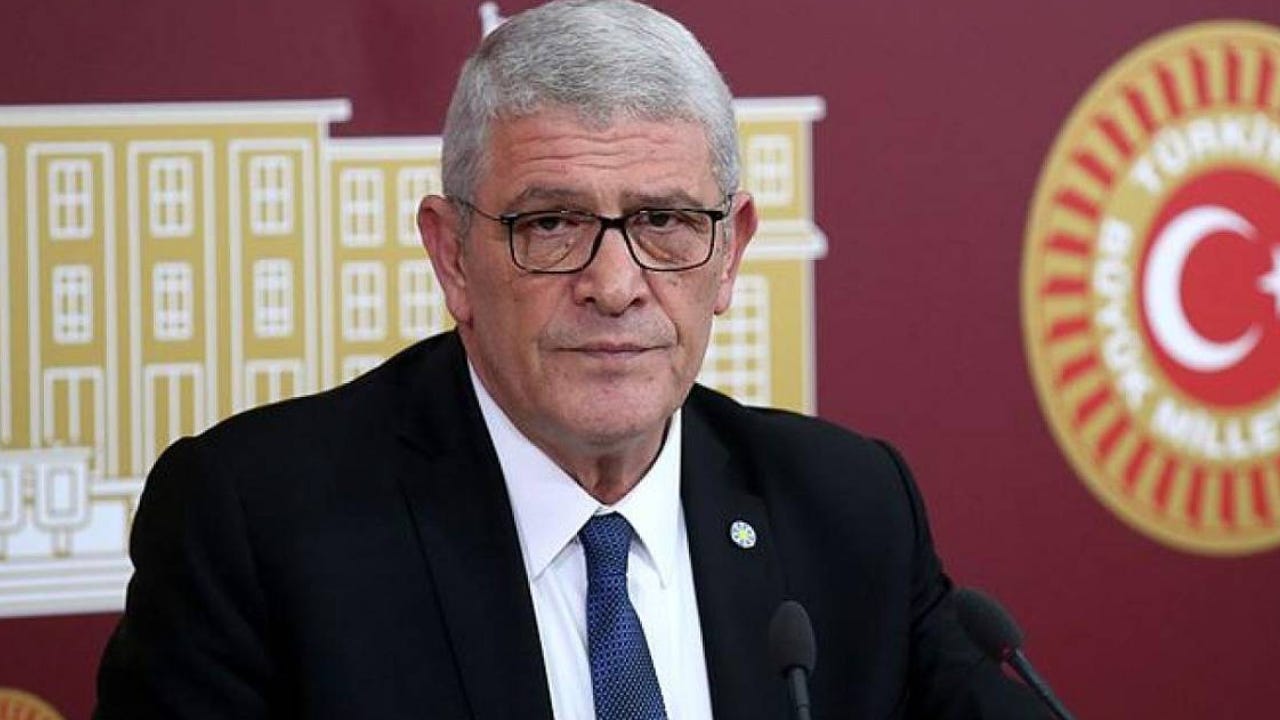
İYİ Party leader Dervişoğlu hits back at wave of transfers to AK Party: “If you have something to hide, leave politics”
İYİ Party leader Müsavat Dervişoğlu has criticised the wave of transfers to the AK Party, telling defecting politicians that the reason behind such moves was either a threat or an offer, and that those with something to hide should not bow to threats but should leave politics. Speaking to Halk TV after Nevşehir mayor Rasim Arı’s defection, Dervişoğlu spoke about the transfers, which came after President Recep Tayyip Erdoğan said admissions to his party would continue and after three more mayors — among them Arı, formerly of the İYİ Party — joined the AK Party with their badges pinned on by Erdoğan. Dervişoğlu said politics was a field that required facing many difficulties while also being one that fostered an area of respect, and that if a politician could not approach with respect the will of the voters who had elected them, that politician’s very identity became open to question, in a way that eroded both the politician and the institution of politics; this, he said, was what had been happening in Türkiye from the outset, and matters had now gone badly off the rails. He said two things came to mind as the reason for the transfers — a threat or an offer — and that whichever a politician was open to called their political morality into question, but that if such scenarios were being engineered deliberately to weaken the standing of the institution of politics and to create avenues for political gain, then a different situation was at hand. Arguing that the “one-man regime” was personalising politics, lowering the value of institutions and standing in the way of building an institutional mindset, Dervişoğlu said he had long stressed that the matter needed to be considered more comprehensively.